

Information on current Russian losses due to sanctions as of 01/26/2026.
1. In 2025, Russia saw a sharp deterioration in the business climate: the number of new companies fell to its lowest in the past 14 years, while the rate of business liquidations noticeably accelerated.
– It is estimated that only 173,000 new companies were registered in Russia over the year — 20% less than in 2024. Meanwhile, the number of liquidated legal entities increased by 15% to 233,000.
– A significant portion of closures was initiated by tax authorities, indicating increased fiscal pressure from the state. The largest decline in business activity occurred in trade and construction — sectors that first respond to declining consumer demand and worsening financial conditions.
– A major factor in the deterioration of the business climate remains the full-scale war that Russia is waging against Ukraine. Military spending, sanctions pressure, limited access to foreign markets and technologies, as well as the redistribution of budget resources in favor of the defense sector, significantly narrow opportunities for private business development.
– Additional restraining factors include increased uncertainty, mobilization risks, capital and labor outflows, which particularly affect small and medium-sized enterprises.
2. The Russian leasing market in 2025 effectively regressed several years and enters 2026 in a state of stagnation.
– Last year, only 326,000 new leasing contracts were signed in Russia — almost at the level of 2022, which was considered “shocking” for the market. Thus, the industry has not been able to recover from the collapse caused by the war, sanctions, and worsening financial conditions.
– The deepest decline was recorded in key segments. The number of new contracts in special equipment leasing decreased by 46%, in the transport segment — by 37%. These areas directly depend on business investment activity, which in Russia has sharply decreased due to expensive loans, weak demand, and overall economic uncertainty.
– The Russian leasing sector reflects a broader economic trend: shrinking investments, demand degradation, and market concentration in the hands of a limited number of financially stable structures closely connected with the state.
3. The export of Russian fuel oil to Asia has sharply slowed down due to sanctions and Ukrainian drone strikes.
– The export of Russian fuel oil to Asian countries at the beginning of 2026 significantly declined amid tightened Western sanctions and successful Ukrainian drone attacks on Russian refineries, undermining the industry’s production capabilities.
– According to Kpler, in January, Russia exported about 1.2 million metric tons of fuel oil to Asia (approximately 246,000 barrels per day). This marks the third consecutive monthly decline in shipments, indicating systemic problems in Russian oil product exports.
– The decline in volumes is primarily due to reduced production at Russian refineries, which have been largely shutting down for repairs since October following drone strikes.
– It is estimated that the attacks have not only damaged infrastructure but also disrupted logistics and oil processing schedules. Additional factors include complications in maritime trade due to stricter sanction controls, complicating vessel chartering, insurance, and transactions, as well as adverse winter weather conditions that limited shipments in December and January.
4. Russian “Nornickel” stuck with Chinese project due to sanctions and partner loss.
– Russian mining and metallurgical company “Norilsk Nickel” faced serious issues in implementing a copper smelter project on China’s southern coast. Construction is delayed after a local Chinese partner withdrew from the project, casting doubt on its future. The Russian company is now forced to seek a new partner in China and resume negotiations on the plant, which was first proposed at the beginning of 2024.
– The delays mean additional costs and increased uncertainty for one of Russia’s key industrial assets. The project in China is critical for “Nornickel.” The company aimed to transfer part of the processing outside Russia to reduce production costs and meet environmental commitments, particularly in reducing sulfur dioxide emissions.
– However, this is where Russia faces the consequences of international isolation. Western technological sanctions have effectively blocked “Nornickel’s” access to modern equipment from Europe, the USA, and Japan. As a result, the company depends on foreign partners, who are increasingly cautious in cooperating with Russian entities due to sanctions and reputational risks.
– The delay of the Chinese plant highlights a broader issue for Russian industry: without access to Western technology and stable international partnerships, large projects become vulnerable and unpredictable.
– For “Nornickel,” this means not only missed deadlines but also additional pressure on financial performance and long-term competitiveness in global markets.
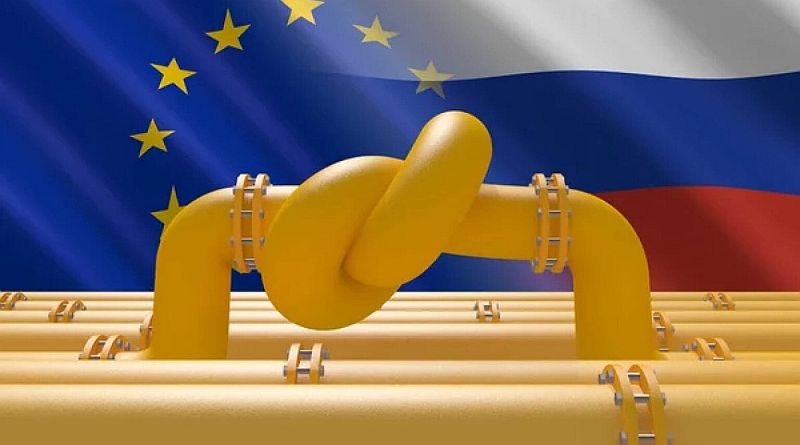
5. EU finally banned the import of Russian gas.
– The Council of the European Union has approved a complete ban on the import of Russian gas, both pipeline and liquefied natural gas (LNG).
– The decision envisages a phased implementation by the end of 2027 and has become one of the most painful blows to Russian energy exports since the start of the war against Ukraine.
– According to the adopted mechanism, short-term gas contracts with Russia will be banned from mid-2026, and long-term ones by the end of 2027. This effectively closes the European market for Moscow, which provided the shortest, cheapest, and most profitable supply logistics.
– The greatest blow will be to the “Yamal LNG” project, which loses Europe as a key sales destination. Importantly, a significant portion of cargo formally belongs to European companies — TotalEnergies and Naturgy, and they will have to seek alternative routes, further complicating Russia’s position as a supplier.
– Meanwhile, Baltic medium-tonnage LNG plants — “Cryogas-Vysotsk” and “Portova LNG” — have already halted exports due to US sanctions, effectively withdrawing from international trade.
– The attempt to redirect Russian gas to Asia seems logical but economically painful. The Arctic LNG 2 project partially uses
– the Northern Sea Route for shipments to China, and “Yamal” has transshipment complexes in the east with a capacity of up to 20 million tons each. However, such routes mean months-long voyages, a shortage of icebreaker fleet, seasonal restrictions, and a sharp increase in costs.
– Alternatives remain in swap schemes — where Russian gas formally “covers” European contracts, and European companies supply their own volumes to Asia. However, such schemes come with increased operational costs, sanction risks, and increasingly complex masking logistics, reducing their effectiveness.
6. Two people in Germany have been detained on suspicion of supporting pro-Russian armed groups in eastern Ukraine.
– In the federal state of Brandenburg, a Russian citizen and a German citizen have been arrested. According to the investigation, since 2016 they have been organizing the supply of food, medicine, and drones to the groups known as “DNR” and “LNR.”
– Prosecutors claim that one of the suspects transferred over 14,000 euros to support the militants, while the other repeatedly visited the occupied territories of Donbas to coordinate contacts and distribution of deliveries.
– Thus, it is not about humanitarian activity but about systematic material support for illegal armed groups operating with Russia’s assistance.
– The investigation has become another signal that European countries are increasingly responding harshly to any forms of assistance to pro-Russian structures involved in the war against Ukraine, even if such activities are masked as “volunteer” or “humanitarian.”
7. The British government is under pressure over a gas contract with a company linked to Russian fuel.
– The UK government must make a fundamental decision regarding the future of a multibillion-pound gas supply contract for the public sector amid growing criticism over the supplier’s ties to Russian energy.
– Currently, gas for heating the Prime Minister’s residence at Downing Street, the Treasury, and other government buildings in Whitehall is supplied by TotalEnergies Gas & Power, the UK subsidiary of France’s TotalEnergies. The current agreement, worth up to £8 billion, expires early next year.
– Despite formally complying with UK sanctions, the company maintains commercial ties with the Russian gas sector, causing increasing outrage among pro-Ukrainian activists and parliamentarians.
– They are urging the government to exclude TotalEnergies from the list of contenders for the new contract set for 2027–2030. The main grievance against TotalEnergies is that the company holds a 20% stake in the “Yamal LNG” project in Siberia and continues to import Russian liquefied gas to Europe under long-term contracts.
– These supplies indirectly fill the Russian budget and support the Kremlin’s war machine. TotalEnergies claims to “condemn Russia’s military aggression against Ukraine” and act within the EU’s sanctions policy.
– At the same time, the company admits it has not terminated key contracts with Russia. TotalEnergies has been the main gas supplier for the UK’s public sector since 2019.
– The new tender, called Energy Supply – Third Generation, is expected to be announced in the coming months, with the contract signing planned for the end of the year.
– The situation surrounding the agreement is another example of how the Russian energy footprint continues to penetrate European institutions despite the war, sanctions, and official statements about energy independence from the Kremlin.
8. The UK fined a major bank for transactions with a sanctioned Russian entity.
– The UK has tightened control over compliance with sanctions against Russia by fining the Bank of Scotland, part of the Lloyds banking group, for violating financial restrictions imposed on individuals connected with Russia.
– The UK’s Office of Financial Sanctions Implementation (OFSI) imposed a fine of £160,000 (approximately $218,600 USD) on the bank.
– According to the regulator, in February 2023, the bank processed 24 financial transactions totaling about £77,000 related to a personal account of an individual listed on the UK sanctions list due to ties with Russia.
– Payments were made both to and from the account, directly contradicting the current sanctions regime. UK authorities emphasize that even relatively small transactions with sanctioned individuals undermine the effectiveness of sanctions aimed at limiting Russia’s financial resources used to support the war against Ukraine.
– The fine serves as another signal to the financial sector that any gaps in sanctions control will be treated as a serious violation, regardless of the scale of operations.
– London demonstrates a readiness to respond harshly to attempts, whether conscious or technical, to maintain access for Russian-sanctioned entities to the Western financial system.
