

This will be a long text that appeared after the public was fed manipulative nonsense like “those anti-aircraft drones are useless in bad weather, you need a lot of SAMs”. I don’t understand the desire to insult the direction that, literally half a year after scaling, is shooting down a quarter of all “Shaheds” and continues to increase efficiency. But let’s try to understand how the air defense system of Ukraine works, what its shortcomings are, and how the weather affects all of this.
The air defense system of Ukraine is built on the following “puzzles”:
1) Military Aviation.
It includes jet fighters and military helicopters. Fighters are mostly used against missiles, but they are also exceptionally effective against UAVs. Helicopters work against “Shaheds”, but their efficiency is much lower because their speed does not allow for rapid sector changes, and taking off to intercept a target flying at almost your speed sometimes requires covering 100-150 km. However, military aviation is a very effective means as part of the whole.
2) Small Arms Fire.
Not a very effective “puzzle”, and no, not because they don’t know how to shoot. It’s just that the system itself is not very effective. Many small arms units might go months without seeing a single “Shahed”. Hitting a “Shahed” with a machine gun does not guarantee it won’t reach the city and fall on people’s heads. Moreover, the system allows including “locationally lost drones” in the shoot-down count, and who are we to discuss statistics and how they are compiled?
3) Civil Aviation.
Also not a very effective puzzle; it might have been further developed, but winter weather conditions have almost halted its already small development.
4) Gun-Based SAMs like Gepards and SkyNex.
These SAMs have an effective range of 3-4 km, and for targeting objectives at these distances, their optical guidance systems must see the target in the sight/thermal imager. The small range of operation, weather conditions that reduce the efficiency of thermal imagers, and enemy tactics, where they just know, more or less, where these systems operate and simply program drones to fly in these sectors at low altitudes, using terrain as cover, significantly reduce the effectiveness of these systems. That’s why there are so few videos of shoot-downs from such anti-aircraft gun systems.
5) Anti-Aircraft Drones.
Among them, there are two types. The first one features an automated guidance system. The tactical radar in automatic mode tracks an aerial target, launches the drone (which is also tracked automatically), and its trajectory is calculated to the target by the system along the shortest path. When it approaches 200-300 meters, and the enemy drone appears in the drone’s thermal imager, it locks onto the target, flies in, and hits it in automated mode. There are few such videos online to avoid revealing the enemy the targeting/acquisition algorithms, as this helps the enemy counter these means.
There are also manually controlled drones. This depends on the pilot’s skill and, in principle, this is an increasingly effective function because the pilots gain more experience, increasing effectiveness. There are many such videos online, but everyone is working towards automating this function. One day, I hope, all drone-based air defenses will be automated, but this requires time. Anti-aircraft drones have not yet, in my opinion, reached even 50% of their potential, unfortunately, as everything requires time, resources, and experience.
6) Anti-aircraft missile systems.
First of all, I must say I’m not an anti-aircraft specialist, I might make mistakes in some nuances, but I’ll try to convey the overall picture.
Anti-aircraft missile systems have three gradations:
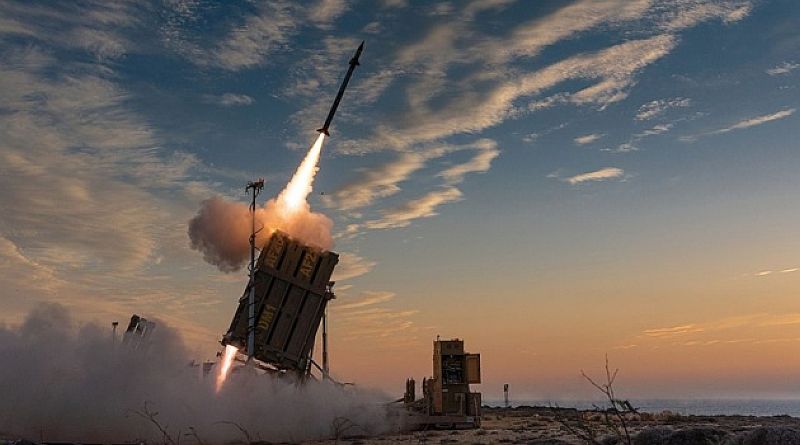
A) Short-range air defense missile systems (e.g., Pantsir S1, Tor, Rapid Ranger, Stormer, Iris-T SLS, and the quite outdated Strela systems, which we won’t consider).
B) Medium-range air defense missile systems (e.g., Buk, Iris T SLM, Nasams).
C) Long-range air defense missile systems (e.g., Patriot, S-300/400, Iris-T SLX).
Medium and long-range air defense systems predominantly have exclusively radar-guided targeting, which is understandable since they should hit targets at distances no visual targeting system can handle. However, such autonomy comes at a cost. These are very complex, expensive systems, and missiles in Western complexes start from $1 million to $3 million. Manufacturing such missiles is costly and time-consuming. These complexes are constantly hunted, since as soon as they turn on their radars, they are detected by Chinese and Russian satellite electronic warfare systems, which relay their coordinates with meter-level accuracy for targeting. That’s how it works. You turn on the radar and see air targets. But the enemy sees you immediately too. Therefore, due to tactical risks and the high cost of missiles, these systems are used against “raid bosses,” cruise missiles, and ballistic threats, often changing their location and replacing them with decoys at these points. It’s quite a complex game that our air defense has been playing for years. It’s a very dangerous game, during which we sometimes incur losses, but air defense personnel constantly head to the next combat duty, understanding that during a drone-missile attack, they are one of the priority targets. Respect them for this.
Short-range air defense systems, their advantages, and disadvantages. Well, finally, we’ll discuss that very wunderwaffe, which, in the minds of some experts, should effectively counter “Shaheds.”
Some Facebook (and not only, there are also “blog-experts”) experts believe that short-range air defense systems work exclusively using radar-guided targeting, like medium and long-range systems. Well, they see the target on the radar, press a button, the missile flies and hits the target. Well, like they saw in movies. But it’s not like that. Short-range air defense systems mostly do not have such powerful radars; for them, the radar is a way to detect a target, while the guidance is performed by an optical-thermal imaging system.
Discussing the listed anti-aircraft systems above.
Pantsir S1.
The demonization of this system on Facebook appeared after a major from the analytical department of the border service calculated Russia’s losses in his reports using the principle “100 drones were launched, they didn’t hit anything because they were shot down by Pantsir-S1, which used 100 missiles on them, inflicting this much damage on the enemy.” The fact that the drones didn’t get through because they were simply jammed by electronic warfare was, of course, not mentioned.
Russians have long stated their opinion on the effectiveness of the Pantsir-S1 against drones, and here is one of the literal quotes. Russian military expert Viktor Murakhovsky stated the following:
“In Syria, it turned out that the ‘Pantsir’ practically ‘does not see’ low-speed and small-sized targets, which include military UAVs. At the same time, the system regularly detected false targets — large birds flying around the base, which confused the operators.”
“The system showed serious shortcomings and flaws while covering the Khmeimim airbase in Syria from air attacks. The ‘Pantsir’ had an effectiveness of only 19%, whereas the Tor-M2 air defense system had an effectiveness of 80%.”
“The drawbacks include the presence of a dead zone in the upper hemisphere and the time to readiness for battle.”
Not quite a wonder weapon, is it?
Below we will examine why the Pantsir-S1 (which is basically a cheaper version of the Tunguska on a truck) fares poorly compared to its counterparts.
Pantsir S-1 Guidance System.
The radar system includes a target detection radar (range up to 80 km) and a target and missile tracking radar (1RS1-1E).
• The optoelectronic system (OES) provides automatic target and missile tracking, operating in the infrared range.
• Guidance methods: Radio-command guidance (commands are transmitted from a ground station to the missile).
• Missile types: Surface-to-air guided missiles (SAM) with radio-command guidance.
So, once again.
The radar detects the target, the operator directs the OPTICAL SYSTEM, and it guides the missile via the beam to the target as an anti-tank missile. The radar itself confuses UAVs with birds and has a blind spot above. If the UAV is obscured from the optical system by fog or clouds, the Pantsir cannot hit it. Thus, in deteriorating weather conditions and limited operation of the visual system, the effectiveness of the Pantsir-S1 is 0%.
The missile does not have an infrared seeker that could acquire a target outside the visual range of the visor; the Pantsir-S1 guides missiles exclusively like an anti-tank missile via the visor.
The tales about the ‘amazing Pantsirs’ end here, I suppose. That is why UAV operators who hunt for air defense systems do not consider the Pantsir a threat, knowing that it cannot do anything to a UAV unless, of course, the UAV flies within 2 km of it and is clearly visible in the visor. However, a modern reconnaissance UAV can see a stationary Pantsir from 6-10 km away, so it’s clear who wins this battle.
Rapid Ranger Air Defense System.
One of the main means of countering ‘Shaheds,’ and quite effective at that.
‘Laser Beam Riding’ Principle:
The missile flies in the center of a laser beam directed at the target, making it resistant to thermal flares (infrared countermeasures).
Hits are ensured by an automated optoelectronic system (day and thermal cameras).
Autonomy: The system can independently detect targets (range >15 km) and track them.
The rockets used are LMM (Lightweight Multirole Missile) or Starstreak.
Detection: a surveillance radar or a panoramic infrared search and track sensor (IRST) can detect targets at distances greater than 15 km.
Conclusion: Rapid Ranger, although having a detection radar, guides the missile along a beam like an ATGM (or Pantsir), using an optical system. For target detection, the SAM system uses an infrared search sensor along with the radar, duplicating radar data.
If there is fog, heavy rain, and other adverse weather conditions, this significantly limits the capabilities of this SAM system. The LMM and Starstreak missiles do not have an infrared head that would capture the target beyond the visual capabilities of the SAM sight.
Stormer SAM.
Everything is the same as the Rapid Ranger, but without the radar, using LMM and Starstreak missiles. However, Stormer lacks both radar and infrared search. Essentially, Stormer is a “lesser Rapid Ranger” with the same missiles.
In deteriorating weather conditions, efficiency drops significantly, which is understandable. If the Stormer’s thermal sensor cannot see the UAV, there is nowhere to shoot.
Iris-T SLS SAM.
This is more interesting.
Key features of the IRIS-T SLS guidance system:
Imaging Infrared Seekers (IIR): the missile has a cooled IR head that sees the infrared image of the target, not just a heat spot. This allows it to effectively distinguish true targets from false thermal traps.
Guidance modes: Initially, the flight is corrected by the inertial system, and in the final phase, the IR head is activated, providing target capture.
Vertical launch provides circular coverage without needing to turn the launcher, eliminating “dead zones.”
Integration: the complex integrates with radars (such as the Saab Giraffe 1X) for target detection and data exchange. The missile for the SLS system is a modification of an aerial missile, adapted for ground launch.
So, the radar sees the target, launches a missile that flies in automatic mode, captures the object with the IR head in the final segment, and strikes the thermal spot. This distinguishes it from the Pantsir and Rapid Ranger SAMs, allowing it to attack targets beyond visual guidance possibilities. However, in very dense fog, the IR head will have reduced efficiency simply because it cannot see thermal signatures. Nevertheless, this system can engage targets where the Rapid Ranger cannot. Although it is not a “wunderwaffe” either. Weather limitations also affect it.
Noticeable drawbacks include the high cost of the SAM complex, its complexity, and the considerable cost of the missiles. But this is the price for its enhanced capabilities. That’s why we have only a few of these complexes, literally just a handful.
Tor SAM.
His Majesty Tor. The top target for any UAV operator, a target they dream of hitting. Let’s analyze it too.
Guidance type: radio-command. Missiles are controlled from the combat vehicle (SPC — command transmission station) via radio, based on the calculated difference in coordinates between the missile and the target.
Operation: the complex operates in both automatic mode (autonomously detects and intercepts targets) and manual mode (with operator involvement).
Targeting complex: can simultaneously track 2 targets (4 for the Tor-M2) and launch two missiles (more for the M2 modification).
A radar station (RLS) uses phased array antennas to detect and accurately track targets in any weather, including stealth technology.
Combat operation: The TOR air defense missile system uses a missile that is captured by a separate coordinator after launch, then guided into the antenna beam for precise control, ensuring a range of up to 12-16 km (depending on the modification) and an altitude of up to 6-10 km.
Thus, of all the listed air defense systems, only Tor can guide a missile solely by radar in automatic mode without a visor.
It is the only short-range air defense system with properties of medium and long-range systems. That’s why it costs as much as a medium-range air defense system ($25 million per launcher).
So, if we want to protect our skies with short-range air defense systems that can effectively fight “Shaheds” in any weather, we have two options:
1) Purchase a hundred Tor air defense systems, missiles, and put them on combat duty from the Russian Federation. Although, even Russia doesn’t have a hundred Tor systems, but that’s a minor detail.
2) Develop our own Tor air defense system in about half a year to a year, put it into service, manufacture a hundred machines, train a hundred crews, and shoot down “Shaheds.” Though missiles there will cost from 300 thousand bucks to shoot down a “Shahed” that costs 70 thousand bucks, but forget about the economics of war.
If anyone is ready to undertake these two points to protect our cities, please raise your hand. Eh, no one is ready? Why is that? Anti-air drones are nonsense, air defense systems are needed, who spread these theses all over Facebook?
And now seriously.
Ukrainian air defense is a puzzle with different means. They counter not just “Shaheds,” but drone-missile attacks that aim to overload the air defense and hit targets. Each time, the air defense rearranges these figures on the board to achieve the optimal result, to ensure fewer drones and missiles get through. This involves the work of missile operators on air defense systems, UAV operators, and pilots of aircraft/helicopters, and anti-air drone pilots. None of them is an absolute weapon during an onslaught. A Wunderwaffe doesn’t exist.
The Wunderwaffe only exists on Facebook. And whether they shoot down poorly or well, they operate within their capabilities, and even if they show low effectiveness, it is still effectiveness. Even a few drones shot down by some puzzle saves lives. The air defense strains in these conditions because they are dire; some means, both drones and missiles, get through. Sometimes “patriots” don’t shoot down missiles. Sometimes small air defense systems can’t protect their sector from drones. Sometimes anti-air drones can’t see targets because of very thick fog.
But today, air defense systems, which are the result of decades of development, are at their limits. They were mostly not developed for defense against drones, but rather against aircraft, missiles, and bombs.
Anti-aircraft drones are a means precisely against drones, which have been around for less than a year. They are cheaper, simpler, and allow for rapid scaling. The automation of processes, improvement of target acquisition algorithms, expansion of tactical radars on the map, increasing the speed and range of drones, testing drones with jet boosters to catch up with reactive “Shaheds” and “Kub” drones with rocket boosters—this process is actively ongoing. It is a promising direction, and today, in the statistics, anti-aircraft drone crews are already surpassing the crews of small SAMs in shoot-downs.
We have room for growth, and to achieve results in practice, not on Facebook, we need to move comprehensively in the right direction. We will not build defense on a wonder weapon. It does not exist. A wonder weapon is a simplification of functionality for the sake of manipulation and conveying one’s message.
However, we can apply all the available means, including scarce ones, most effectively.
And finally.
We will survive this last month of winter. It will be difficult. We will quarrel, blame everyone around us, some of us will do crazy things like blocking roads, some will promote Russian propaganda theses, but we will get through it. And after winter, we will remind Putin who he is, without bowing to this terror.
And all those who are trying to protect our sky will help us as much as they can. From the anti-aircraft gunner on a “Patriot” or a drone to the last National Guard member with a machine gun, who, in this cold, guides a spotlight across the sky or peers into a thermal scope on a machine gun, trying to determine from what direction they hear the sound of a “moped.”
Don’t forget about this.
