
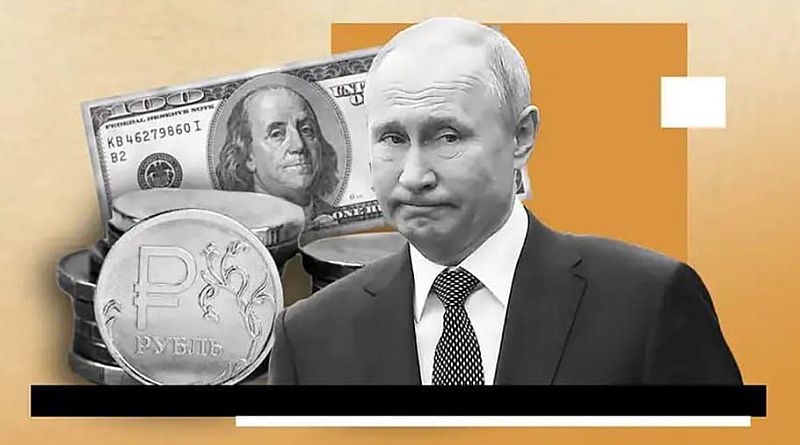

Against the backdrop of the Russian terrorist attacks, evidence of their economy being driven to the brink sounds like harbingers of justice. They are falling, and they will fall. We need to stand firm to take advantage of their downfall. In the meantime, together with allies, we should hit the vulnerable spots and aid in their decline.
In recent days, the press has been focused on the anomalous 9-fold increase in the sale of Russian gold to China. To have something to sell, it has to be taken from somewhere. They are taking from the reserves of last hope.
From 2022-2025, the volume of gold in Russia’s National Wealth Fund decreased by 71% — from 554.9 tons in May 2022 to 160.2 tons as of January 1. In 2023, the fund lost 196 tons of gold, in 2024 — another 171 tons, in 2025 — an additional 19 tons.
Sales occurred almost monthly: 8.2 tons in January, 4.4 tons in February, 6.4 tons in March, 29 tons in April-May; after accounting for 72.4 tons in June, 32.8 tons were sold in July, 6 tons in August-September, and 12.8 tons in December.
The total volume of liquid assets of the NWF (gold and yuan) at the beginning of January amounted to 4.1 trillion rubles. Compared to the pre-war level, reserves decreased by almost 60% or by 5.6 trillion rubles. It continues to fall — they are scraping it clean.
With the average price of Russian oil falling to $39 per barrel against the budgeted $59, there’s nothing to slow the decline. All hopes lie on a change in market conditions.
But the market conditions not only haven’t changed, but they’re also shaping corresponding sentiments within Russia.
At the end of 2025, Russians massively withdrew money from the banking system, setting a record for the last 11 years in terms of cash increase in circulation.
According to a well-known joke from the 1990s, “it’s time to exchange dollars.” More precisely, to withdraw savings and spend them on consumption.
In December, the amount of cash rubles increased by 836.3 billion. Overall, for 2025, the volume of cash in the economy grew by almost 1 trillion rubles — five times more than in 2024. Over 80% of this increase occurred at the end of the year, indicating a sharp drop in the population’s trust in banks and the financial system.
An additional factor was the mass internet outages in dozens of regions of the Russian Federation, as well as increased control over banking operations. Against this backdrop, some citizens are returning to cash transactions, fearing account blockages, payment delays, and financial infrastructure failures.
The combination of these factors underscores the growing nervousness in the Russian economy and the erosion of trust in the banking sector.
And simply, there’s an ever-growing lack of money. Both for the Kremlin and the Russians.
More to come.
Illustration: Center for Counteracting Disinformation
