
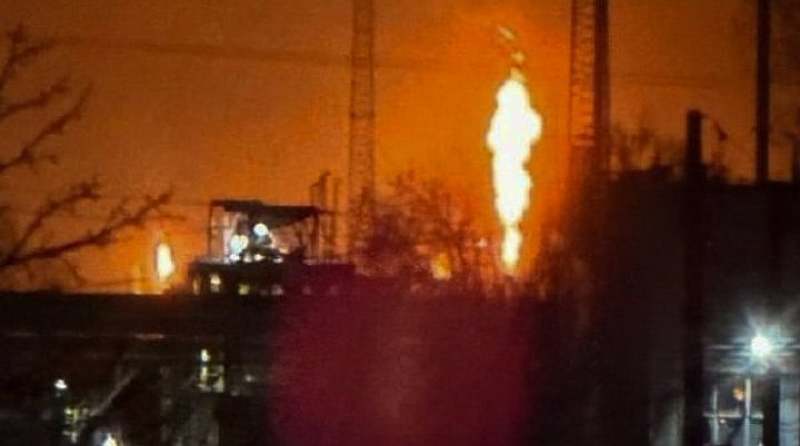
Attack on the night of April 5 — this is not just mosquito bites, our barrage munitions have long been stinging significantly, but a full-fledged strategic operation targeting their export and industrial lifeline. This is our reaction to the rise in mother-oil prices. We assessed previous waves of UAVs, conducted reconnaissance, and identified priority targets.
The Russian Ministry of Defense, of course, cheerfully reported having shot down a bunch of drones, but when a “safe burning of debris” begins, it’s important to see where exactly the fires are burning. And we struck very densely and precisely.
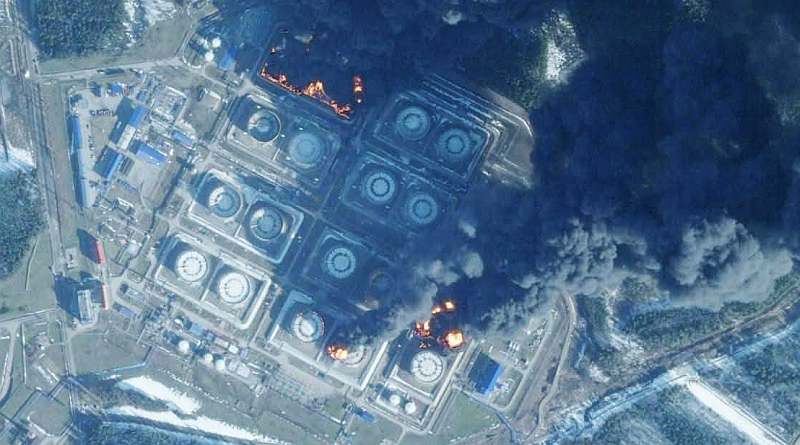
Baltic Hub: Paralysis of Primorsk
In the Baltics, the port infrastructure of Primorsk was hit once again. They pierced the pipeline, and while their governor whines about some debris, burning continues from the shut-off pipe. Plus, the sky over Petersburg was paralyzed, which equals economic losses.
Primorsk is their most important hub in the Baltics, so stopping the pipeline affects the entire logistics chain. For about five days, tankers stopped loading completely, then from the surviving tanks (we burned about 30% of the storage capacity) they started transmitting from shore infrastructure and began filling more slowly. Well, given the shut-off pipe engulfed in flames leading to the port in general, this is problematic. If you fix it here, we’ll hit further south.
Volga Region and Chemical Warfare
Next, the Volga region. About 30 drones aimed solely at the Nizhny Novgorod region, where the long-suffering refinery in Kstovo and the Novogorkovskaya CHP were affected. The plant was barely operating as it was, and hitting the CHP is classic: cut off power to the industrial zone to halt production. The chemical industry in Tolyatti was also affected.
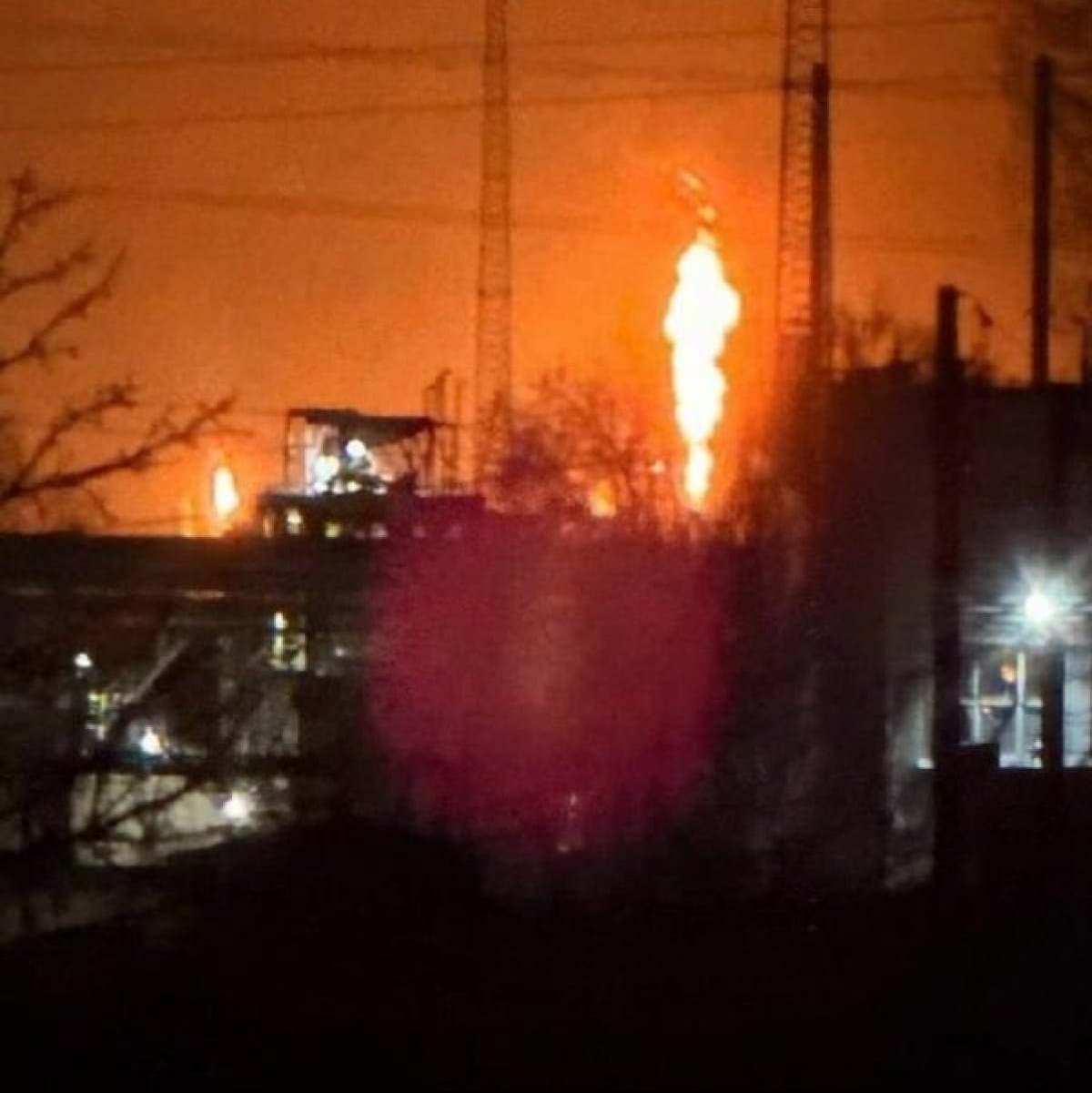
The main strike at the end of March targeted the infrastructure of Togliattiazot — one of the world’s largest ammonia producers.
Here, once again, our favorite surgical tactic was employed: hitting precisely at the gas distribution nodes and imported compressor stations that cool and pump ammonia under immense pressure. Taking out these compressors is like ripping the heart out of the production cycle.
Combat chemistry is always a priority: to advance, you need a lot of drones, shells, and iron — all consumed at a wild pace. Without precursors for explosives, there’s no effective advancement.
TNT (TNT): for its preparation (nitration) toluene and the same nitric acid are needed.
RDX (RDX) and HMX: the basis of all modern powerful warheads — from ballistic missiles to “shaheeds.” They are also produced using nitric acid.
Gunpowders: the propellant charge of any artillery shot is nitrocellulose powder. Without nitric acid, cellulose cannot be nitrated, and the guns simply will not fire.
Plus fertilizers before sowing. Who said “cattle slaughtered because of foot-and-mouth disease, fuel shortages, sanctions on parts for Western equipment, and fertilizers — that’s a royal flush”?
Regarding Togliattikauchuk, which was hit during yesterday’s series of raids, this is another blow to their military logistics. It struck precisely at the gas fractionation units and polymerization reactors. This is a key link where complex high-temperature synthesis occurs. Taking down such a column or compressor station means instantly stopping the entire supply chain for their tire giants like Nizhnekamskshina. Quickly replacing these nodes is impossible; it means months of downtime and the loss of millions of dollars in export revenue. Without its own rubber, the army remains “bald,” and they will have to milk the budget even more, buying overpriced Chinese rubber.
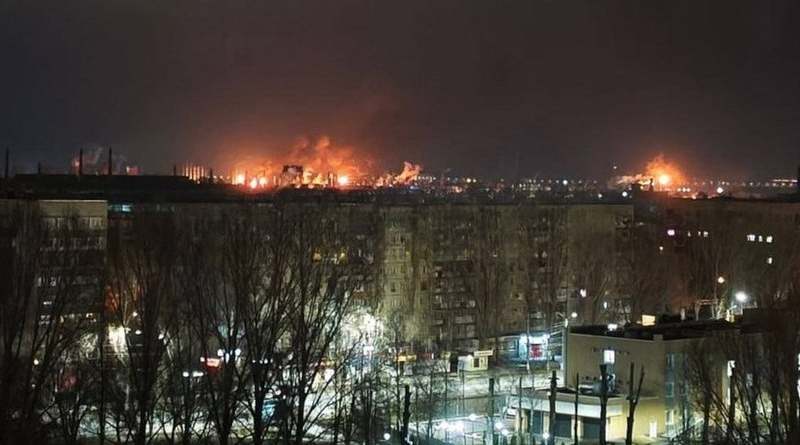
South: Shutdown of the “Sheskharis” Terminal
But the most interesting part is the south and Novorossiysk. The third wave on Sheskharis: hitting the tanks (containers) is impressive for Telegram videos and for an immediate stop to extinguish and embank, but hitting the pipe (distribution nodes and pumping stations) is effective for the long-term economic downturn. This is exactly what they did at the Sheskharis oil terminal. A tank can be extinguished quickly, only one tank burns out. But a manifold or a pumping station is the bottleneck of the entire terminal.
High-tech pumps and the brains of control systems are imported. Getting them now circumventing sanctions for Sheskharis is a six-month quest. You can weld a pipe, but you can’t replace the powerful pumps.
The strike was precisely in the “Upper” site area, where the pressure regulation and oil metering nodes are located (both Russian oil and Kazakh CPC pass through them). If you take out this node, a domino effect occurs: the terminal turns into a warehouse that quickly fills up, and you have to shut down wells somewhere in Siberia.
Last month, previous waves of drones already cut their overall shipment by almost 450–500 thousand barrels per day. The attack on April 5 just crushed their attempts to recover the transshipment, completely paralyzing the surviving lines. Their shadow fleet is now in a dead queue at the raid, losing tens of thousands of dollars daily under the threat of new strikes.
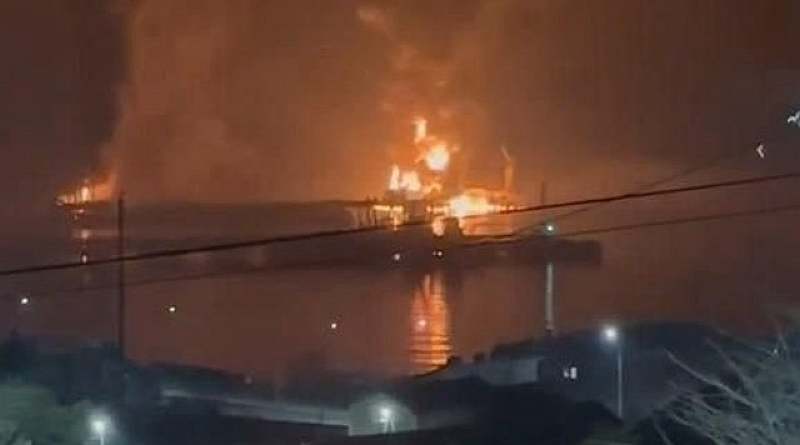
The strike also hit piers number 1 and 2 — there’s a big fire there, which means they hit the target, as piers generally don’t burn much on their own.
Macroeconomics and the Air Defense Crisis
Reducing everything to macroeconomics, the cost of freight and insurance (War Risk) for entering Novorossiysk skyrockets — it’s a “tax” on each of their barrels, paid to insurers. Brent instantly reacts with volatility, and we see the best advertisement for our (and Western defense industries). Any such disruption in global logistics leads to a rise in stock prices for EU defense, while Russian air defense openly fails to secure such vast areas.
The main cause of the crisis — air defense missiles are not made like fried pastries. The cycle for one delivery vehicle to the S-300/S-400 is 6–8 months. Electronics cannot be scaled because even the existing ones burn like “Kremny El.” Now the shortage has also reached missiles for “Pantsir.” During yesterday’s raid, no missile launches were recorded by cameras.
Budget Hole and the Oil Paradox
Only in January-February 2026, the actual hole in the Russian budget reached 3.4–3.5 trillion rubles. That’s over 90% of the annual plan in just two months! March only worsened this picture. Market analysts are already openly predicting that at this rate, the deficit will easily break the five trillion mark by the end of the year.
Their main downside now is the catastrophic drop in oil and gas revenues. In January 2026, they halved (minus 52% year over year). And here is the essence of our drone tactics: due to the war in the Middle East, oil is expensive on global markets. It would seem like a jackpot for the Kremlin. But they physically cannot earn this money. Due to burned terminals (Primorsk, Sheskharis) and damaged refineries, shipment volumes have significantly dropped. What can be exported goes through a shadow fleet that consumes a gigantic margin on logistics and insurance, which have skyrocketed. Continuous arrests of ships by the Swedes or French also hit their pockets.
As a result, export revenue remains with intermediaries in India and the Emirates, while just pennies reach the Russian federal budget.
Hidden Crisis in the Regions
The second major downside — regional budgets in Russia. The center drains resources for defense, leaving governors with nothing. Even Moscow, always flush with cash, showed only a 2% revenue increase at the beginning of 2026, instead of the expected 6.5%. This is significantly below real inflation, so the capital has begun cutting investment projects. According to experts, many other regions face deficits reaching 15–20%. The federal government doesn’t provide money just for appearance, so regions will need to take loans on the internal market at astonishing rates.
The National Wealth Fund is dwindling, and its liquid part is scarce. They can cover this massive hole in only two ways: either by borrowing domestically (and the Central Bank rate has been sky-high, making such debt incredibly expensive to service), or by simply turning on the printing press, which will inevitably drive inflation even higher.
The Russian raw material model broke not due to a fall in global prices — we physically squeezed their export pipeline, drones gnawed at terminals, and sanctions made logistics extremely costly. The survival economy devours itself at maximum pace. A textbook story.
