
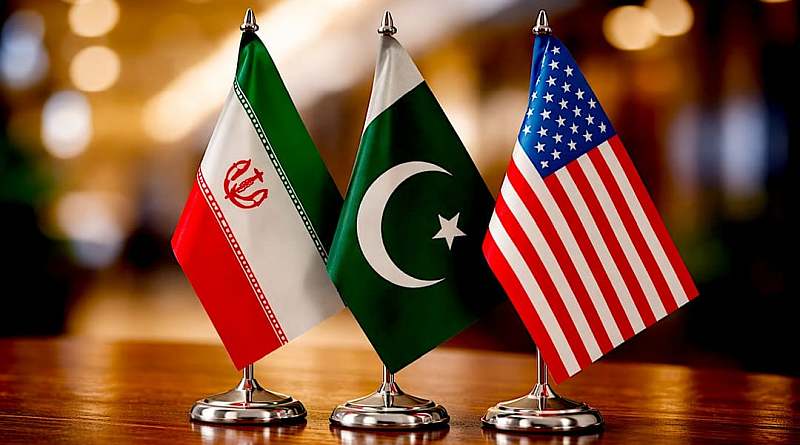

The war in Iran, which began in late February 2026, marked by strikes from the US and Israel coalition, put the world on the brink of a global energy collapse. It was at this moment that Islamabad, traditionally balancing between Tehran and Washington, proposed a “Plan for Peaceful Settlement,” which became the main diplomatic sensation of the spring.
The Pakistani initiative, developed in close contact with Beijing, is based on the principle of “two-stage de-escalation.” The plan, unofficially called the “Islamabad Agreement,” includes five key points:
Firstly, immediate “freezing” of the conflict and the introduction of a 45-day ceasefire to stop airstrikes and missile attacks.
Secondly, unlocking the Strait of Hormuz, with Iran committing to restore full navigation in exchange for non-aggression guarantees on the tanker fleet.
Thirdly, launching the “East-West” humanitarian corridor to use Pakistani logistics for delivering medicines to the Iranian provinces of Sistan and Balochistan.
Fourthly, organizing a diplomatic hub to establish a permanent platform in Islamabad for direct contacts between IRGC representatives and the US State Department.
Finally, fifthly, multilateral guarantees: China and Pakistan act as “enforcement guarantors,” with Beijing providing an economic cushion and Islamabad military monitoring.
As sources in Iran note, Tehran views this plan as the “lesser evil,” allowing the regime to survive while partially saving face.
Regarding the deal’s prospects, the mediation of Pakistani General and Chief of Staff Asim Munir has become a critical factor. Unlike previous European attempts, Pakistan possesses direct leverage over both sides.
As for the US position, despite Trump’s rhetoric, Vice President JD Vance is interested in quickly lowering gasoline prices ahead of the midterm elections. The “Peace for Oil” formula allows the US to claim “achievement of containment goals” without engaging in a prolonged ground operation.
For its part, after the destruction of part of its nuclear and military infrastructure in March 2026, Iran needs de-escalation. The Iranian leadership, through intermediaries in Islamabad, signals readiness for a “painful compromise.”
The prospects for concluding the deal are assessed as quite realistic. Here, Pakistan acts as a “trusted party,” able to guarantee that Iranian proxies will not strike at the moment of memorandum signing.
For Moscow, the war in Iran at the beginning of 2026 seemed like a “geopolitical gift.” The rise in oil prices and the blockade of the Strait of Hormuz created a shortage, allowing Russia to sell its oil volumes with minimal discount. However, the Pakistani plan directly strikes these calculations. Therefore, peace under the Iranian scenario looks like a failure for the Kremlin.
The implementation of the “Islamabad Agreement” and the opening of Hormuz will inevitably lead to a drop in Brent prices to levels uncomfortable for Russia’s deficit budget.
The peace plan implies a gradual lifting of sanctions on the export of Iranian raw materials. This creates direct competition with Russian grades in Indian and Chinese markets.
The fact that peace is being attempted by Pakistan and China with the silent consent of the US removes Russia from the ranks of significant players in the region. Moscow loses its status as an “indispensable arbiter.”
If in March 2026 Russian analysts called the attack on Iran a “blessing for Urals,” by April it becomes clear: Pakistani diplomacy is laying the groundwork for a “reverse price shock.” Thus, the Pakistani plan is not only an attempt to save Iran from destruction but also a tool for reformatting the energy market, where Russia’s benefit is sacrificed for regional stability and the interests of the Islamabad-Beijing-Washington trio.
