

Information regarding current losses of the Russian Federation due to sanctions as of 01/25/2026.
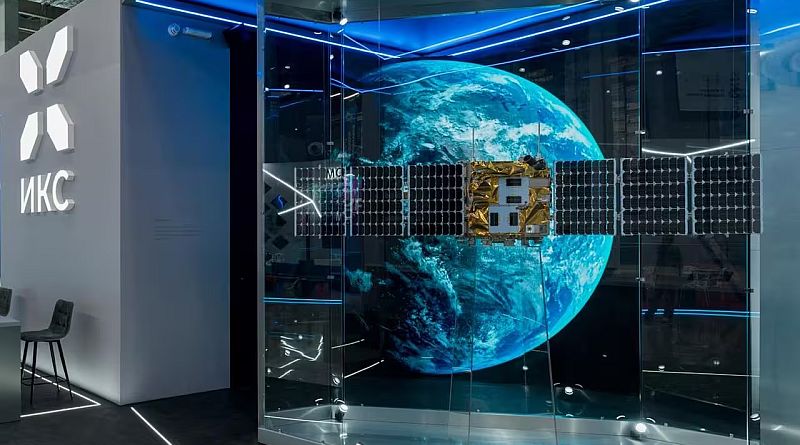
1. Russia failed to launch a Starlink analogue.
– The launch of the first batch of low-earth orbit broadband satellites of the “Rassvet” project was postponed to 2026, probably because the necessary number of devices has not yet been assembled.
– The project aims to become an analogue of Starlink and envisions over 900 satellites by 2035. Currently, there are only 6 devices from two experimental missions in orbit.
– 102.8 billion rubles have already been allocated for “Rassvet” from the budget, with another 329 billion planned to be invested by 2030.
– For comparison, Starlink has over 7,000 satellites. Amid problems with import substitution in 2025, the head of a key enterprise in the Roscosmos satellite industry was dismissed.
2. The Russian car market in 2025 decreased in monetary terms for the first time in a decade.
– The total market volume of passenger and light commercial vehicles — both new and used — decreased by 7.8% and amounted to 13.8 trillion rubles.
– Even the formal increase in prices could not compensate for the decline in sales. The majority of transactions, 67%, were on the secondary market, but even there turnover decreased to 9.18 trillion rubles, which is 1.4% less than a year earlier.
– The new car segment shrank significantly more: a minus 18.4% in monetary terms, down to 4.61 trillion rubles, making up only a third of the total market. Notably, this decline occurred despite the increase in car prices. The average price of a new car rose by 6% — to 3.54 million rubles, and used by 4%, to 1.35 million rubles.
– This means the market is falling not because of “cheap prices,” but due to a sharp contraction in real demand: Russians simply cannot afford to buy cars, even used ones.
– The decline is linked to several factors simultaneously: a reduction in physical sales, a market structure skewed toward older cars, overall economic depression, and the effect of “paper” strengthening of the ruble.
– In total, this marks a systemic crisis in the industry, which has not recovered after the exit of Western brands and the disruption of supply chains.
3. Russian gas supply to the European Union via the “Turkish Stream” pipeline in January 2026 nearly reached historic highs.
– This highlights the preservation of the energy dependence of certain EU countries on Russia despite sanctions and the declared refusal of Russian energy resources.
– From January 1 to 18, gas exports via this route increased by 10% year-on-year to 993 million cubic meters. Average daily supplies were 55.2 million cubic meters, and a higher level was recorded only in December of last year.
– In fact, “Turkish Stream” remains the only operational channel for pipeline export of Russian gas to the EU, allowing the Kremlin to maintain foreign currency revenues even in conditions of war and sanctions.
– The increase in pumping is explained not so much by the “recovery of demand” as by the vulnerability of the European market. Gas reserves in underground storage are decreasing amid cold weather, spot prices are rising, and generation from wind power plants is temporarily decreasing.
– As a result, Southeastern European countries – Bulgaria, Serbia, Hungary, and others – are forced to increase purchases of Russian gas. For Russia, this means a short-term easing of financial pressure and the ability to demonstrate “export stability.”
– At the same time, dependence on a single route and a limited circle of consumers only emphasizes the degradation of Russia’s former gas model, which a few years ago relied on large-scale supplies to all of Europe.
4. The IEA forecasts a significant surplus in the global oil market in the first quarter.
– The global oil market is entering a phase of deep surplus in 2026, creating additional risks for the Russian economy, critically dependent on raw material exports.
– According to the January report of the International Energy Agency, global oil demand will rise to 104.98 million barrels per day in 2026, while supply will reach 108.7 million b/d.
– Russia is trying to take advantage of freed-up niches in Asia. In December, Russian oil exports increased to 4.91 million b/d, and oil products to 2.63 million b/d.
– Export revenues formally increased to $11.35 billion, but this effect is largely offset by a sharp expansion of the discount: the average price of Urals fell to $35.6 per barrel, which is several times lower than Brent. Under conditions of structural surplus and overflowing storage, prices will find it difficult to remain at high levels. In such an environment, producers with financial resilience will benefit.
– For Russia, this means increased pressure on the budget, which is already facing a decline in oil and gas revenues, an increasing deficit, and the need to compensate for losses with reserves and internal taxes.
5. Sanctioned goods continue to enter Russia from Germany through schemes.
– Journalists from German publications and investigators have discovered that sanctioned goods continue to flow from Germany to Russia through semi-legal postal-logistical channels.
– According to the investigation, a significant amount of cargo regularly travels to Moscow, using schemes to bypass sanctions. Journalists claim that postal shipments are collected in warehouses near major German airports and then transported by trucks through Poland and Belarus into Russia.
– According to the investigation, companies formally registered in Germany participate in the scheme but have a legal presence only in the form of mailboxes, allowing them to avoid control.
– Journalists also conducted experiments by sending test parcels with prohibited electronic components labeled as “safe” goods — all of which crossed the border without issues and reached Moscow, indicating systemic flaws in customs and sanctions control.
– Furthermore, the investigation notes the use of documents from third countries to mask the origin of shipments, facilitating the circumvention of sanction bans.
– German law enforcement has already begun checks for possible violations of export legislation and circumvention of sanction regimes, as these schemes could undermine the effectiveness of the EU’s sanction policy against Russia.
6. The United States has seized Venezuelan oil from all seven captured tankers.
– The fuel is already being unloaded and directed to American refineries. Among the detained vessels are tankers of the so-called Russian shadow fleet, intercepted by Washington in the early weeks of the operation.
– In particular, the tanker Marinera (formerly Bella 1), sailing under the Russian flag, was detained in early January. Another vessel, Veronica, renamed to Galileo, also obtained Russian registration shortly before being captured.
– Formally, these tankers were “Russian,” but they were actually transporting Venezuelan oil, using the Russian flag as cover for sanction schemes.
– All seized vessels have Russian origins or were registered in Russia. For example, Bella 1 was owned by the Russian company Burevestmarin.
– The US has not only taken control of Venezuelan exports but also effectively deprived Russia of part of its material base for its shadow oil logistics.
– The US operation hit two regimes at once: disrupting Venezuela’s revenues and Russian assets involved in sanction trade.
– Meanwhile, part of Russia’s shadow fleet is trying to hide: after the first detentions, at least 26 vessels urgently changed registration to Russian, attempting to gain political “cover” from Moscow.
Cover: The development of the Russian analogue of Starlink is being handled by “Bureau 1440” (part of “ICS Holding”). Photo: “Bureau 1440”
