
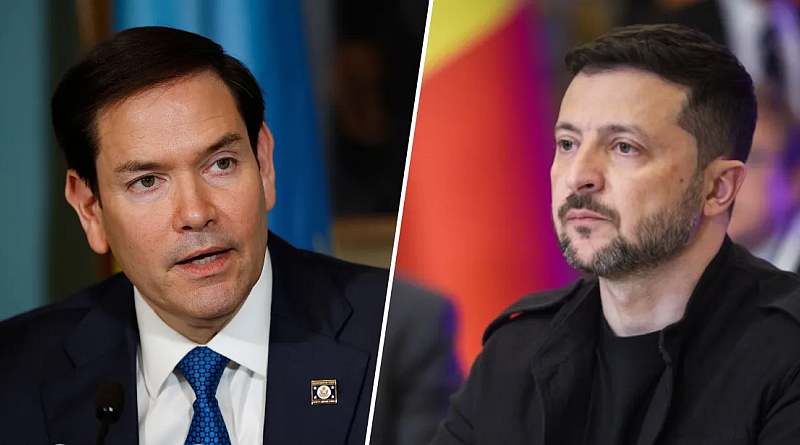

The public statements by Volodymyr Zelensky and Marco Rubio regarding the conditions for ending the war, in my opinion, have not added constructiveness, indicating a lack of direct dialogue, but have somewhat clarified the situation.
It is not surprising that Volodymyr Zelensky cannot accept Russian territorial demands, as this would essentially be the President of Ukraine agreeing to the violation of its sovereignty and territorial integrity, with all the ensuing consequences.
And Marco Rubio cannot allow the U.S. position, where he not unreasonably hopes (according to analysts) to potentially run for President in the future, to be perceived as a position that demands a direct violation of international law in favor of the aggressor’s demands.
The reason for the slightly different interpretations of the course and essence of the negotiation process may also be that both high-ranking officials are not DIRECTLY involved in the negotiations, but are listening to other participants.
However, I see in these statements also positive aspects and new opportunities.
What did Marco Rubio state? In my opinion, he clearly outlined three things:
First: “What are security guarantees? They are troops ready to intervene and ensure security guarantees.”
Second: “Security guarantees will not take effect until the war is over.”
Third: this is not related to the ceding of territory (of Ukraine).
Thus, the position of the Head of the U.S. State Department, Marco Rubio (and this is the official position), can be understood as follows: Americans are not pressuring and will not in any way pressure Ukraine on the issue of territories that the Russian side demands without a fight. Obviously, this not only undermines international law but also the reputation of the U.S. It sets a precedent for the return of the right to annexation.
And this should be the end of it!
There is no longer any sense in “escalating” the informationally “complex issue of territories,” which is potentially “explosive,” for Ukrainian negotiators.
It is necessary to strengthen one’s negotiating position and weaken the enemy’s on a new basis and in new conditions.
From all this, of course, it won’t be easier, but clearly understanding the realities and defining terms with partners is already a step towards solving the problems.
