

Information on current Russian losses due to sanctions as of 03/25/2026.
1. On the night of March 25, Ukrainian drones attacked one of the key energy hubs of Russian exports in the Baltic — the port of Ust-Luga in the Leningrad region.
– As a result of the strike, a fire broke out in the port area. Ust-Luga is the largest Russian port in the Baltic Sea and the second largest in the country in terms of turnover, after the port of Novorossiysk. Through its terminals, oil and petroleum products such as oil, fuel oil, aviation kerosene, and gasoil are exported.
– In 2025, about 700,000 barrels of oil per day were exported through the port, and the total export of petroleum products reached 32.8 million tons.
– The attack occurred a few days after a strike by Ukrainian drones on another key Baltic oil port of Russia — Primorsk. After this, oil supplies to external markets through both ports were temporarily suspended.
– A series of strikes on Russia’s oil infrastructure complicates Moscow’s ability to gain additional revenues from rising global energy prices.
– Previously, drone attacks were also repeatedly recorded in the area of the port of Novorossiysk, where delays in tanker loading have already reached approximately ten days. The combined export of Russian oil from the ports of the Baltic and Black Seas in March may reduce to about 1.7 million barrels per day — the lowest level since the start of the full-scale war.
2. On the night of March 25, Ukrainian drones struck Russian military infrastructure in the Leningrad region, hitting the Vyborg Shipyard — one of the key shipbuilding sites for Russian law enforcement agencies.
– According to monitoring channels and local sources, a border patrol ship of project 23550 (“Yermak”), which was under construction, was damaged on the enterprise’s territory.
– As a result of the strike, the vessel suffered serious damage and tilted to one side. The information about the damage was effectively confirmed by Russian pro-war bloggers. It concerns one of the newest military icebreakers that Russia uses to strengthen its presence in the Arctic.
– The strike on the Vyborg Shipyard indicates the growing vulnerability of Russia’s defense industry even deep in the rear.
– An attack on a facility that provides for the construction of military ships undermines Russia’s fleet expansion capabilities and demonstrates the limitations of its air defense systems.
– This incident also underscores that Russian investments in expensive military projects do not guarantee their protection, and the losses from such strikes increase pressure on the country’s budget and defense sector.
3. The largest Russian truck manufacturer KamAZ is once again switching to a four-day workweek due to a sharp drop in demand in the heavy equipment market.
– According to sources at the enterprise, the new work schedule is planned to be implemented starting June 1, 2026, for most divisions. The company explains this as a necessity to reduce costs amid a sharp decline in sales.
– In the first two months of the year, the Russian heavy truck market shrank by approximately 40%. The manufacturer’s own sales decreased by 15%, even though its market share increased to about 37%. This is the second instance of switching to a reduced work schedule in the past year.
– Currently, the situation is worsening again. According to Avtostat, in the segment of trucks weighing over 16 tons, sales in February fell by 33% — to 2.9 thousand vehicles, and the overall reduction for the two months reached 40%.
– The collapse in demand is associated with a general economic slowdown, high interest rates, and significant inventories of Chinese equipment on the Russian market.
– Because of this, Russian manufacturers are forced to cut production plans and switch enterprises to a savings mode.
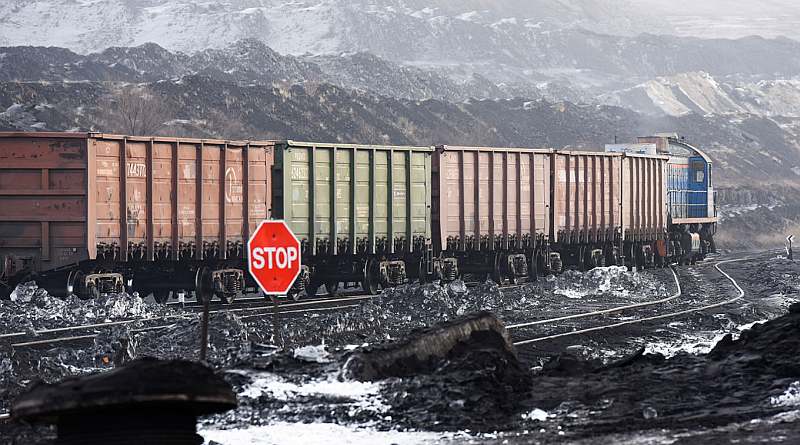
4. The Russian coal sector continues to rapidly accumulate losses due to an unfavorable market situation and financial constraints.
– According to an estimate by the Ministry of Energy of the Russian Federation, in 2026, the total losses of the sector may increase by 41% compared to last year, reaching 576 billion rubles. The forecast is based on maintaining current market parameters — low export coal prices, high key rates, and an unstable exchange rate.
– Such a combination of factors significantly limits companies’ ability to stabilize their financial situation and invest in development. The ministry acknowledges that the industry’s recovery is being delayed: systematic coal price increases are not expected before the end of 2026 or in 2027. This means a prolonged preservation of losses and further deterioration of companies’ financial indicators.
– The current dynamics indicate a deep crisis in one of the basic export sectors of the Russian economy. The loss of some markets, logistical difficulties, and rising expenses reduce the industry’s competitiveness and increase its dependence on state support, creating additional pressure on the budget.
5. China is reducing its purchases of Russian coal for the third consecutive year.
– In January–February 2026, Russian coal deliveries to China decreased by 15% year-on-year to 10.8 million tons. In January, exports amounted to 6.1 million tons (-3% year-on-year), and in February they fell sharply by 26% to 4.7 million tons. In monetary terms, the volume of deliveries decreased by 17% to $1.1 billion.
– After the introduction of the European embargo, Russia sharply redirected coal exports to Asian markets, primarily to China. If in 2021 deliveries amounted to 56.7 million tons, by 2023 they had increased to approximately 102.1 million tons.
– However, by 2024 Chinese imports of Russian coal decreased by 7% to 95.1 million tons due to the introduction of import duties in China, falling global prices, and rising logistics costs. In 2025, the trend continued: deliveries decreased by another 7% to 88.8 million tons.
– In monetary terms, the reduction was even more pronounced — approximately 25%, to $8.2 billion.
– This dynamic indicates a gradual weakening of Russia’s position even in its key Asian coal market.
6. Russia increased its oil export revenues to the highest level in four years due to a sharp rise in global energy prices.
– Russia’s average daily oil revenues over the past three weeks almost doubled — to approximately $270 million per day from about $135 million in January. The growth was associated with a surge in oil prices due to escalation in the Middle East, which pushed up quotations for Russian grades as well.
– The volume of Russian oil seaborne shipments also increased. On average, for the four weeks to March 22, they amounted to about 3.6 million barrels per day, while in the last week they reached approximately 4.07 million barrels.
– A significant portion of shipments were made through the port of Novorossiysk. Export support was also provided by the temporary easing of US restrictions for batches of oil shipped by March 12.
– This allowed for increased deliveries to Asian markets, primarily to India. According to Argus Media, Russian Urals oil from the Baltic ports traded at approximately $61.9 per barrel, while ESPO grade was about $74.9. As a result, gross oil export revenues increased to approximately $1.71 billion per week over four weeks, and almost $2.46 billion in the last week.
– The majority of these flows are directed to Asian markets. However, this income growth is temporary, as it depends on geopolitical instability and fluctuations in global oil prices.
7. Russia’s “shadow fleet” sharply increased its activity and income, taking advantage of the destabilization in the oil market and the easing of sanctions.
– The Gulf War has effectively turned illegal tanker transportation into one of the key channels for oil supply, while traditional logistics are experiencing disruptions.
– It is estimated that Russia receives up to $150 million in additional daily revenue by using schemes to circumvent restrictions. Iran is also actively increasing exports, earning over $140 million a day from shipments to Asia.
– These operations are based on opaque practices: switching off transponders, concealing routes, and transferring oil in open waters.
– The strengthening of the “shadow fleet” demonstrates that sanctions pressure is losing effectiveness in the face of political compromises and instability in global markets.
– In fact, Russia is increasingly forced to rely on semi-legal export tools, accompanied by increased costs, risks, and reliance on intermediaries. The situation also exposes the differences between the US and European allies: in the EU, there are open warnings that easing restrictions undermines joint sanctions policy.
– Meanwhile, rising oil prices and steady demand support the functioning of gray schemes, solidifying them as a forced but unstable element of Russia’s export model.
8. The European Union has postponed the presentation of a plan for a complete ban on importing Russian oil.
– The European Commission did not include the relevant bill on the agenda for April 15, and a new date for its consideration has not yet been set. The European Commission explained that the postponement is related to the current geopolitical situation and instability in the global energy market.
– At the same time, Brussels emphasized that the EU’s strategic goal — to completely stop importing Russian oil — remains unchanged. Earlier, European Commission President Ursula von der Leyen stated that returning to purchases of Russian energy would be a “gross strategic mistake” for Europe.
– The European Union plans to legally enshrine a complete ban on Russian oil by the end of 2027. A similar decision to stop the import of Russian gas with the same deadline has already been adopted.
– According to sources, the postponement is related to the escalation of the conflict in the Middle East, which has led to a sharp rise in oil prices and risks of supply disruptions.
– This complicates the EU’s plans to compensate for the abandonment of Russian energy by using supplies from the Gulf countries.
9. European raw materials may indirectly reach the Russian military-industrial complex through aluminum supply chains.
– Central to the investigation is the Aughinish Alumina plant, the largest alumina producer in Europe. The enterprise is owned by the Russian aluminum group United Company Rusal.
– According to trade data, after the start of Russia’s full-scale war against Ukraine, a significant portion of the Irish plant’s production continued to be supplied to Russian metallurgical enterprises of the same group.
– Since 2023, more than half of the alumina exported from the plant in Ireland has been sent to Russian aluminum plants. After processing, these enterprises sold aluminum worth hundreds of millions of dollars to the Moscow company Aluminium Sales Company, which acts as a key distributor of metal on the domestic Russian market.
– Among the clients of this company are dozens of Russian defense industry enterprises that produce weapons and are under European Union sanctions. The total value of aluminum supplies through this intermediary exceeded $650 million.
– Although it is impossible to trace specific batches of alumina due to the mixing of raw materials at the processing stage, the investigation shows that Russian metallurgical supply chains related to the defense industry continue to utilize resources produced at European enterprises.
– This emphasizes that even under sanctions pressure, Russia maintains access to critical raw materials through international manufacturing and trade connections.
