

Information on current Russian losses due to sanctions as of 24.01.2026.
1. In 2025, Russia saw a decline in liquefied natural gas exports, which became one of the noticeable negative signals for the energy sector.
– LNG deliveries to external markets decreased by approximately 7% year-on-year, or about 3 billion cubic meters, despite sporadic shipments to China.
– The main factors for the decline were sanctions against the “LNG Portovaya” and “Cryogas-Vysotsk” projects. Additionally, exports from Russia’s largest plant, “Yamal LNG,” decreased by approximately 7.5% over the year, corresponding to about 2 billion cubic meters. Sanction pressure continues to narrow Russia’s presence in the global LNG market.
– Exports are becoming more fragmented and increasingly dependent on a limited number of directions, which increases the industry’s vulnerability and reduces foreign currency revenue.
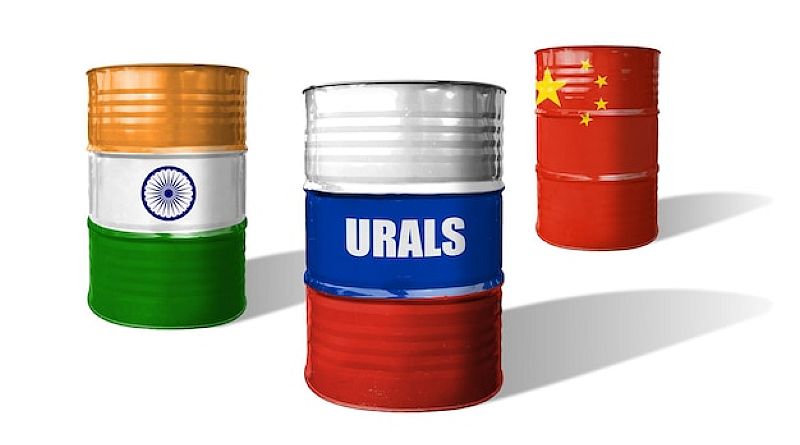
2. Russian flagship oil Urals sharply depreciated in the Chinese market after the withdrawal of Indian buyers.
– In January, Urals for delivery to China traded at a discount of about $10 per barrel to Brent, whereas in August, Russia sold this oil at a premium of about $1. Thus, over five months, sales conditions worsened nearly tenfold.
– The sharp drop in demand from India was the key factor. Russian oil deliveries to the world’s third-largest importer in December fell to the lowest level in more than three years amid US sanctions against Russian companies and increasing political risks.
– As a result, competition for Urals cargoes weakened, and prices plummeted. Logistical pressures also intensified: Urals is shipped from European ports of Russia, making deliveries to China longer and more expensive compared to the Far Eastern ESPO grade. This further erodes the income of Russian exporters.
– Accumulation of unsold oil becomes another symptom of the crisis. According to Kpler, Urals volumes stored on tankers exceeded 13 million barrels — the highest level in at least a decade. Part of these stocks is concentrated near Asia, effectively forcing Russia to sell oil at substantial discounts.
– Although Urals imports to China have increased to about 400,000 barrels per day since the beginning of the year, record volumes are achieved not through demand but through price dumping.
– In fact, Russia is compensating for the loss of the Indian market by selling oil to China on increasingly unfavorable financial terms, undermining foreign exchange earnings and budget revenues.
3. Import substitution in Russian shipbuilding has effectively failed, and the industry itself is rapidly losing its workforce.
– Russian shipyards remain critically dependent on foreign software, disrupting the shift to modern production technologies.
– The digital transformation of shipbuilding is progressing slowly and faces systemic issues. Additionally, authorities acknowledge a severe shortage of IT specialists: the industry lacks personnel for implementing digital solutions at all stages — from design to ship disposal.
– According to Russian authorities, young people are avoiding the shipbuilding industry due to low salaries and harsh working conditions, preferring the commercial IT sector.
– Thus, even several years after the launch of “import substitution” programs, Russian shipbuilding remains technologically dependent on the West and unable to compete for talent, casting doubt on both civilian and military plans of the Kremlin in this area.
4. Another tanker from Russia’s “shadow fleet” is stuck in the Mediterranean, highlighting growing risks and the degradation of logistics for oil exports from Russia.
– The sanctioned vessel Progress, with a cargo of about 730 thousand barrels of Urals, lost control near the Algerian coast: the tanker abruptly deviated from shipping routes, its status changed to “not under command,” and its speed dropped to ~1 knot.
– The vessel was heading to the Suez Canal from European ports of Russia, which already reduces margin due to long logistics. The manager is St. Petersburg’s Legacy Marine LLC; the tanker is sanctioned by the EU and the UK, is 19 years old, has changed its name twice, and recently moved under the Russian flag and to the Russian registry.
– Signs — deviation from routes, speed drop — indicate a mechanical malfunction (engine or steering failure). The incident occurs amid heightened scrutiny: over 600 vessels are already on “blacklists,” and this week another tanker with Russian oil on a similar route was detained by French and allied naval forces.
– A series of failures demonstrates that the “shadow fleet” is becoming an increasingly costly and risky asset for the Kremlin, increasing losses, environmental risks, and the likelihood of supply disruptions.
5. Russian LNG exports to China have sharply increased, but without revenue growth.
– In 2025, China imported 9.8 million tons of Russian LNG — an 18% increase over the year and 51 times more than in 2015. This is a historical high for deliveries.
– However, there was almost no financial effect: revenue amounted to about $5 billion, practically unchanged compared to 2024 due to falling prices. Only in December did volumes more than double, and revenues increased by approximately only 50%.
– China has effectively become a key and almost exclusive market for Russian LNG amid the loss of access to Europe, increasing Russia’s dependence on one sales direction and making exports vulnerable to price pressure from China.
6. Russia has sharply increased gold shipments to China.
– In 2025, physical deliveries of Russian gold to China increased ninefold to 25.3 tons, which corresponds to a growth of approximately 800%. In monetary terms, exports rose even more sharply, by 14.6 times, to $3.29 billion. In both volume and value, these are the highest figures in the history of gold trading between Russia and China.
– In December 2025 alone, Russia shipped 10 tons of gold to China worth $1.35 billion—another record emphasizing the accelerated nature of the sales.
– Despite the explosive growth in exports, Russia remains a secondary player in the Chinese gold market. By the end of the year, it ranked only seventh among suppliers, significantly trailing leading exporters. China receives much larger volumes of gold from Switzerland, Canada, South Africa, Australia, and Kyrgyzstan.
– As recently as 2024, Russia was only in the 11th position, and the current rise in ranking rather reflects a forced sale of reserves than an enhancement of competitive positions.
– The increase in gold supplies to China fits into a general trend: the Kremlin is increasingly converting material reserves into foreign currency revenue, compensating for limited access to Western financial markets and growing pressure on the war budget.
