
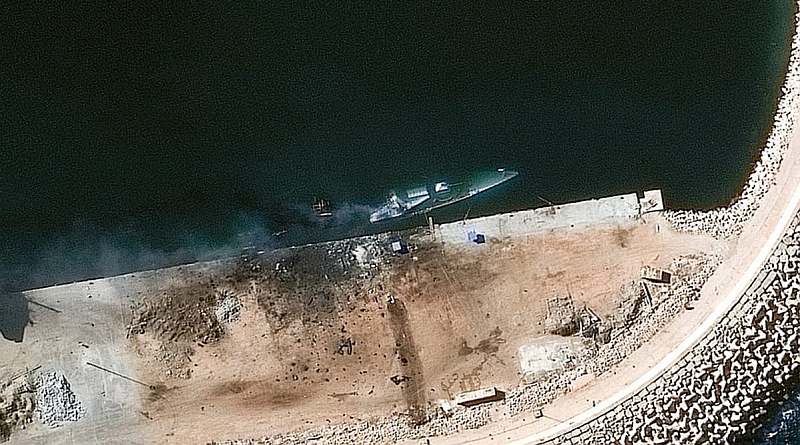

On the night of November 22, 2026, off the coast of Libya near the port of Benghazi, Ukrainian naval drones sank the Russian missile corvette “Mercury,” which had a Ka-27 helicopter on board, and also struck the MV ANGARA freighter, which was carrying weapons.
Satellite images released after the strike captured smoke and the aftermath of a fire in the harbor, where Russian ships regularly found cover for logistics and military cargo escorts. This nighttime raid eloquently demonstrated that the Russian aggressor can no longer feel safe anywhere, as the geography of deterrence expands along with the routes supplying the Russian army.
Article 51 of the UN Charter grants Ukraine the inalienable right to self-defense in international waters, and international law does not limit the response to aggression solely to the front line or the territory of the state under attack.
Meanwhile, Kyiv consistently emphasizes that it does not drag other states into war and does not extend military actions onto the territory of third countries, as strikes are exclusively aimed at military targets and the aggressor’s logistics chains.
Combat ships, vessels with military equipment, and tankers of the shadow fleet that fuel the Russian war machine are legitimate targets, and the responsibility for the threat near the Libyan coast lies with the Russian ships and arms carriers that regularly arrive there.
Moscow has for years used Libyan territory as a base for destabilizing and aggressive actions against Libya’s legitimate government, as well as against other African states, relying on the fragmentation of local political elites after the fall of Colonel Gaddafi’s regime.
The Kremlin deliberately fosters the division of Libya, supporting a parallel power center to the legitimate government in Eastern Libya and turning port infrastructure into a supply link for its operations in the region. Therefore, all responsibility for the destabilization of the Mediterranean falls on Russia, which substitutes diplomacy with military presence and undermines regional security.
The official reaction from Kyiv is extremely clear and precise, although sharp statements about violations of sovereignty and demands for explanations have been voiced in Tripoli. Ukraine’s Ministry of Foreign Affairs noted that the corvette “Mercury” sunk in Benghazi was a legitimate military target, and Ukraine sincerely respects Libya’s sovereignty and looks forward to developing bilateral cooperation.
Questions about risks to port infrastructure should be addressed to Moscow, which involves foreign harbors in its military transports, thereby threatening the peace of the entire Mediterranean.
The events off Benghazi cement a new dimension of the protracted war, where Moscow’s attempts to find refuge in remote waters fail in the face of the technological adaptation of Ukrainian armed forces.
As the Kremlin tries to maintain influence in Africa through arms supplies and military ships, pressure on its maritime communications becomes a logical continuation of defense, meaning the previous impunity for Russian expansion becomes a thing of the past.

