

Information on the current losses of the Russian Federation due to sanctions as of 11/24/2026.
1. Since the start of the full-scale war, over $400 billion of private capital has been withdrawn from Russia.
– According to the Stockholm Institute of Transition Economics (SITE) at the Stockholm School of Economics, from the end of 2021 to mid-2026, the net outflow of private capital from Russia amounted to $406 billion. Overall, since mid-2008, about $1.3 trillion of private capital has been moved abroad.
– The outflow sharply intensified after the start of the full-scale invasion: in just four quarters up to the end of 2022, $219 billion was withdrawn from Russia — the largest annual figure in the entire research period. After 2023, capital inflow almost ceased, while the outflow through portfolio investments, loans, and other financial operations continued at about $10 billion per quarter.
– Despite sanctions and restrictions on Russian companies’ and banks’ access to the Western financial system, it has not been possible to stop the withdrawal of funds. At the same time, the directions of capital flow have changed: private Russian deposits in Western banks have significantly decreased, and a significant portion of funds that are still reflected in international banking statistics are frozen central bank reserves of Russia.
– Researchers estimate that about $1 trillion of capital withdrawn from Russia cannot be traced through available international statistics. This is related, among other things, to Russia’s reduction in the publication of data on the placement of foreign assets and the incompleteness of international reporting.
– The cumulative outflow of capital weakens Russia’s domestic investment base and reduces resources for economic development. At the same time, a significant portion of the withdrawn funds remains opaque regarding ultimate ownership and directions of use.
2. Russian sunflower oil exports may fall by 15% and become the worst in four seasons.
– Export of sunflower oil from Russia in the 2026/27 season may decrease to 3.9 million tons—by 700 thousand tons, or 15.2%, compared to the previous season. This will be the lowest figure since the 2022/23 season. The export season runs from September 1, 2026, to August 31, 2027.
– The export forecast has already been reduced by 26.4% compared to the August estimate. Russian producers are facing serious logistical problems: southern ports, through which a significant portion of agricultural exports traditionally pass, are closed, and reorienting supplies to alternative routes is complicated and still not completed.
– The disruption of maritime logistics threatens Russian exporters with the loss of external markets, additional costs, and accumulation of products within the country. Under such conditions, it will be more difficult for producers to sell the harvest and maintain profitability, and the Russian oil industry risks ending the season with the worst results in recent years.
3. The European Commission has presented the 22nd package of sanctions against Russia, aimed at increasing pressure on maritime transportation of Russian oil, tanker insurance, and servicing of energy infrastructure.
– Specifically, Brussels proposes adding over 70 shadow fleet vessels to the sanctions list and banning tankers insured by Russian companies. The latter proposal could become one of the most serious restrictions on Russian oil logistics.
– Unlike sanctions against specific vessels, the new mechanism potentially allows for restricting the use of tankers based on insurance criteria, even if they are not on sanctions lists. This could significantly narrow Russia’s ability to attract vessels for oil exports and use its own insurance structures to ensure transportation.
– The European Commission also proposes banning European companies from participating in the construction, operation, and repair of Russian energy infrastructure, including refineries. Thus, the restrictions will affect not only raw material exports but also the technical maintenance of enterprises on which Russia’s fuel and energy complex depends.
– The financial block of the package provides for disconnecting about 60 more Russian banks from the international SWIFT system, as well as restrictions on cryptocurrency platforms and payment networks used to bypass sanctions. This is intended to complicate international settlements for Russian energy resources and the work of financial intermediaries.
– The new proposals complement the already implemented restrictions against Russian oil infrastructure. Specifically, previous EU sanctions affected 12 Russian refineries and an oil terminal in St. Petersburg.
– The sanction pressure gradually covers all key links of Russian oil exports—from processing and storage to transportation, insurance, and financial services.
4. The European Commission has proposed radically limiting the issuance of tourist Schengen visas to Russian citizens.
– The relevant proposals foresee the actual cessation of issuing tourist visas, which are planned to be issued only in specific documented cases. According to the EC document, a complete ban on entry into the Schengen area is proposed for Russians who participated in military actions against Ukraine, as well as Russian athletes. Last year, Russian citizens received about 680,000 Schengen visas.
– The European Commission recommends maximally tightening checks on Russian applicants, in particular, investigating their ties to state structures and sanctioned individuals, as well as support for the Putin regime. At the EU external borders, it is proposed to systematically interview Russian citizens and take fingerprints.
– EU countries are also advised to refuse to accept visa applications from Russians through embassies and consulates in third countries, including Georgia, Armenia, Kazakhstan, Serbia, Turkey, and the UAE. Additionally, it is proposed to stop issuing multiple-entry visas with long validity periods and to increase the processing time for applications to the maximum allowed 45 days.
– Another recommendation is to issue Russians territorial-limited visas, which would allow them to stay only in the country that issued the document, without the possibility of free movement in the Schengen area. When assessing the financial capacity of applicants, EU countries must take into account that Russian bank cards do not work in the Union’s territory.
– “Russian citizens continue to pose a serious security threat to the European Union, including through hybrid threats, disinformation, sabotage, espionage, and other hostile actions,” emphasizes the European Commission.
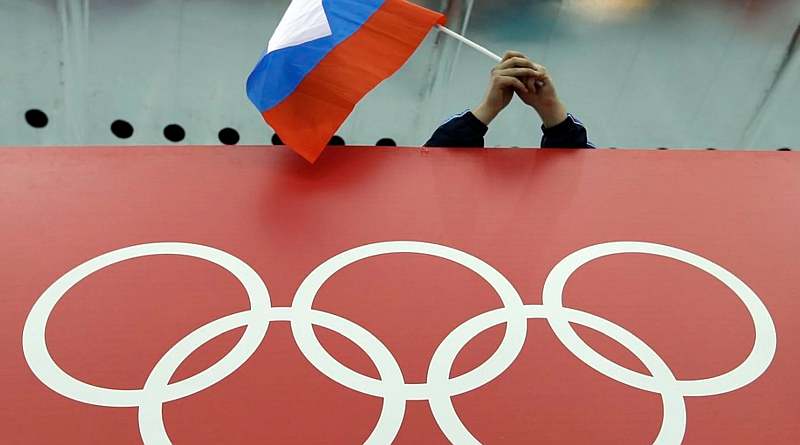
5. Russia’s return to international sports faces increasing resistance in Europe.
– Russia’s attempts to return to international sports competitions after being excluded due to the war against Ukraine are encountering resistance from European countries and threaten to complicate the selection for the 2028 Olympic Games in Los Angeles.
– Despite recommendations from the International Olympic Committee (IOC) regarding the admission of Russian athletes, several European states and sports organizations oppose their return. Norway, Sweden, and Poland have refused visas to Russians; some teams are boycotting matches, and World Athletics continues to maintain restrictions. The opposition has already moved to the Court of Arbitration for Sport (CAS). The Russian Olympic Committee has challenged the conditions for athletes’ participation in the Winter European Youth Olympic Festival, which will take place in Romania in February. Russians were offered to perform under the emblem of the national Olympic committee, without a flag or anthem. A decision is expected no later than December 15.
– Additional difficulties arise around the 2027 World Ice Hockey Championship in Germany. The participation of the Russian team will require enhanced security measures, increasing the cost of organizing the tournament.
– Russia intends to use all legal mechanisms to return its athletes. The IOC states that access to international competitions should not depend on citizenship, but decisions regarding participation in non-Olympic tournaments remain up to international federations.
6. China and India will purchase record volumes of Russian oil in 2026, but demand will begin to decline.
– China and India may set a record for importing Russian oil in 2026, taking advantage of supply shortages from the Middle East due to the war with Iran, as well as temporary easing of American sanctions.
– However, by 2027, purchases may decrease due to the restoration of supplies from the Persian Gulf and rising prices for Russian crude. According to Vortexa Analytics, from January to mid-November, sea shipments of Russian oil to China and India averaged 3.4 million barrels per day. This is 530,000 barrels per day more than the same period last year.
– These two countries account for more than 80% of Russia’s seaborne crude oil exports. The increase in shipments allowed Moscow to boost oil revenues despite Ukrainian strikes on oil refining infrastructure, which disabled a significant portion of Russian refining capacity and forced companies to increase crude oil exports.
– An additional factor was the rise in Brent prices by almost a third since the beginning of the war in the Middle East.
– In January-October, China increased its import of Russian oil by 17% to 2.34 million barrels per day. Its share in the country’s total oil imports reached approximately 24%, and the cost of purchases amounted to $59.6 billion. This occurred despite a general decrease in China’s oil imports by 15% due to reduced supplies from the Middle East.
– Meanwhile, further increases in Russian crude purchases may become a problem for Moscow. Estimates suggest that Beijing is not interested in excessive dependence on a single supplier. Additionally, Russian oil is losing price attractiveness: its premiums to Brent have increased, and certain ESPO grade shipments for eastern China are trading with almost a $30 per barrel premium. This deprives Chinese independent refineries, which traditionally bought Russian oil at significant discounts, of the economic motivation to increase imports.
– By early November, India imported an average of 1.99 million barrels of Russian oil per day — 250,000 barrels more than a year earlier, according to Kpler. Deliveries for January-October increased by approximately 10% to 1.87 million barrels per day, accounting for about 38% of the country’s total oil imports.
– It is estimated that the average figure for the entire year 2026 will be about 1.9 million barrels per day. However, in 2027, India may also reduce purchases if Middle Eastern supplies return to normal levels. Indian refineries are expected to again actively purchase Middle Eastern oil, and the volume of Russian crude imports will mainly depend on its price competitiveness.
– So far, record purchases by China and India support Russian oil exports and compensate for losses in other markets. However, this dependence on two buyers makes Moscow vulnerable: the recovery of Middle Eastern supplies and the disappearance of price discounts could deprive Russia of a significant portion of current demand.
7. A Russian military ship is suspected of jamming GPS signals for 140 flights near Great Britain.
– A Russian warship escorting a convoy of cargo ships is suspected of jamming the satellite navigation of commercial aircraft over the North Sea. The incident occurred on November 9, approximately 190 miles from the English coast. The interference lasted about 20 minutes and affected around 140 flights, including British Airways, easyJet, and Ryanair.
– Affected flights included those from Edinburgh, Manchester, and London’s Heathrow. About 40 aircraft were in British airspace or nearby. Seven flights reporting a loss of GPS signal were redirected to Amsterdam’s Schiphol Airport.
– According to the aviation intelligence group Hexbird, the source of the interference might have been on the Russian warship escorting three sanctioned cargo ships — Lady R, Lady D, and Maia-1. These ships were previously suspected of transporting weapons between Russia and North Korea for use in the war against Ukraine.
– The interference might have been a response to NATO monitoring the Russian convoy, which was being tracked while passing through the North Sea. The incident may indicate an expansion of Russian electronic warfare operations near the UK.
– Powerful equipment on the military platform created interference over a large area, risking the navigation of civilian aviation and potentially other systems dependent on GPS.
Photo: Suspilne
