

The official decision of the Pakistani government to introduce a state of emergency and deploy regular army units in the border province of Khyber Pakhtunkhwa marks a critical turning point in the political landscape of South Asia.
The federal government in Islamabad justifies such radical steps by the inability of local regional authorities to counter the growing terrorist threat. The involvement of armed forces to maintain order, protect civilians, and key state facilities indicates the exhaustion of standard police management mechanisms.
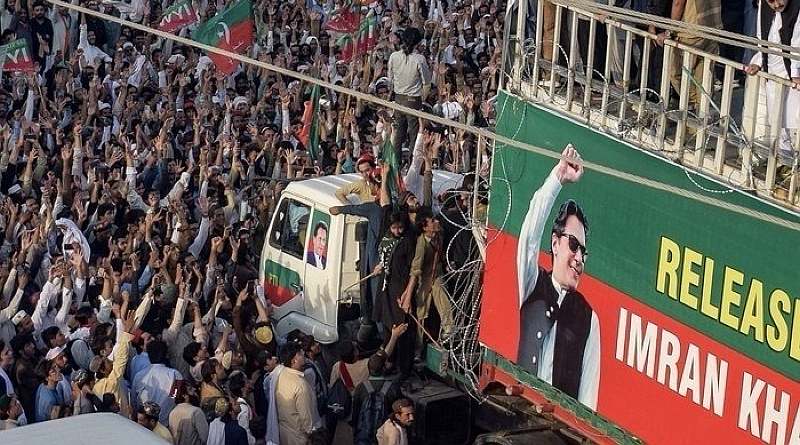
In reality, the underlying cause of internal division is the sharp confrontation between the central leadership and the opposition party “Tehreek-e-Insaf,” which holds power in this region. Supporters of the convicted former Prime Minister Imran Khan are conducting a massive protest march aimed at the capital, creating enormous pressure on the current government led by Shahbaz Sharif of the Pakistan Muslim League. Participants plan to make several stops along the way before heading to the capital. The march is led by the head of the province, Sohail Afridi.
The deployment of troops in the province is perceived as an extreme measure to neutralize the opposition stronghold, as the regional administration is directly sabotaging the central directives.
The situation is significantly complicated by foreign policy factors related to the resumption of intense skirmishes on the Afghan-Pakistani border. Border instability facilitates the unhindered infiltration of militants from radical groups, turning Khyber Pakhtunkhwa into a zone of constant military risk.
Federal structures are concerned about the formation of a link between opposition protest movements and extremist cells, intending to exploit internal chaos to undermine the state’s sovereignty.
The local consequences of the crisis manifest in the paralysis of civilian administration, restriction of basic freedoms, and blockage of transport routes. The region’s population faces direct security threats due to both armed group actions and possible harsh crackdowns by regular troops. The introduction of a state of emergency effectively abolishes local self-government, transferring all control levers to the security structures.
The global scale of the crisis is due to Islamabad’s special status as a nuclear arsenal holder, whose internal destabilization causes serious concern to the international community.
The escalation of the conflict in the border areas can destabilize neighboring Afghanistan and negatively impact transit and energy projects throughout Central and South Asia, adversely affecting the economic interests of Moscow and Beijing. International observers emphasize that further deepening of the confrontation between the army and opposition supporters threatens to escalate local clashes into a systemic crisis of statehood.
The development of events in the province of Khyber Pakhtunkhwa will be a key indicator of the ability of the Pakistani political system to maintain stability in the face of combined external and internal challenges.
