

Information on the current losses of the Russian Federation due to sanctions as of 20.03.2026.
1. For the fifth year, the Russian Federation cannot unblock tens of billions in rupees.
– Russia continues to face the issue of “stuck” funds in India: significant volumes of rupees accumulated after a sharp increase in oil supplies remain effectively frozen. It is estimated that tens of billions of dollars’ equivalent cannot be freely used outside of India.
– The Reserve Bank of India is currently looking for options to bring these funds into the domestic economy — particularly through investments by Russian companies within the country.
– However, this is only a partial solution that does not solve the key problem: the rupee is not a freely convertible currency. After 2022, India sharply increased purchases of Russian oil at a large discount, and part of the settlements switched to the national currency. This led to the accumulation of substantial sums that Russia cannot convert or withdraw.
– Previously, it was estimated that around $39 billion is “stuck”. Even with limited permissions to invest in the Indian market, these funds remain illiquid and tied to a single jurisdiction.
– In summary, the situation demonstrates deep financial vulnerability: Russia is forced to sell resources at a discount and receive payment in a currency that cannot be fully utilized. This is essentially a hidden blocking of export revenue and another channel of loss for the Russian economy.
2. The condition of small and medium-sized businesses in Russia is deteriorating: in March, already 75% of companies reported a lack of profit for development.
– A month ago, it was 57%, indicating a sharp worsening of financial problems in the sector. According to monitoring by the Center for Strategic Research, the share of enterprises willing to invest in production expansion has basically collapsed — from 29% in February to just 8.3% in March.
– Instead, 17% of businesses choose not development but preservation of funds, placing them in bank deposits. The main reasons for stagnation cited by entrepreneurs are weak demand (42%), high cost of credit (33%), and rising expenses (14%). Under these conditions, about half of the companies are forced to restrain prices to maintain market positions, which further pressures their profitability.
– Structural problems are confirmed by statistics: in 2025, the share of own funds in capital investments reached almost 59% — the highest since 1997, indicating the actual inaccessibility of external financing.
– Meanwhile, investments in fixed capital have already decreased by 2.3% after growth in the previous year, and in 2026, a further decline of 0.5% is expected.
3. The Russian oil giant “Lukoil” ended 2025 with a significant financial failure: the company recorded a net loss of 1.06 trillion rubles against a profit of 851.5 billion rubles the previous year.
– The key factor was the de facto nullification of its foreign business. “Lukoil” completely wrote off its investment in Lukoil International GmbH, which accumulated its international assets.
– As a result of the loss of control and uncertainty regarding the future of these assets, the company recognized losses from disposal and impairment of 1.667 trillion rubles.
– The report states that due to dependence on decisions by the U.S. Office of Foreign Assets Control (OFAC), the company cannot assess the prospects for sale or transfer of these assets. Against this backdrop, their value was effectively reduced to zero.
– An additional negative signal was the drop in revenue: over the year it decreased from 4.4 trillion to 3.8 trillion rubles.
– At the same time, the foreign segment has been officially reclassified as “discontinued operations,” meaning the company’s de facto exit from most international markets.
– One of Russia’s key oil exporters is losing its global presence and incurring massive financial losses due to sanction pressures and restrictions on managing assets abroad.
4. The Russian financial system is once again facing a yuan deficit – a key currency for foreign trade.
– Overnight yuan lending rates on the Moscow Exchange soared to 44% per annum — an unprecedented level indicating an acute liquidity shortage. At the beginning of the year, they hovered near zero, but by March, the market had effectively “overheated.”
– The reasons are systemic: Drop in export revenues due to lower oil prices at the end of 2025 and the Ministry of Finance’s refusal to sell foreign currency from the National Wealth Fund. As a result, the inflow of yuan has decreased, and there are virtually no alternative sources.
– The situation is complicated by dependence on China: Unlike the dollar or euro, the yuan is not freely available. Chinese banks are not rushing to lend to Russian companies, and currency inflows are limited to trade flows.
– The yuan deficit is already hitting the ruble: the currency’s rate has risen by 7% in a few days, reaching a year-high, while the dollar and euro have also sharply strengthened. This exacerbates inflationary pressure and undermines financial stability. The Russian economy finds itself in a situation where even a “friendly” currency becomes scarce.
– This underscores the limitations of the sanction circumvention maneuver and the growing dependence on external decisions that Moscow does not control.
5. Russia earned over 7 billion euros in two weeks thanks to the war in Iran.
– Thanks to the easing of U.S. sanctions and rising energy prices, the Kremlin managed to earn about 7.7 billion euros in the first half of March. This is reported by Euronews, citing the Centre for Research on Energy and Clean Air (CREA).
– From March 1 to 15, Russia was earning about 513 million euros a day from the sale of oil, gas, and coal. This is 8.7% higher than the figures for February.
– The two main reasons are rising oil prices and the temporary easing of U.S. sanctions on Russian oil due to the war in the Middle East.
6. Russian oil may regain lost positions in the Indian market after a sharp drop in imports at the beginning of the year.
– In February, Russia lost its status as the largest oil supplier to India, overtaken by Iraq. Russian oil imports fell by 32% year-on-year, to approximately 1 million barrels per day, nearly half the peak levels of mid-2025.
– This resulted from both sanctions pressure and India’s shift towards Middle Eastern suppliers. Notably, imports from Iraq increased to 1.18 million barrels per day (a two-year high), and from Saudi Arabia to nearly 998,000 barrels per day (the highest level since 2021). The share of Middle Eastern oil in India’s imports reached 59%.
– However, the situation began to change at the end of February amid escalating conflict around Iran and supply disruptions through the Strait of Hormuz.
– An additional factor was the temporary easing of U.S. sanctions on Russian oil for specific routes. As a result, by March, Russian oil imports recovered to approximately 1.8 million barrels per day and may increase to 2-2.2 million barrels.
– Despite all restrictions, Russian oil remains a crucial element of India’s energy strategy, primarily due to discounts.
– At the same time, this dynamic highlights the instability of Russia’s position: its share in key markets depends not on long-term contracts but on crisis situations, sanction easements, and disruptions in global logistics. This makes Russian exports more vulnerable and less predictable in the medium term.
7. The US might allow Iranian oil on the market to curb prices.
– Washington is considering the temporary allowance of Iranian oil already at sea to increase supply and stabilize prices. Estimates suggest about 140 million barrels—roughly equivalent to two weeks of global consumption.
– The decision is related to a market shortage following escalation in the Middle East and the blockage of the Strait of Hormuz, creating a supply gap of 10-14 million barrels per day.
– Meanwhile, significant volumes of Russian oil—about 130 million barrels—remain on tankers at sea. Most of these supplies were previously oriented towards China, but due to unstable demand and logistical constraints, shipments are increasingly being redirected or delayed.
– This increases costs and reduces export efficiency. The US attempts to increase supply are crisis-related and do not signify a revision of sanction policy.
– At the same time, the situation with Russian oil demonstrates structural problems: dependence on a limited circle of buyers, unstable routes, and accumulation of unsold volumes.
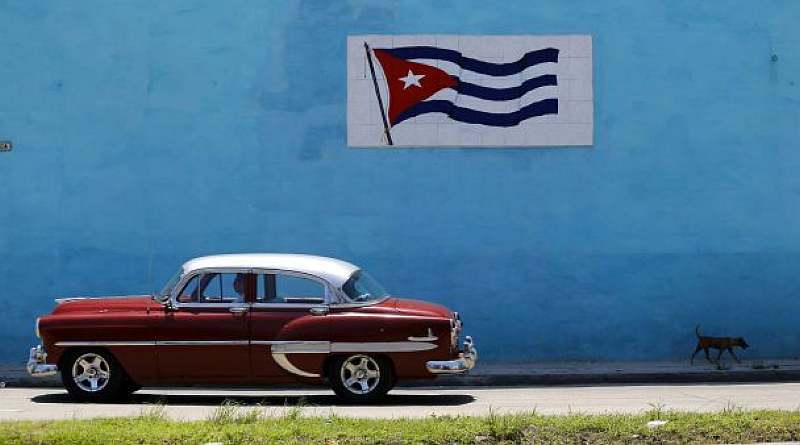
8. The US has strengthened restrictions on the export of Russian oil, specifically banning its supply to Cuba even despite partial sanction easements for other countries.
– The U.S. Treasury Department’s Office of Foreign Assets Control (OFAC) has clarified a recent license allowing the purchase of Russian oil loaded onto tankers by March 12, for a limited period.
– The exemption explicitly prohibits shipments to Cuba, as well as to Iran, North Korea, and the temporarily occupied territories of Ukraine, including Crimea.
– Washington effectively blocks Moscow’s attempts to support Cuba’s energy sector, where Russia has already sent tankers with oil and gas. This decision fits into the broader U.S. policy of increasing pressure on both Russia and its political allies.
– Despite a formal relaxation for part of the market, selective restrictions demonstrate that Russian energy exports remain under strict control and may be directed to only a limited number of destinations. This further complicates logistics for Russia’s supplies and reduces opportunities to circumvent sanctions.
9. France intercepted the oil tanker Deyna in the Mediterranean Sea, which was heading from Murmansk and suspected of sanction evasion.
– The operation was conducted in the western Mediterranean with the involvement of the French navy and British allies. The vessel was flying the flag of Mozambique and, according to preliminary data, may have used a so-called “flag of convenience” to disguise its true origin.
– After interception, the tanker was escorted to an anchorage for further inspection. The basis for stopping it was Article 110 of the UN Convention on the Law of the Sea (“right of visit”), which allows the inspection of ships on the high seas under suspicion of violations, including illegal activities or concealing identity.
– French President Emmanuel Macron stated that such vessels are part of a sanctions evasion scheme and effectively finance Russia’s war against Ukraine. According to him, France will not allow maritime routes to support Russia’s military machine. This is the second incident since the beginning of the year: in January, French forces also stopped the tanker Grinch near Spain and Morocco.
– Additionally, earlier in March, France participated in a joint operation with Belgium against ships related to Russian oil shipments.
