
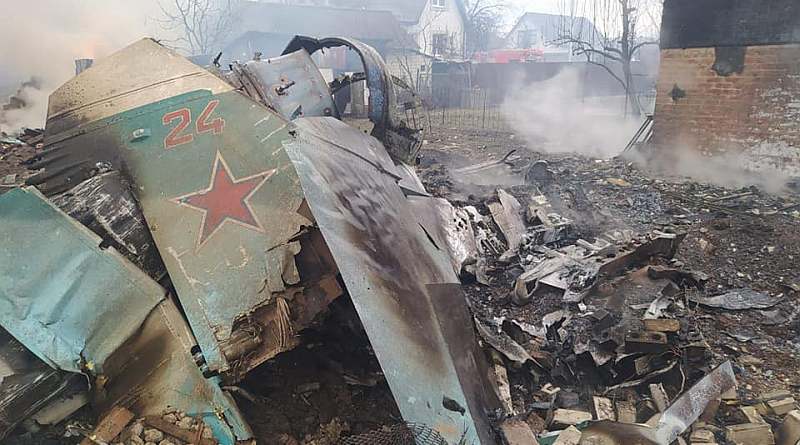
Alexander Kovalenko / Obozrevatel
On the night of March 14, Russian occupiers carried out another massive combined attack on Ukraine. Russia continues systematic terror against the rear of Ukraine, destroying civilian infrastructure and killing citizens of the country in the form of genocide. However, even these devastating strikes demonstrate the crisis into which the strategic aviation of the Russian Federation is sinking, which has played the role of no more than a tactical terrorist since 2022.
First of all, I want to draw attention to the fact that Russia’s strategic aviation, inherited from the USSR, specifically the Tu-95MS, Tu-22M3, and Tu-160 aircraft – is the most important component of the nuclear triad, its main aviation wing.
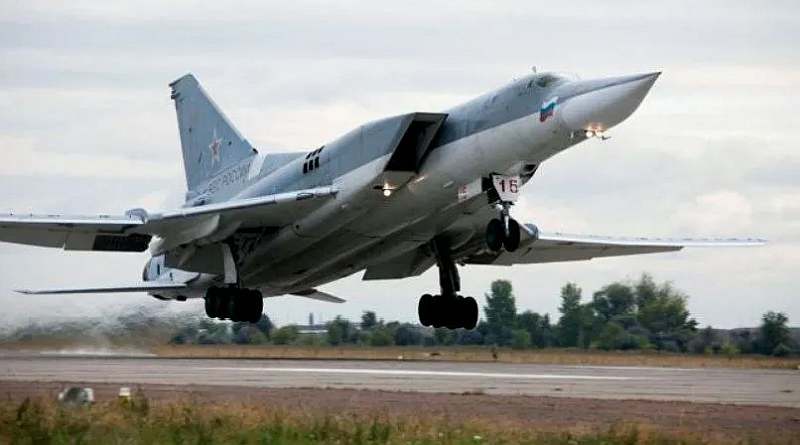
These strategic missile-carrying bombers were, according to the plans of strategists from the Soviet era, supposed to play an essential, possibly decisive, role during a potential Third World War – for delivering nuclear warheads to the territory of a hypothetical enemy.
The functionality of this strategic trio is precisely for nuclear strikes on enemy territories, as well as the destruction of carrier strike groups in open oceans and sea areas. Strategic aviation is not designed for tactical, frontline missions, but as the “last argument” tool that protects or plunges the world into nuclear hell.
In turn, Russia over more than four years since the beginning of the full-scale invasion of Ukraine, has not only transformed this strategically significant component into a means for solving tactical tasks, but has also reduced its status to an instrument of terror against civilian populations.
In fact, the once formidable and intimidating Tu-95MS, Tu-160, and Tu-22M3 aircraft have become, in their tasks, similar to “suicide vehicles.” But most importantly, the constant use of this aviation for terrorizing the civilian population of Ukraine has led to increased wear on these already very old aircraft, and consequently, to the loss of their resource.
Essentially, the non-targeted use of Russia’s aviation wing as part of its nuclear triad has led to the rapid wear of each operational aircraft, as well as the degradation of the component itself. Ukraine’s successful strikes on the airbases where these aircraft are stationed during the full-scale war and Russia’s inability to protect them have altogether exhausted the strategic aviation wing.
Today, we will discuss the irreversible crisis, degradation, and disappearance of Russian strategic aviation.
Exhausted Giants
First and foremost, it is important to note that for a long time now, Russian strategic bomber aircraft Tu-95MS, which are the main carriers of X-101/555/55 missiles, as well as the Tu-22M3, the main carriers of X-22/32, do not fire the full complement they are capable of carrying according to specifications.
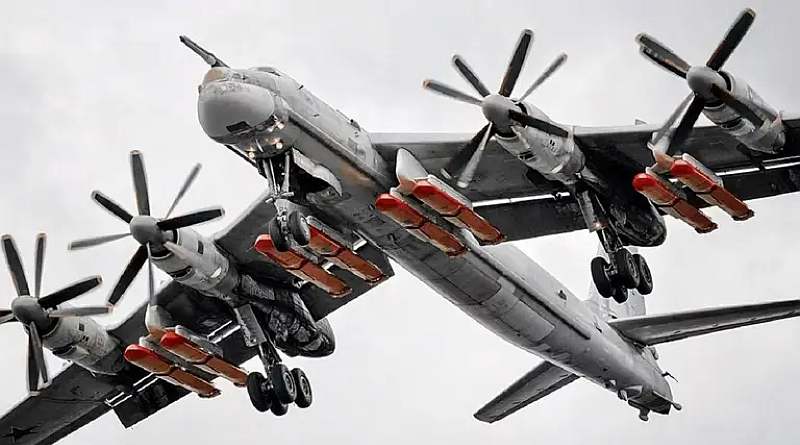
For instance, the Tu-95MS can carry eight X-101/555/55 cruise missiles, but rarely has it deployed more than four from a single aircraft in recent years. Meanwhile, the Tu-22M3, capable of carrying three X-22/32 missiles, almost always launches a single missile.
In several instances, considerations about the distances to launching positions, fuel consumption, and maximum payload have been factors. However, limited payloads on the Tu-95MS have become increasingly common from the end of 2022-2023, when the aircraft were stationed relatively close to the Ukrainian border.
Already in 2022, it was noted that almost all Russian strategic aviation aircraft – the Tu-95MS, Tu-160, and Tu-22M3 – have exhausted their service life, which critically affects their ability to carry full loads without risks to the aircraft’s major components and airframe overall.
For example, with a full combat load of 20,850 kilograms and each X-101 missile weighing 2,425 kg, the Tu-95MS can indeed carry eight missiles of this type – according even to the number of mounts (pylons) under the wings. But the reality is somewhat harsher and discordant.
The initial design load capacity of the Tu-95 was 5 tons, and its characteristics were later modified not by revising the entire design, but through modernization and local changes in the aircraft’s architecture.
In other words, any load exceeding the basic calculated capacity exerts a negative impact on its airframe, power units, and other components, accelerating wear. And for an aircraft that had exhausted its service life 10-20 years ago, this is downright suicidal.
Since 2022, these aircraft have been subjected to unprecedented pressure. Carrying out terrorist missions, the aircraft are depleting their mechanical resources and pushing wear indicators to an irreversibly critical level!
On the other hand, resource wear and tear is not a problem when there is production of the relevant equipment, as well as the possibility of maintenance, repair, and modernization. Especially since Russian propaganda has repeatedly highlighted the release of new Tu-22M3 and Tu-160.
At first glance – yes, but only at first. In reality, Russia lacks the production of new strategic aviation, and it is unlikely to ever be revived.
Strategic Farce
First of all, it should be understood that in Russia today there is a complete absence of production for Tu-95 aircraft, and its resumption is not feasible.
As for the Tu-22M3 and Tu-160, for years Russia has cultivated the myth that production has been revived at the Kazan Aviation Plant named after Gorbunov. In reality, what is happening there is the assembly of “leftovers,” inherited from Soviet times. For example, it is known that at least four “leftovers” – assembled but empty fuselages – were stored at the plant for the Tu-22M3.
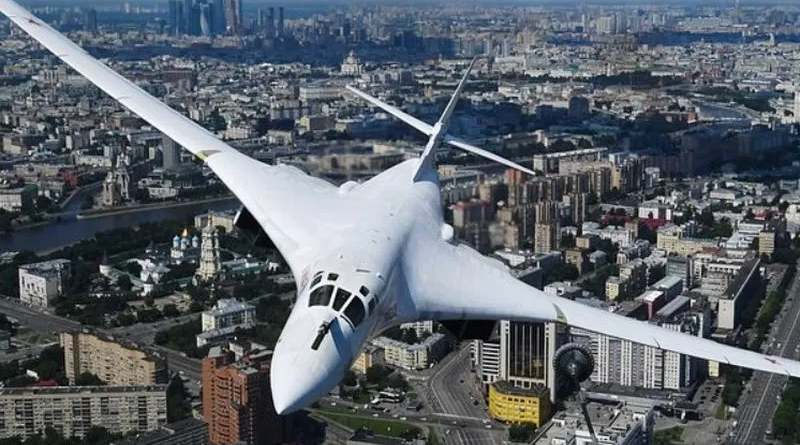
Regarding the Tu-160, there is no exact information, but it is known that the first Tu-160M №2-02, which took its trial flight in 2020 (lasting 34 minutes at an altitude of 1,500 meters) –– was an assembled leftover, already 31 years old at that time… At the same time, the aircraft was not fully assembled, only configured enough for a demonstrative flight. It could not fully perform combat missions.
Thus, it should be noted that Russia lacks full production of Tu-22M3 and Tu-160, and there is only the assembly of “leftovers” from Soviet times. Meanwhile, there is absolutely no production or even assembly of the Tu-95MS.
This all leads to the fact that any loss of such an aircraft, or even damage to it, is an irreparable loss.
Hunting for Strategists
Over more than four years of the full-scale invasion of Ukraine, Russian occupiers have lost dozens of operable and repairable units of strategic aviation.
Since 2022, the Ukrainian Defense Forces have attempted to destroy the strategic aviation of the Russian occupying forces, gradually moving towards their goal and scaling the irreparable damage.
It all started small, with pinpoint individual strikes: on “Engels” air base on December 5, 2022, where two Russian Tu-95MS suffered critical damage, as well as “Dyagilevo” airfield, where a Tu-22M3 was damaged.
The peak of the hunt for Russian strategists was the operation of the Security Service of Ukraine “Web” (June 1, 2025). Its results are still debated, but according to statements from the SBU, 41 aircraft of various types and purposes were destroyed and damaged, including 15 Tu-95MS, 12 Tu-22M3, and one Tu-160.
According to verified data, during the full-scale invasion of Ukraine, Russian strategic aviation lost ten Tu-95MS, eleven Tu-22M3, and one Tu-160, which according to the ratio of verified information to real 2-2.5 fully confirms Russia’s real losses, which can be described with just one word – critical.
Conclusions
On the night of March 14, Russian occupiers used Kh-101 missiles for a strike on Ukraine along with the Tu-95MS and also the extremely energy- and resource-intensive unique Tu-160. This simultaneously indicates that for the launch of 24 cruise missiles, the Russian Armed Forces took to the sky not just three aircraft, which with a load of 8 missiles could fully accomplish these tasks, but also an additional three Tu-95, as well as three Tu-160.
This is a vivid example of the degradation of Russian strategic aviation, where it cannot perform its full function, which was established for it back in the days of the USSR. Even such unique aircraft as the Tu-160, in Putin’s manic vision, must play the role of “shahid-mobile”, because the Tu-95MS cannot cope not only with the combat load but also with the number of combat-ready units.
You cannot launch 24 missiles even with six Tu-95MS, because… Because there are no more combat-ready ones left. And this is a fact of numbers, not just speculation.
In the fifth year of the war, Russia has become so exhausted that the magnificent strategic aviation, which was supposed to be the “last argument of kings”, has not only become unsuitable due to its use in terror mode against the civilian population and massive wear, production degradation, but also because the opposing side has chosen it as the main target for destruction.
And they have achieved results in this that no other country in the world has allowed itself.
The material is published as part of a joint project between OBOZ.UA and the group “Informational Resistance”.
