

Information about the current losses of the Russian Federation due to sanctions as of 13.03.2026.
1. The largest Russian exporters sharply reduced foreign currency sales in the domestic market following the drop in oil prices.
– 29 of the largest Russian exporters reduced their net foreign currency sales (the difference between sales and purchases) by 31% to $3.5 billion in February, reported the Central Bank of the Russian Federation. This is the lowest level since the publication of statistics began in November 2022.
– The annual decline is even deeper: compared to February 2025, the sales volumes of currency by exporters on the exchange nearly tripled.
– The reduction in foreign exchange earnings resulted from the drop in Russian oil prices. According to the Russian Ministry of Economic Development, the average price of Urals was $39 per barrel in December and $41 in January, significantly lower than previous levels.
– The decline in oil revenues already affects export earnings. According to estimates by the International Energy Agency (IEA), in February, Russia’s revenues from the export of oil and oil products amounted to $9.5 billion, which is $1.5 billion less than in January and $4 billion less than a year ago.
– Besides the price drop, physical supply volumes also decreased. In February, the export of Russian oil and oil products was 6.6 million barrels per day, 850 thousand barrels less than in January, marking the lowest level since the beginning of 2022.
– The Central Bank of the Russian Federation does not disclose the list of the 29 largest exporters, but it includes the country’s key oil companies. The regulator explains the reduction in currency sales not only by cheaper oil but also by the increased share of settlements in rubles and the accumulation of foreign currency by companies to pay off debts.
2. Losses of Russian companies in 2025 approached 9 trillion rubles.
– The financial results of Russian businesses have sharply deteriorated against the backdrop of slowing economic growth. By the end of 2025, the combined losses of companies increased by 7.5% and reached 8.9 trillion rubles, according to Rosstat data.
– In total, 17,200 companies (27.1% of the total) ended the year with losses. At the same time, 46,400 enterprises made a profit, which collectively amounted to 35.9 trillion rubles, 1.3% less than the previous year. As a result, the consolidated financial result of Russian businesses (profit minus losses) fell by 3.9% to 27 trillion rubles.
– The greatest deterioration in financial performance was recorded in several key sectors of the economy. Specifically, the consolidated result decreased in the production of motor vehicles by 79.7%; in freight transportation by 77.4%; in coke production by 66.6%; in oil and gas extraction by 63.9%; in paper production by 61.5%.
– In several sectors, the share of loss-making companies exceeded the share of profitable ones. This concerns coal mining (66.1% loss-making enterprises), heat supply (63.8%), other land transport (58%), water supply, and waste management (51%), as well as oil and gas extraction (50.9%).
3. The US temporarily allowed the sale of Russian oil already in maritime transit to avoid sudden shocks to the global energy market.
– The US Department of the Treasury’s Office of Foreign Assets Control (OFAC) issued a license permitting the sale of Russian oil and oil products loaded onto tankers by March 12. The permit will be valid for one month — until April 12.
– US Treasury Secretary Scott Bessent explained that the decision aims to support the stability of the global energy market. According to him, the temporary easing of sanctions should not bring significant financial benefits to the Russian budget, as the main part of the state’s revenues is formed through taxes collected directly at the extraction stage.
– According to Russian estimates, the sanctions easing may affect about 100 million barrels of fuel already shipped on vessels. Meanwhile, according to Fox News, approximately 124 million barrels of Russian oil are in maritime transit.
– In Moscow, the decision is interpreted as a signal of possible further changes in sanctions policy. Dmitriev stated that amid escalating global energy situations, further easing of restrictions on Russian energy resources may become inevitable.
4. The war in the Middle East has sharply boosted Russia’s oil revenues, providing the Kremlin with additional billions of dollars amid a spike in global energy prices.
– The Russian budget receives approximately $110–160 million in additional revenues daily due to the rise in oil prices after the start of the war in Iran.
– In the first 12 days of the conflict, additional revenues are estimated at $1.3–1.9 billion, and by the end of March, they may reach $3.3–4.9 billion if the average oil price is $70–80 per barrel.
– However, these funds will reach the Russian budget with a delay: March tax revenues are calculated at February’s average price, which was about $45 per barrel, so the main effect is expected in April.
– After the US temporarily allowed India to increase purchases of Russian oil, Indian companies signed contracts for about 30 million barrels in just five days — the same amount bought throughout February.
– According to Kpler analysts, deliveries in March may rise to almost 2 million barrels per day, or about 60 million barrels for the month. If the crisis drags on, competition for Russian oil among Asian buyers may sharply intensify.
– India and China will effectively compete for Russian supplies. Already, according to Kpler, Indian companies are paying about $5 more per barrel than Brent, indicating a shift of Russian oil from a discount to a premium.
– Meanwhile, the price of Russian Urals has reached about $85 per barrel — the highest since 2022.
– Such prices call into question the effectiveness of part of the sanction pressure on the Russian energy sector.
5. Russia plans to transfer dozens of “shadow fleet” tankers under its own flag.
– Russia intends to increase the number of oil tankers flying the Russian flag. This step is related to more frequent detentions of “shadow fleet” vessels by European and US countries. This was reported by the Ukrainian Foreign Intelligence Service.
– According to intelligence, the Russian Maritime Register of Shipping plans to conduct identification and inspection of about 80 tankers soon to re-register them under Russian jurisdiction. Currently, a significant portion of vessels transporting Russian oil formally belong to companies registered in other countries.
– The intelligence notes that transferring tankers under the Russian flag may be related to coordination with Iran, particularly regarding the safe passage of vessels through tension zones in the Middle East.
– At the same time, the intelligence warns that expanding the “shadow fleet” under Russian jurisdiction could facilitate the placement of Russian intelligence agents on such vessels for intelligence and sabotage activities against Western countries.
– This is particularly significant for the Baltic region, through which over 40% of Russia’s maritime oil exports pass. Simultaneously, Russian tankers are increasingly indicating Singapore as a destination, although this country virtually does not import Russian oil due to sanction risks. Moscow is also ready to redirect additional volumes of oil to India to compensate for supply disruptions from the Middle East.
– Near Indian waters, there are already tankers with about 9.5 million barrels of Russian oil.
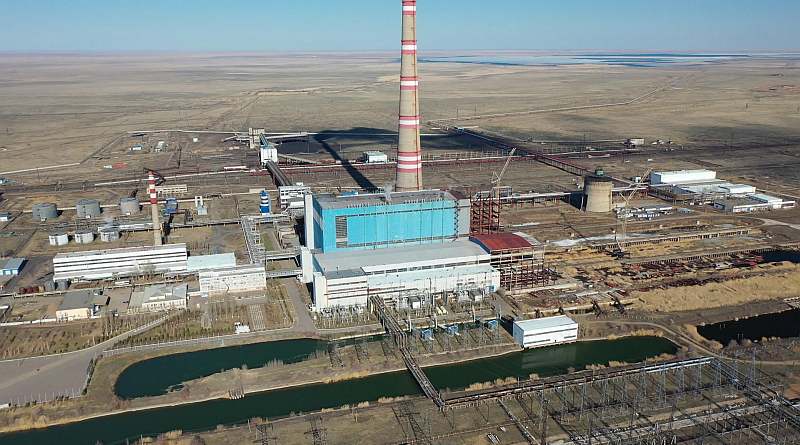
6. Kazakhstan has refused Russian equipment for an energy project in favor of Chinese suppliers.
– During the review of the construction plan for the third power unit of the Ekibastuz GRES-2, the country’s authorities decided to abandon Russian turbines and generators. The new supplier of the equipment became the Chinese company Harbin Electric International.
– Changing the supplier allowed for a significant reduction in the project’s cost. The construction cost of the power unit decreased from 650 billion to less than 400 billion tenge. Thus, the savings could exceed 250 billion tenge, equivalent to approximately $500 million.
– The decision demonstrates a gradual move away from Russian technologies in large energy projects in the region, where cheaper or more accessible suppliers from China are increasingly preferred.
7. Sweden detained a tanker heading to a Russian port.
– The Swedish Coast Guard detained the tanker Sea Owl I, which was heading through the Baltic Sea to the Russian port of Primorsk. The operation was conducted jointly with the police when the vessel entered the kingdom’s territorial waters.
– According to Swedish authorities, the tanker sails under the flag of the Comoros Islands, but there are suspicions that the vessel is not actually registered in an official shipping registry and may be using a so-called “false flag.” In such a case, no state bears responsibility for the vessel’s safety.
– The Swedish Coast Guard also stated that Sea Owl I is on the European Union’s sanctions list.
– According to available data, the tanker departed from Brazil and was heading to the Russian oil terminal in Primorsk. This is the second detention of a vessel heading to Russia in recent times.
– Previously, on March 6, Swedish authorities detained the cargo ship Caffa in the Baltic Sea, which was also heading to a Russian port.
