
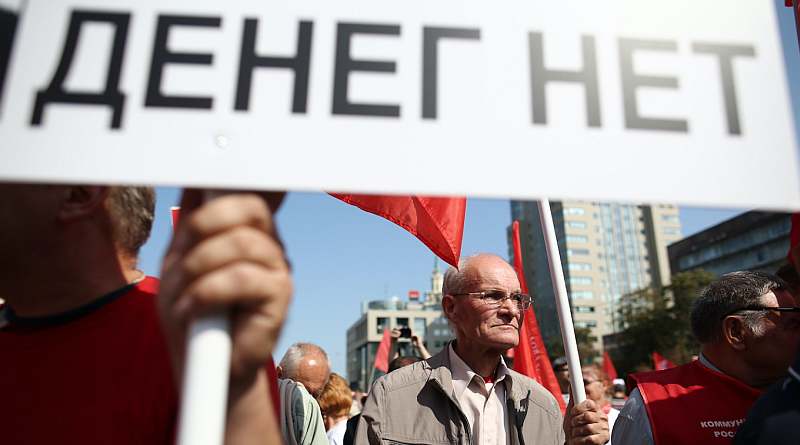

Information on the current losses of the Russian Federation due to sanctions as of 03/12/2026.
1. Ukrainian drones attacked a major oil transshipment point in southern Russia.
– On the night of March 12, Ukrainian drones attacked the Tikhoretsk district of the Krasnodar region of the Russian Federation. As a result of the strike, a fire broke out at the local oil depot, the regional operational headquarters reported.
– According to Russian authorities, the fire area was about 150 square meters, with 83 rescuers and 26 units of equipment involved in extinguishing the blaze. Analysis of eyewitness photographs indicates that several fuel tanks caught fire.
– The affected oil depot is part of the Tikhoretsk oil hub, one of the largest oil transshipment points in southern Russia. The facility is operated by Tikhoretsk-Nafta company, which is part of the structure of the Russian pipeline monopolist Transneft.
– The oil depot is also connected to the Tikhoretsk linear production-dispatch station, which is an important element in the logistics of Russian oil transportation.
2. The Russian authorities have sharply accelerated the use of the National Welfare Fund (NWF) funds against the backdrop of a rapidly growing budget deficit.
– In the first two months of 2026, the Russian Ministry of Finance withdrew almost as many resources from the fund as in the entire year 2025. According to preliminary estimates of budget execution, in January–February, the Ministry of Finance sold 20.98 billion Chinese yuan and 12.94 tons of gold from the liquid part of the NWF, receiving 392.3 billion rubles.
– For comparison, during the same period last year, only about 120 billion rubles were received from gold sales. After these operations, the liquid assets of the NWF as of March 1 were reduced to approximately 4 trillion rubles, of which about 2.7 trillion rubles are held in the most liquid forms — yuan, gold, and cash rubles.
– More active use of the fund is taking place against the backdrop of a sharp deterioration in Russian government finances. In the first two months of the year, the federal budget deficit of the Russian Federation reached 3.45 trillion rubles, which is 91% of the level planned for the entire year 2026 (3.78 trillion rubles).
– The main reason for this gap was a 47.1% drop in oil and gas revenues, as well as a 5.8% increase in government spending. At the same time, the possibilities of covering the deficit through debt borrowing remain limited: in January–February, the Ministry of Finance placed government bonds worth 932.8 billion rubles.
– As a result, through borrowing and the use of the NWF, the Russian authorities managed to raise only 1.3 trillion rubles, while the actual deficit exceeded 3.4 trillion rubles.
3. Oil production in Russia has been declining for the third consecutive month.
– Oil production in Russia continues to decline for the third consecutive month due to increased sanctions, reduced purchases from India, and rising discounts on Russian raw materials.
– According to the OPEC monthly report, in February, Russian companies extracted an average of 9.184 million barrels of oil per day. This is 56,000 barrels per day less than in January, when production also declined for the second consecutive month.
– Thus, the actual level of production was about 390,000 barrels per day lower than the quota set for Russia under the OPEC+ agreement.
– The February figure was the lowest since August of last year, when production began to recover after a decline caused by sanctions at the beginning of 2025. The last peak was recorded in November — 9.38 million barrels per day.
– The new decline in production is linked to worsening conditions for exporting Russian oil, including stricter sanctions, logistical problems, and reduced demand from key buyers.
4. The Russian government is considering a 10% sequestration of the federal budget due to a sharp drop in revenues and a growing deficit.
– The cuts may affect most expenditure items, except for defense and “protected” social spending. The authorities plan to make a final decision depending on the further dynamics of oil prices.
– The Ministry of Finance has already signaled to the main budget managers the need to prepare for spending cuts.
– In particular, secondary or postponed infrastructure projects, including the construction of new facilities or road repairs, may be subject to cuts.
– The need for sequestration arose due to a sharp deterioration in budget indicators. As of the end of January-February, the Russian federal budget deficit reached about 3.5 trillion rubles. Revenues for this period were 4.76 trillion rubles, while expenditures were 8.21 trillion rubles.
– The situation was partly affected by the rise in oil prices amid the conflict around Iran. The price of Brent temporarily rose to $119 per barrel, and Russian Urals increased to about $75, although at the end of February its price barely exceeded $40. However, the Russian government believes that this spike may be short-lived, so spending cuts are still considered a necessary step.
5. In Russia, doctors and teachers are being massively laid off due to budget deficits.
– In Russia, at the end of 2025, budgetary institutions conducted a massive wave of staff reductions due to worsening financial situations in the regions.
– According to Rosstat, in the fourth quarter, 4.9 thousand government administration workers, 4.6 thousand healthcare and social services employees, and 3.8 thousand teachers lost their jobs.
– Overall, in October–December, the number of layoffs across all economic sectors increased by 59% year-on-year, reaching 32.6 thousand people. Meanwhile, the budget sector — civil servants, medical staff, and educators — accounted for about 40% of all reductions, or 13.3 thousand workers.
– The wave of layoffs is associated with the sharp deterioration of regional finances, as most hospitals and schools are funded from local budgets.
– By the end of the year, the budget deficit of Russian regions reached 1.5 trillion rubles, a record high in observation history. Seventy-five regions ended the year with a deficit, with its cumulative volume increasing 3.6 times compared to the previous year.
6. The price of Russian oil Urals surged due to the conflict over Iran.
– The escalation in the Middle East caused a sharp rise in the cost of Russian oil.
– In two weeks, the price of Urals almost doubled — from approximately $45 to $76 per barrel. The conflict around Iran and the threat to shipping in the Strait of Hormuz — a key artery of global oil trade — caused a spike in prices on world markets.
– Russian oil became one of the temporary beneficiaries of instability. On Monday, Urals quotations exceeded $75 per barrel for the first time since the summer of 2023. In ruble terms, the price rose to 6105 rubles per barrel at the beginning of the week, 82% more than before the US and Israeli strikes on Iran. This also exceeded the level set in the Russian budget of 5440 rubles per barrel for the first time in 15 months.
– However, the growth proved unstable. By Wednesday, the Urals price dropped to approximately $62 per barrel following reports that G7 countries intended to release 400 million barrels of oil from strategic reserves to stabilize prices.
– Additionally, Russian exporters face a sharp increase in logistics costs. The cost of tanker freight for transporting oil from Baltic ports to India reaches $22–23 million per voyage, several times higher than previous tariffs, significantly reducing additional profits from high prices.
– A contributing factor was the temporary easing of US sanctions, after which India purchased about 30 million barrels of Russian oil at sea within a few days.
– According to Janis Kluge of the German Institute for International and Security Affairs, this move could bring about $3 billion in additional revenue to the Russian budget.
7. Russia consults Iran on drone usage tactics against the US.
– Russia is providing Iran with information on drone strike tactics developed during the war against Ukraine. Moscow is assisting Tehran in improving methods for using drones to attack American targets and U.S. ally facilities in the Persian Gulf countries.
– These tactics allow drones to more effectively overcome air defense systems. Consultations on direct strike tactics signify a new level of support that is concerning the West.
– It is known that during the war against Ukraine, Russia uses Iranian-origin drones in “waves” — several devices simultaneously, constantly changing course to complicate interception by air defense systems.
– Previously, The Washington Post reported that Russia is providing Iran with intelligence on the location of American military facilities, including ships and aircraft.
8. IEA countries agreed on a record sale of 400 million barrels of oil from strategic reserves.
– Member countries of the International Energy Agency (IEA) have decided on the largest ever use of strategic oil reserves to stabilize the market amid the war in the Middle East.
– According to the agency, 32 IEA member states unanimously agreed to release 400 million barrels of oil from strategic reserves onto the market. This step is intended to help offset supply disruptions and curb sharp price increases.
– The agency’s Executive Director, Fatih Birol, stated that the situation in the oil market is unprecedented, which is why IEA countries agreed to extraordinary collective measures of a record scale.
– Overall, the IEA countries’ strategic reserves amount to about 1.2 billion barrels of oil. Additionally, governments can draw up to 600 million barrels from commercial stocks of companies with which they have agreements.
– This is the sixth use of strategic reserves since the IEA was founded in 1974. The previous largest operation occurred in 2022 after Russia’s full-scale invasion of Ukraine — 182 million barrels were released onto the market at that time.
