

Information on current Russian losses due to sanctions as of 10.03.2026.
1. Due to taxes, more and more entrepreneurs in Russia are ready to close their businesses.
– In Russia, the number of entrepreneurs considering closing or selling their businesses has sharply increased due to rising taxes and worsening economic conditions.
– By the end of the first quarter of 2026, 31% of small business owners are considering such options, which is 8 percentage points more than the same period in 2025.
– Short-term business expectations have also become the worst ever recorded. 52% of entrepreneurs expect their business conditions to worsen in the first quarter of 2026, while only 12% predict improvement.
– For comparison, the previous peak of pessimistic assessments was recorded in 2022 after sanctions were imposed due to the war against Ukraine — at that time, 38% of respondents expected deterioration.
– Additionally, at the end of 2025, 39% of entrepreneurs stated their business is operating in survival mode, the highest level in five years of research. This is 8 percentage points more than mid-year.
2. The number of companies with Chinese capital in Russia has increased tenfold since 2022.
– Since the start of the full-scale war against Ukraine, the number of companies with Chinese involvement in Russia has almost increased tenfold — to 14,798.
– The share of businesses with Chinese founders currently accounts for 22.3% of all foreign-involved companies in Russia.
– For comparison, at the end of 2021, this figure was only 3.6%. The increase in activity by Chinese entrepreneurs is linked to numerous niches opening up after Western companies exited the Russian market.
– An additional factor has been the sharp development of online trade, with Chinese businesses actively working in Russia not only as suppliers but also by directly opening their own companies.
3. Putin may benefit from the Middle East war due to a spike in oil prices.
– The escalation of the war in the Middle East following US and Israeli strikes on Iran has led to a sharp increase in global oil prices — above $100 per barrel, potentially boosting one of the main revenue sources for the Russian budget.
– High energy prices may partially ease the financial pressure on the Kremlin, which has recently faced economic challenges. Previously, Russia recorded a drop in energy revenues, and the economy was further strained by sanctions, high interest rates, and a labor shortage.
– The growing tension in the Persian Gulf has created disruptions in oil supply through the Strait of Hormuz. As a result, major energy importers, including India and China, are trying to secure stable supplies and are willing to pay a premium for Russian oil.
– An additional factor was the temporary easing of restrictions by the US, allowing India to purchase Russian oil, which also supports Moscow’s revenues.
– However, the short-term increase in prices is unlikely to drastically change the situation for the Russian economy. To significantly impact Russia’s finances, high oil prices need to be sustained for a long period.
4. Putin is again trying to blackmail Europe with energy resources due to the crisis around Iran.
– Putin suggested that Europe resume purchases of Russian oil and gas, using the escalation in the Middle East as an argument to bring Russian energy resources back to the European market.
– During a meeting in the Kremlin regarding the global oil market situation, he stated that Russia is allegedly ready to resume supplies to Europe if European companies agree to long-term cooperation without “political bias.”
– Putin emphasized that Moscow has not refused supplies and is ready to work with European buyers if they decide to purchase Russian energy resources again.
– Meanwhile, Russia continues to supply oil and gas to Hungary and Slovakia — two EU countries that still maintain energy cooperation with Moscow.
– He also stated that the war around Iran and the possible blocking of the Strait of Hormuz, through which a significant portion of global oil trade passes, could lead to a sharp increase in energy prices, inflation, and problems in the global economy.
– In this regard, the Kremlin is effectively trying to use the energy crisis as a new tool to pressure Europe by offering to resume purchases of Russian resources.
5. The US is considering easing oil sanctions against Russia due to the surge in energy prices.
– The administration of U.S. President Donald Trump is considering easing sanctions on Russian oil to curb the rise in global energy prices amid the U.S. and Israel’s war against Iran. The White House is discussing various options—from partial easing of restrictions to more targeted solutions that would allow specific countries to buy Russian oil without the risk of U.S. sanctions.
– Specifically, there is a possibility to allow certain countries, including India, to continue purchasing Russian oil without the threat of American sanctions or tariffs.
– Last week, the U.S. already permitted India to temporarily purchase Russian oil that was on tankers at sea to help offset supply disruptions in the Middle East.
– However, such a move could complicate Western efforts to limit Russia’s revenue from energy exports, which Moscow uses to finance the war against Ukraine.
6. Democrats in the U.S. demand Trump immediately reinstate sanctions on Russian oil.
– Democrats in the U.S. Congress called on President Donald Trump’s administration to revoke the decision on temporarily easing sanctions, which allows India to purchase Russian oil. This was stated in a letter from lawmakers to the U.S. Secretary of the Treasury.
– In an appeal from Congressman Sam Liccardo and Senator Ruben Gallego to Treasury Secretary Scott Besent, it is noted that the Treasury’s 30-day exemption from the sanctions regime allows Indian refineries to buy Russian oil.
– Democrats sharply criticized this decision, calling it “dangerous, counterproductive, and unjustified” as it effectively helps Russia gain additional revenue from energy exports.
– In their view, the temporary easing of restrictions undermines U.S. and allies’ efforts to limit funding for Russia’s war against Ukraine.
7. Indian Reliance purchased 6 million barrels of Russian oil amid supply disruptions.
– Indian company Reliance Industries bought at least 6 million barrels of Russian oil for March delivery amid energy supply disruptions from the Middle East due to the conflict around Iran. Indian refineries started actively buying batches of Russian oil that were already on tankers at sea.
– This was made possible after Washington granted India a 30-day exemption from sanctions for Russian oil cargos loaded on ships as of March 5.
– Reliance was purchasing Russian Urals oil at prices ranging from a $1 discount to a $1 premium over the benchmark Brent. India, the world’s third-largest oil importer, gets about 40% of its oil imports from the Middle East, a significant portion of which passes through the Strait of Hormuz. Due to the escalation in the region, Indian companies began looking for alternative supply sources.
– After the full-scale invasion of Ukraine by Russia in 2022, India became the biggest buyer of Russian seaborne oil, although in early 2026, Indian refineries started reducing purchases under U.S. pressure.
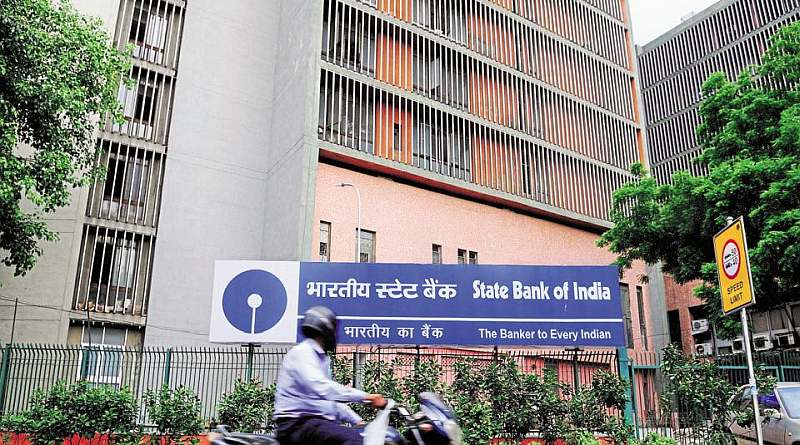
8. The largest bank in India refused to process payments for Russian oil.
– The largest bank in India, State Bank of India, refuses to process payments for Russian oil, despite a temporary easing of sanctions by the United States.
– According to them, the bank is uncertain about how long the permission granted by Washington for India to import Russian oil will last, so it does not want to participate in such transactions.
– SBI’s management fears that participating in payments for Russian oil could create sanction risks for the bank and harm its reputation in international financial markets.
– The bank has a significant overseas loan portfolio, with about 26% of its international lending in the United States, so it seeks to avoid possible restrictions or secondary sanctions.
– The cautious stance of India’s largest bank also indicates that even the temporary easing of U.S. sanctions has not yet restored the financial channels that facilitate India’s purchases of Russian oil.
