
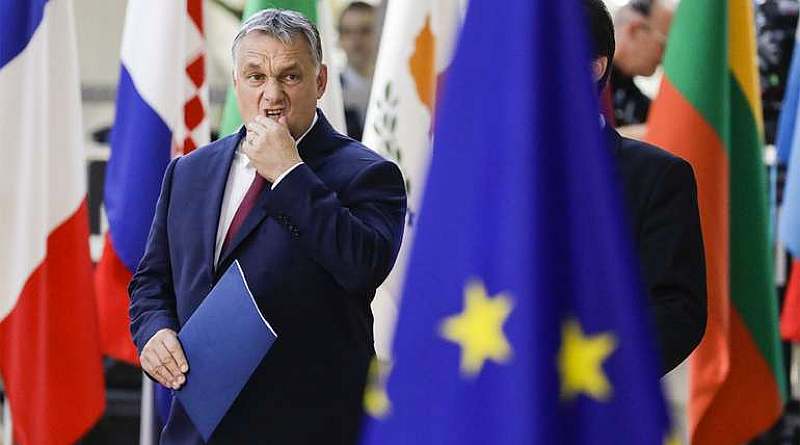

Europe has already lost in the war against Russia, so the best the EU can do is to lift sanctions and other restrictions on Russian oil and gas. This scenario of European capitulation was proposed by Hungarian Foreign Minister Péter Szijjártó in a tweet today.
The readiness of the current Hungarian government to lay their country at Putin’s feet has long ceased to surprise. It is clear that Russian oil is not the true reason for such statements.
The “Druzhba” pipeline is connected to the Danube refinery. This plant is privately owned, and receiving cheap Russian oil only increases the profits of its owners, without leading to cheaper gasoline for Hungarians themselves. Gasoline in Hungary costs the same or even more than in neighboring countries, and the difference between cheap oil and fuel prices simply remains in the pockets of the refinery owners.
The Russo-Ukrainian war is taking place in the very center of Europe. The distance from Budapest to Kramatorsk is less than the length of the Ukrainian front line—much closer than it seems. The future security system of the entire continent depends on the outcome of the war in Ukraine. In any scenario, an armed Russia, which already openly perceives Europe as its number one enemy, will remain close by.
Current Hungarian politicians are ready to trade the future of their country and the entire continent for the profits of a private plant. This is not only a separate tragedy for Ukraine.
Lifting Europe’s sanctions on Russian oil would mean a strategic defeat for Europeans in the war against Russia without a single shot fired. It would mean a transition from deterring the aggressor to actually financing the Russian army. Europe, which is used to feeling strong and confident, would essentially admit its own impotence, legitimizing Russian blackmail.
There is nothing surprising when such things are said by Russian politicians. But such rhetoric from leaders of EU member states discredits the very idea of a united Europe and shows how much the EU needs to change to be ready to ensure its security now and in the future.
All this means the European-designed concept of the “steel porcupine” needs revision. Such a “porcupine” should not only be Ukraine but all of Europe—together with Ukraine.
Since last year, Putin has changed his rhetoric: his main enemy is no longer the USA, but Europe itself. This is connected to the launch of the EU militarization process, which effectively began only in 2025.
Against this backdrop, the proposals to lift sanctions on Russian oil and gas voiced by Péter Szijjártó would signify total capitulation of Europe and strategic defeat for decades to come.
