

Zaporizhzhia Direction
1. The enemy (Russian troops) continues its offensive on the right flank of its troop grouping (TG) “Dnipro,” trying to break through to the defense line of the Ukrainian Armed Forces along the Konka River (in the area of Malokaterynivka — Komyshuvakha) and to encircle the Ukrainian Armed Forces’ Orikhiv defense district from the west and southwest, advancing with their forward units towards Mali Shcherbakyi — Novopavlivka.
In the offensive, forces and resources of the 58th Combined Arms Army (CAA) and parts and units of the Airborne Forces (ADF) of the Russian Armed Forces, attached for reinforcement, are involved. Specifically:
58th CAA:
– 19th Motorized Rifle Division (MRD) – 392nd, 503rd, and 429th Motorized Rifle Regiments (MRR),
– 42nd Motorized Rifle Division – units from at least three of its regiments observed – the 70th, 291st MRR, and the 78th Special Purpose Motorized Regiment (SPMR) “Akhmat-Northern,”
– 136th Separate Motorized Rifle Brigade (SMRB),
– Consolidated regimental tactical groups from the 4th Military Base (MB) from South Ossetia (Tskhinvali) and the 201st MB from Tajikistan (Dushanbe, Kulob, Bokhtar).
Airborne Forces:
– 7th Air Assault Division (AAD) – units from its two air assault regiments (AAR) – the 108th and 247th AAR are present,
– 76th Air Assault Division, likely operating with its main forces (104th, 234th, and 237th AAR, possibly without one, “very occupied” in the Sumy direction).
In addition to the aforementioned forces and means, it is quite possible that several formations from the TG “Dnipro”, including the 47th MRR of the 18th CAA (most likely one or two regiments from its main composition of the 1152nd, 1153rd, and 1154th MRR) or several battalions of the 104th Air Assault Division are also involved in the Russian 58th CAA strip.
Also, in the same direction, in the 58th CAA area, several units of the 100th Separate Reconnaissance Brigade (SRB) and the 45th Separate Special Purpose Brigade (SSPB) of the Airborne Forces are active.
In other words, the combat and numerical composition (CNC) of the Russian grouping directly moving towards Zaporizhzhia has not changed significantly during the reporting period.
2. Current Situation
Over the past month, as a result of several counterattacks conducted by the Ukrainian Armed Forces in this direction, it has changed to some extent. This mainly concerns the pace of advancement (offensive) of the Russian troops’ forward parts and units. They have sharply fallen, and in some areas have even “zeroed out” entirely. Moreover, in certain segments, the enemy was forced to tactically retreat from their forward positions. Specifically:
– Apparently, counterattacks by the advanced units of the AFU in the direction of Richne — Prymorske have led to the retreat of small Russian infantry groups from the northern and central areas of Prymorske, although they managed to consolidate in its southern part (the area of Zaliznychnaya and Dachnaya streets).
– Operating in the directions of Zapasne — Novoyakovlivka and Novoboykivske — Novoyakovlivka, the AFU apparently managed to “clear” Novoyakovlivka of Russian “infiltrators” and even push the enemy significantly south of Pavlivka. While the Russian command tried to prevent this with persistent counterattacks from Stepove.
– In the area of the city of Stepnohirsk and the village of Lukyanivske, likely fierce counter-battles occurred over two weeks, allowing the AFU to push Russian units out of the northern part of the city and occupy several advanced enemy positions southwest of Lukyanivske.
Currently, the enemy (Russian forces) apparently continues to hold the area of the Stepnohirsk Children’s Music School (the so-called “high-rise” area in the southern part of the city) and several blocks on the western outskirts (the area of Agrarna Street and the intersection of Tavriyska and Sovietskaya). Although it seems Ukrainian advanced assault groups have already managed to advance close to the “high-rise” area.
– In addition, several sources claim that individual AFU assault groups have even managed to break through between Stepnohirsk and Prymorske (moreover, with equipment), securing the northern outskirts of Plavni. Although I haven’t seen real confirmation of this information, I’m inclined not to trust it too much.
– On the opposite flank, in the area of Orikhiv (in the zone of the 76th Airborne Division), Russian troops are conducting persistent attacking/assault actions in the area of Bilohirya and Mala Tokmachka (in the general direction of Novopokrovka — Chervona Krynytsia), trying to break through from the southeast to the close approaches to Orikhiv. So far without much success.
Several attempts to conduct similar actions south of Orikhiv (direction of Robotyne — Novodanylivka) and southwest of the city (direction of Mali Shcherbaky — Novopavlivka) also did not bring success to Russian troops.
Thus, it can be stated that currently the advance of the Russian VDF “Dnepr” has practically slowed down significantly. And while its command is unlikely to give up further offensive actions (as evidenced by the continuation of persistent attacking actions in several areas and on a number of sections, particularly in the area of Orikhiv, along the E-105 road, west of Stepnohirsk and in the area of Prymorske), currently the units and formations of the Russian 58th Army, as well as forces and means allocated to it from the airborne troops, are forced to effectively repel AFU counterattacks instead of continuing their own advance.
3. Regarding future prospects
As I see it, the overall operational situation on the Zaporizhzhia front today is determined by a couple of key factors, namely:
– The ability of the Russian UV “Dnepr” command to find additional forces and resources for this direction from its OWN composition, while not relying on its “higher command,” which is evidently more inclined to assist UV “Vostok” rather than UV “Dnepr.”
For this, General Teplinsky may continue to “dissect” his secondary Prydniprovskyi (also Kherson) direction (18th ZVA), but everything that could be taken from there (47th and 70th MSD, as well as 104th DSD) has largely already been taken. For example, the most combat-ready division of the 18th ZVA (specifically the 70th MSD) was urgently regrouped for the offensive on Kostiantynivka and Druzhkivka, and even earlier, the “totally mobilized” 47th MSD (“named Aksenov-Goblin”) was actively involved in attacks/storms precisely in the Zaporizhia direction, etc.
Moreover, the left bank of the Dnieper in its lower course also needs to be held by something. Reducing these forces and resources to a critical level may become more costly for oneself. Furthermore, what if SIMULTANEOUSLY with counterattacks on the Zaporizhia and Hulyaipole directions, the Ukrainian Armed Forces again “jump” the Dnieper in an eastern direction?
– The second factor concerns the POSSIBLE decision of the UV “Dnepr” command, particularly its 58th ZVA, regarding the transition from attempts at a wide operational encirclement of the Orihiv defense area of the Ukrainian Armed Forces from the west, especially with the need to advance on a broad front in the 19th MSD strip (approximately from Prymorsky to Stepove) to a more “grounded” tactical scale option — tactical breakthroughs to Novopavlivka and towards Chervona Krynytsia through Mala Tokmachka and Bilohiria.
Judging by a series of recent statements by Colonel V. Voloshyn, spokesperson for the Southern Operational Zone SOU, regarding certain “intelligence information” about the Russian command’s intentions to break through to the outskirts of Orihiv and consolidate there, such a possibility is indeed being considered in the relevant Russian headquarters and control bodies.
In reality, if this scenario is successfully implemented, it will allow the Russian command to conserve its forces and resources while simultaneously demonstrating a certain degree of their own “offensive effectiveness.” Although, in truth, from an operational value perspective, this would be much worse than the hypothetical breakthrough of Russian troops on a broad front in their 19th MSD strip to the defense line of the Ukrainian Armed Forces along the Konka River.
Yes, from a political standpoint, it will look successful — “we broke through to yet another more or less large settlement.” Russian generals might even receive various medals and perks for this. After all, the current military-political leadership of the regime (or what we call the Kremlin regime) is unlikely to properly assess and compare the significance of both options from an operational perspective. The fact that the attempt at a frontal assault on the Orihiv defense area of the Ukrainian Armed Forces (if it proves successful for Russian troops, which is far from certain) essentially signifies the disruption of their major operational offensive towards Zaporizhia this summer is clearly not understood by them. At the same time, for any military person familiar with the basics (even if not the nuances) of operational troop planning, this dilemma is entirely clear.
Simply put, what could and should have advanced on Zaporizhzhia this summer, in this case, the Russian command will mostly have to spend on Orikhiv. And, it seems, as of today, no one in the general staff of the Russian Armed Forces is in much of a hurry to “clarify” this issue to their military-political leadership, choosing a simpler and cheaper option with a “breakthrough on Orikhiv.”
Well, as they say, better an Orikhiv sparrow in hand than some unattainable Zaporizhzhia crane in the sky. The only problem for the Russian military command is that this spring it will be very, very difficult to “catch” even the Orikhiv sparrow.
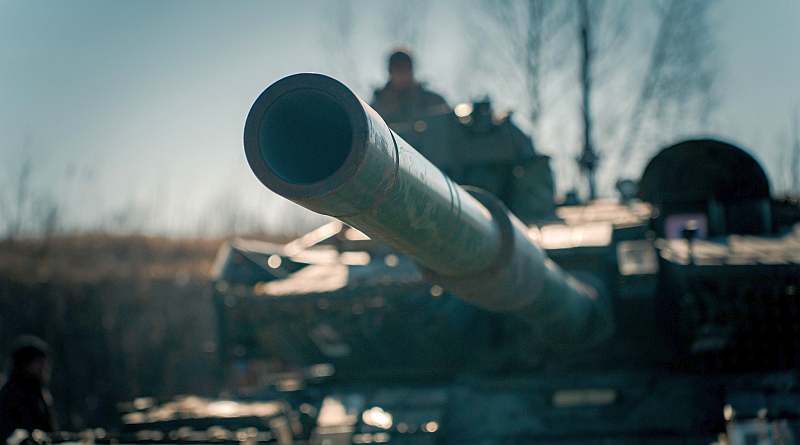
Photo: 31st Separate Mechanized Brigade named after General-Khorunzhyi Leonid Stupnytskyi
