
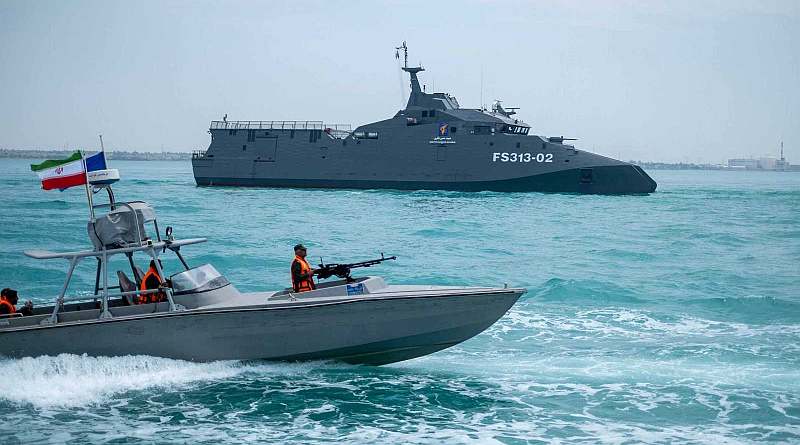
Since February 28, the world has been observing the most massive escalation in the Strait of Hormuz in decades. During eight days of maritime confrontation, Iran has lost almost half of its conventional fleet, including unique drone carriers and submarines.
However, Tehran still managed to effectively block the planet’s main oil artery, threatening 26% of global exports. While tanker traffic is coming to a halt, and the US Navy is using torpedo attacks for the first time since World War II, shipping companies resort to tricks, disguising themselves as Chinese ships to avoid being targeted.
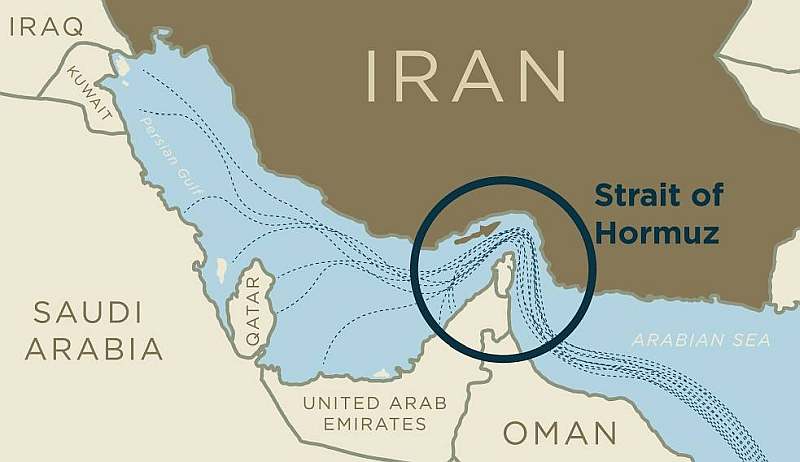
February 28 – March 1: Iran declared the strait closed to shipping and threatened to attack any ships attempting to pass. Commander of the Islamic Revolutionary Guard Corps Ebrahim Jabari stated: “The strait is closed. If anyone tries to pass, the heroes of the Revolutionary Guard and the regular fleet will set these ships on fire.” Tanker traffic dropped by 70–85%, more than 150 vessels stopped outside the strait, waiting for passage to become safe. Some attempted to pass the narrow area with the AIS (automatic identification system) turned off, but overall movement virtually stopped.
March 1–2: the first attacks on commercial ships were recorded. Over the next 36 hours, four tankers were hit directly in the strait and the Gulf of Oman. At least four sailors died, three tankers were damaged. Iran claimed it attacked tankers that ignored warnings. A US Navy submarine torpedoed an Iranian frigate Dena (class Moudge) in international waters near Sri Lanka as it was returning from international exercises in India. This is the first US Navy torpedo attack since World War II. Tanker traffic has effectively stopped, with about 170 ships gathered outside the strait. Iran allows Chinese and Russian ships to pass, blocking all others.
March 2–3: The US launched strikes on an Iranian naval base in Bandar Abbas (including the key port near the strait). Iran responded with strikes on oil infrastructure (platforms in the UAE, the Saudi Aramco plant in Saudi Arabia, LNG terminals in Qatar). Ship traffic sharply decreased: comparison of MarineTraffic data from February 27 and March 3 showed an almost empty strait in the latter case. Iran also threatened attacks on pipelines, which could further raise oil prices.
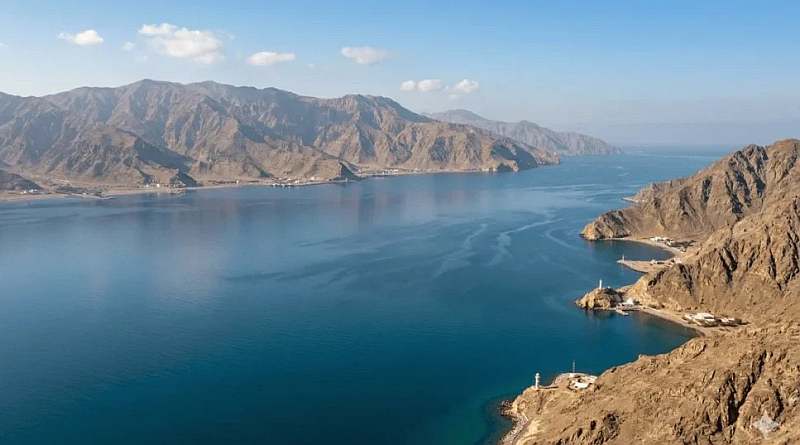
March 4: The strait remained closed to most ships, and the risk of further escalation was high. Oil supply problems began, prices climbed, and the conflict showed a tendency to spread and reformat into a broader regional one, involving Lebanon and Iraq.
March 5: Iran continued to block the strait, with the IRGC claiming full control of the waterway and promising to attack all vessels. Ship traffic decreased by 90%, mostly due to fears of drone and missile attacks. Many tankers remained blocked near the strait, and a global oil supply disruption became increasingly apparent. Only Chinese ships continued to pass through the strait. The US Navy stated that they were ready to escort tankers and provide “political risk insurance,” though they did not take practical actions.
March 6: An Iranian maritime drone struck a commercial vessel in the strait, causing a fire. The British maritime authority UKMTO reported the incident six nautical miles north of Oman. Satellite images from Sentinel-1 recorded instability in the ports of Oman, Dubai, and Abu Dhabi. The price of Brent oil increased. The International Transport Federation (ITF) recognized the area as a Warlike Operations Area, noting increased GPS jamming (Iran has been engaging in this for several years) and frequent attacks on ships. 26% of the world’s seaborne oil trade was threatened. The most affected were China, India, and other Asian countries: 89% of oil from the strait goes to Asia. Energy prices rose even more, and the conflict spread to 12 countries.
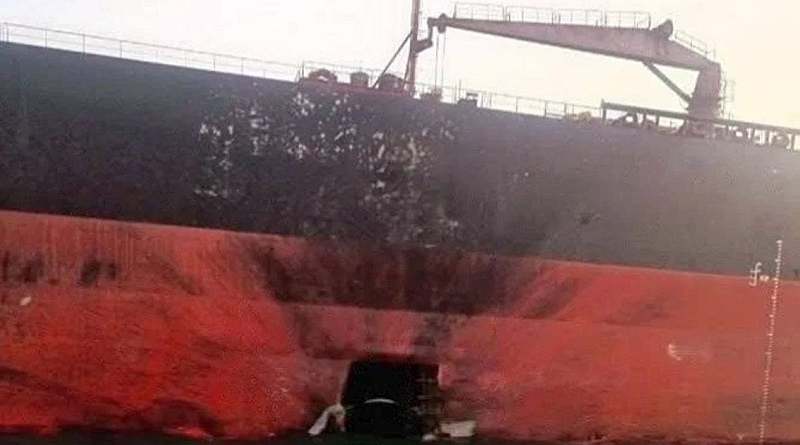
March 7: Escalation in the Strait of Hormuz has taken new turns with attacks on commercial vessels and intensified electronic warfare. The strait remains effectively closed, with minimal ship movement and rising global energy prices. A drone from the IRGC attacked the Maltese tanker Prima. Only three passages through the strait were recorded (one inbound, two outbound), with traffic down 25% compared to the previous day. GPS and AIS disruptions have intensified, affecting over 1650 vessels.
March 8: The IRGC announced full control over the strait, with an Iranian drone striking the American tanker Louise P in the strait. Traffic remained at a minimum (approximately a 90% drop). There is an increased risk of a global stagflation shock due to the blockade of a significant part of the world’s oil flow.
A few words about the implementation of US promises. Iran doesn’t just have a navy. It has its own fleet and the IRGC, as someone must guard the revolution at sea. It was the first to be targeted: according to CENTCOM (the United States Central Command, responsible for military operations in the region), in the first days of the conflict, Iran lost between 9 to 17 ships (how do they count?!) with a focus on large combatants.
Overall, Iran’s fleet before the war consisted of about 40 ships, over 1500 speedboats (more than 300 with missiles), and submarines, but the strikes destroyed key assets.
At the Bandar Abbas base, a diesel-electric submarine of the Kilo class, Ghadir-class mini-submarines, Fateh-class submarines, and an auxiliary vessel were destroyed. The largest ships of the Iranian Navy were also destroyed there: two aircraft carriers, IRIS Makran and IRIS Shahid Bagheri. These are essentially tankers and container ships converted for UAV use, resembling drone carriers. Additionally, four fast attack craft, three missile boats, several corvettes, and smaller ships were hit.
In the Gulf of Oman, 11 Iranian Navy warships were sunk. CENTCOM reported that most were targeted at bases or ports along the coast (Chabahar and Konarak), with some sunk directly in the Gulf. At the Konarak base, several Alvand-class frigates, Moudge-class frigates, and a Jamaran-class corvette (near the pier in Chabahar) were destroyed. The drone carrier IRGC Shahid Mahdavi (a converted container ship) was sunk in open waters after being hit by LRASM missiles. The IRIS Shahid Sayyad Shirazi frigate was also sent to the bottom.
On March 7, an interesting scenario begins in the Strait of Hormuz: some vessels change their AIS to add markings indicating Chinese ownership or report a Chinese crew. This is not always an official reflagging, which requires legal procedures, but rather a tactical change of signals to simulate Chinese affiliation. Iran states that it allows passage only to Chinese ships in gratitude for diplomatic support, while other vessels risk missile attacks.
Among such tricksters is the bulk carrier Iron Maiden, which after changing its signal to China owner passed through the strait on the night of March 5. Tracking data from Vortexa and Kpler show that such signals help avoid threats. As it proved effective, the vessel KSL Hengyang flying the flag of the Marshall Islands, upon approaching the strait, added the message China owner and crew and proceeded onwards.
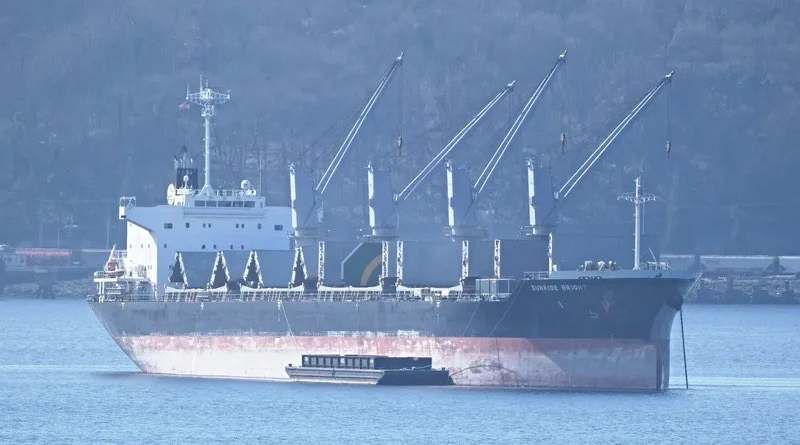
This tactic also works in the Red Sea, where the Houthis play with anti-ship missiles. Their missile units damaged the high-speed vessel HSV-2 Swift of the U.S. Navy (leased to the UAE Navy, with a civilian crew on board) in 2016, and in 2017 hit the UAE Navy minesweeper M402 Al Hasbah and the Saudi frigate Al Madinah near the coast of Mokha in the Red Sea. All ships were damaged but did not sink.
Games with AIS are concerning due to potential fake signals (e.g., from the USA/Israel for provocations) and possible geopolitical shifts.
About 300 tankers remain blocked, and only Chinese/Iranian vessels can move freely in the region. China publicly calls on all parties to ensure safe passage.
Overall, Iran truly might have lost up to half of its conventional fleet, but has mostly retained its speedboats for defending the strait. Therefore, the IRGC still has potential for asymmetric attacks.
