

Information on current Russian losses due to sanctions as of 03/07/2026.
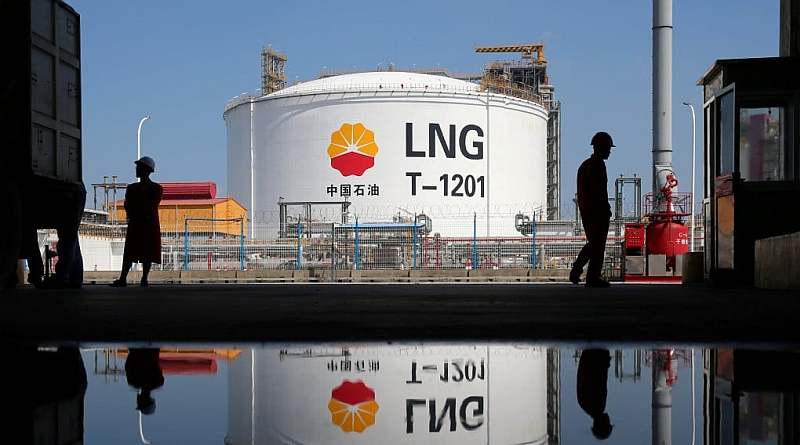
1. Russia’s attempt to redirect LNG supplies from Europe faces obstacles.
– Russia’s idea to reorient liquefied natural gas supplies from Europe to other markets faces serious legal and logistical difficulties.
– After a sharp rise in gas prices in Europe, caused by supply disruptions from the Middle East, Russian authorities stated that part of the export could be quickly redirected to Asia.
– However, in practice, implementing this is much more difficult. In fact, the only Russian project whose supplies could theoretically be reoriented from Europe to other markets is the large Yamal gas liquefaction plant.
– At the same time, most of its supplies to Europe are under long-term contracts, terminating which involves significant penalties. A commercial decision to change the market is not considered force majeure; hence, suppliers cannot simply refuse to fulfill contracts without financial consequences.
– An additional problem is logistics. Currently, cargos from Yamal are transported by special ice-class tankers to a northern Russian port, where they are transferred to conventional vessels for further delivery to European terminals.
– If these supplies are completely reoriented to Asia, significantly more tankers will be needed. It is estimated that up to 60 conventional vessels may be required to transport the liquefied gas, whereas last year the project used only about 17.
– Representatives of the Russian government state that some volumes currently supplied to Europe could be directed to other markets where demand for Russian gas remains. However, specific terms for such reorientation have not yet been named.
– Despite political statements about the possibility of quickly abandoning the European market, Russia remains largely tied to existing contracts, infrastructure, and a limited number of specialized vessels for transporting liquefied gas.
2. Wealthy Moscow cuts investments, indicating deeper budgetary problems in Russia.
– Moscow, the wealthiest region in Russia, will for the first time since the COVID-19 pandemic cut its large-scale investment program. This could indicate a worsening financial situation in Russian regions in the fifth year of the war against Ukraine.
– The Mayor of Moscow stated that in the first two months of 2026, the city’s budget revenues increased by only 2%, while a growth of 6.5% was expected during the budget formation. As a result, the capital’s authorities decided to reduce the investment program by 10% — to approximately 1.2 trillion rubles — and cut the number of municipal employees by 15%.
– Despite claims by Russian authorities of a relatively stable federal budget, broader indicators show a more complex situation. The deficit of Russia’s consolidated budget, which includes federal and regional budgets, increased to 8.3 trillion rubles, or 3.9% of GDP in 2025. This is 2.6 times more than in 2024.
– Financial pressure on regions is also increasing due to changes in the structure of their debts. The share of preferential loans from the federal budget fell from 78% to 67%, while the share of significantly more expensive loans from commercial banks tripled in a year.
– Overall, in 2025, 74 out of 89 Russian regions had budget deficits. The total expenditures of the regions increased by 9% — to 24.1 trillion rubles, while revenues increased by only 4% and amounted to 22.6 trillion rubles. In case of further economic growth slowdown, regions will have to cut spending, primarily on infrastructure and investment projects.
– An additional burden on budgets has been payments to volunteers fighting against Ukraine, as well as support for their families. In Moscow, such payments can exceed 5 million rubles per person in the first year.
3. One of Russia’s largest metallurgical companies halts coal mining at a Kuzbass mine.
– Russian steel group MMK has decided to suspend operations at one of its coal mines due to unfavorable market conditions, according to its subsidiary MMK-Ugol. This concerns the “Chertinskaya-Koksovaya” mine in the Kemerovo region.
– The enterprise, which extracted over 1.2 million tons of coal in 2025, will be put into “dry conservation” mode. In its 2025 report, MMK reported an overall loss and noted that it had devalued the coal segment by 28 billion rubles due to high key rates and challenging macroeconomic conditions. The Russian coal industry is experiencing a severe crisis.
– Among the reasons are the loss of part of export markets due to sanctions, weak market conditions, payment issues, and transport infrastructure constraints.
– At the end of 2025, the Russian government extended the coal industry support program for three months — until March 2026. It includes, among others, deferrals on tax and insurance payments. Despite this, the financial state of the industry remains difficult. In the first 11 months of 2025, the cumulative pre-tax loss of the Russian coal industry reached 334.9 billion rubles.
– Due to the worsening economic situation, major Russian industrial companies have begun reducing working hours or personnel, including in the coal mining sector.
4. Capital investment in Russia continues to decline.
– In the fourth quarter of 2025, the indicator decreased by 5.3% year-on-year and amounted to 16.5 trillion rubles, according to Rosstat data. For the entirety of 2025, investment in the Russian economy totaled 42.6 trillion rubles, which is 2.3% less than in 2024.
– The reduction in investments indicates a further weakening of business activity and limited economic growth opportunities amidst sanctions pressure and high war expenses.
5. Slovakia wants to increase imports of Russian gas before the EU ban comes into effect.
– The Slovak state gas company SPP is negotiating with Gazprom to increase imports of Russian gas in 2026–2027, aiming to do so before the planned European Union ban.
– According to their statement, the company is considering increasing purchases to cover up to 100% of its needs by 2027. After the cessation of Russian gas transit through Ukraine at the end of 2024, Slovakia received only about a third of the necessary volumes from Russia in 2025.
– Subsequently, supplies began to be delivered via Turkey, but they are limited by infrastructure capacity. EU rules prohibit countries from increasing contractual volumes of Russian gas imports, although certain adjustments are allowed.
– According to one source, the parties are discussing amendments to contracts for large volumes that may require a special exception from EU rules.
– It is expected that imports of Russian liquefied gas to the EU will cease at the end of 2026, and pipeline gas supplies by November 1, 2027. After this, the Slovak company is exploring the possibility of importing liquefied gas through Poland, Germany, and Italy.
6. In the Baltic Sea off the coast of Sweden, law enforcement conducted a large-scale operation to detain the cargo ship Caffa, which may be linked to Russia. This was reported by the Swedish channel SVD.
– The ship, flying the Guinean flag, was stopped near the city of Trelleborg in the south of the country. According to Swedish services, the ship is on Ukraine’s sanction list and may be directly linked to Russia.
– Ukrainian authorities previously accused it of transporting grain from occupied Sevastopol to Syria in July 2025.
– According to ship tracking services, Caffa was en route from Casablanca to St. Petersburg and was supposed to arrive at the Russian port on March 10. The Swedish Coast Guard suspects the ship of violating maritime law and considers it potentially unseaworthy.
– Currently, all investigative actions are being conducted directly at sea: law enforcement is conducting searches, checking documents, and questioning crew members.
