
Huliaipole Direction
1. The enemy (Russian forces) continues offensive operations in the operational zone of its “Vostok” group of forces, concentrating main efforts on the left (southern) flank of the 5th Combined Arms Army (CAA) sector to the west and southwest of Huliaipole.
However, in the 36th CAA sector and on the right flank of the 5th CAA (north of Huliaipole), due to successful counterattacks by the Armed Forces of Ukraine (AFU), the enemy was likely forced to adopt a defensive stance, attempting to impede further advancement of AFU front-line units and detachments in a general southeast direction.
Currently, the Russian “Vostok” group operates in this direction in the following composition:
– 29th CAA, the northernmost army of the group, operates on both sides of the Zaporizhzhia – Donetsk road, includes the 36th Separate Motorized Rifle Brigade (SMRB), 430th Motorized Rifle Regiment (MRR), as well as a number of attached units and subunits (possibly from the 90th Tank Division or 41st CAA of the “Center” group).
– 36th CAA, operating south of the Vovcha River in the general direction of Velyka Novosilka — Pokrovske, covers the northern flank of the 5th CAA, includes the 37th SMRB, 5th Separate Tank Brigade (STB).
– 5th CAA, the most powerful army of the “Vostok” group, operates west and north of Huliaipole, includes the 127th Motorized Rifle Division – 114th, 143rd, and 394th MRR, 218th Tank Regiment (TR), 57th and 60th SMRB.
– 35th CAA, part of its forces operate southwest of Huliaipole, while another part is likely used as an operational reserve of the “Vostok” group. It includes the 38th and 64th SMRB, 69th Separate Cover Brigade.
Additionally, formations at the level of motorized rifle/rifle regiment (MRR/RR), motorized rifle/rifle battalion (MRB/RB) classified as “mobilization reserve” (MR), or in the status of territorial troops (TT), are actively involved within the “Vostok” group. They are either integrated into the standing units and formations of these armies or assigned operational subordination as reinforcements. There can be up to 6-7 of them in the operational zone of the “Vostok” group.
2. Current Situation
Due to over two weeks of intensive engagements in the Huliaipole direction, the Russian forces of the “Vostok” group were forced to significantly slow down their offensive pace (reducing it to a minimum even in a tactical sense), and in some areas even switch to active defense, trying to hold their advanced positions or aiming to restore their standing.
Moreover, it is evident that the command of the “Vostok” group, due to active AFU counterattacks on several tactical directions, was compelled to conduct some regrouping of their forces and assets within their operational zone, as well as redistribute efforts between the sectors of their armies. Importantly, they evidently had to use part of their operational reserves.
A characteristic feature of the current situation in the Hulyaipole direction is its particular “ambiguity” for the Russian forces. On one hand, in the northern and partially central parts of the operational zone of Joint Forces Operation “East,” they are forced to solve predominantly defensive tasks, while on the other, they are simultaneously attempting to advance in its southern part.
At the tactical level, it looks like this:
– In the area of the Russian 36th Army Corps, it is evident that the Ukrainian Armed Forces continued counterattacks towards Sosnivka — Ternove and Verbove — Kalynivske. As a result, they managed to advance to Ternove and reach Novomykolaivka. After three days of fierce fighting, the Ukrainian Armed Forces likely managed to secure positions in Ternove and in the center of Novomykolaivka.
Additionally, the forward infantry groups of the Russian 5th Separate Amphibious Assault Brigade were apparently partially driven out of Berezove itself. Although they are currently attempting to hold the area of Zaporizhia and west of Berezove.
– The Ukrainian Armed Forces also continued counterattacks along the river Yanchur, trying to secure the line Solodke – Pryvillya and break through to the Novo-Hryhorivka area. Two days ago, I saw fairly verified information that the forward Ukrainian assault groups had apparently entered Novo-Hryhorivka and begun fighting for Solodke.
– Meanwhile, in the area of the 5th Army Corps, where the Ukrainian Armed Forces also tried to counterattack, their results are currently much more modest. Ukrainian assault units managed to push the enemy back to the Haichur River from the area of Ternuvate and Kosivtseve, but so far the Ukrainian Armed Forces have not been able to secure a foothold in Dobropillia on its eastern bank. The enemy is actively attacking the village from the east, trying to restore the defense line along the river, and regularly sending their assault troops into the village.
– Further south, the Ukrainian Armed Forces, likely after successfully pushing the forward units of the 127th Motor Rifle Division out of Pryluky and Olenokostiantynivka beyond the Haichur, were forced to retreat from these villages due to enemy attacks from the south, although earlier they had managed to engage in battles for Varvarivka on the opposite bank.
The enemy, attacking from Zelenyi, managed to re-enter Olenokostiantynivka and, by attacking across the river, pushed the counterattacking groups of the Ukrainian Armed Forces out of Pryluky and even advanced to Tsvitkove.
– Furthermore, to the west and southwest of Hulyaipole, the 57th and 60th Separate Motorized Rifle Brigades of the Russian 5th Army Corps (apparently reinforced by several units of the 38th Separate Motorized Rifle Brigade of the 35th Army Corps) continue to very actively attack along the Hulyaipole-Omelnyk road and in the direction of Dorozhnianka — Hulyaipilske.
Although the enemy’s advancement has been minimal (over a week of persistent attacks/storm actions, averaging 1-1.5 km), they still managed to begin fighting for Zaliznychne (and individual enemy assault groups have already been recorded west of the village) and advance south of the road itself.
– Fierce battles continue in the western part of Hulyaipole city. The Ukrainian Armed Forces, holding the line of Tsvitkove-Staroukrainka, continue to defend several positions in the area of Franka and Luhova Streets.
3. Therefore, in a broader (operational) sense, the situation in the Hulyaipole direction looks quite unstable for both sides. The Ukrainian Armed Forces have not yet been able to completely stop the advance of the Russian Joint Forces Operation “East” and force it to switch to defense. Although, at least in the area of one army of this group (the 36th Army Corps), the enemy was apparently forced to switch to defense. There, the Russian forces were essentially pushed far back from the Vovcha River to the south.
At the same time, the Russian 5th Army Corps of the Eastern Military District continues its persistent attempts to break through from the east to the line of Verkhnya Tersa – Hulyaypilske and subsequently envelop the Orikhiv defense area of the Ukrainian Armed Forces from the east and northeast. So far, these attempts have been unsuccessful, but the forward units and formations of this army continue to attack persistently, despite a significant tactical threat of encirclement on its right (northern) flank due to successful counterattacks by the Ukrainian Armed Forces.
Should the Ukrainian Armed Forces advance further south along both banks of the Yanchur River and reach the area of Uspenivka, it is likely that the enemy’s 5th Army Corps will be forced to halt its offensive (which I believe is currently the main goal of the Ukrainian command), as it will have to turn its right flank northward to avoid a breakthrough by the Ukrainian Armed Forces into its rear. In this case, it is likely to also have to abandon its positions north of Hulyaypole (along the Haichur River). In this context, it is worth noting that the advanced assault groups of the Ukrainian Armed Forces, having broken through towards Verbove – Novohryhorivka, are ALREADY 4 km from Uspenivka and 2.2 km from the Hulyaypole – Velyka Novosilka road passing through it.
The situation for the Russian Eastern Military District could worsen even further if the Ukrainian Armed Forces break through to Temyrivka (and they are also ALREADY 4.2 km from it). In this case, a real ‘wedge’ will be driven between the Russian 5th and 36th Army Corps (approximately 8 km wide, and that’s if the Ukrainian Armed Forces are ‘modest’ and decide to ‘postpone’ Uspenivka itself ‘for later’).
Obviously, all of this is STILL just wishful thinking. After all, the Ukrainian Armed Forces in this direction are conducting counterattacks with very limited forces and resources, which are clearly insufficient for deep (in the operational sense) breakthroughs and envelopments. In my opinion, their true main goal (at maximum) is not the defeat of the Russian 36th Army Corps, let alone the enemy’s Eastern Military District, but the disruption of the Russian command’s plans for this year’s summer campaign.
In other words, as I see it, the Ukrainian command, after assessing and analyzing the situation on the ‘greater’ Zaporizhzhia front (Hulyaypilske direction + Zaporizhzhia itself, to be discussed in the next review) across the entire Southern operational zone, managed to find a sufficiently favorable location and chose a sufficiently favorable moment (when the Russian Eastern Military District, trying to ‘turn’ towards Orikhiv, stretched its forces along the front) to conduct fairly effective stabilization actions with very limited forces. These actions, if further developed, could acquire operational-tactical significance. But, in my view, they may not, after all, as it is now 2026, not 2023.
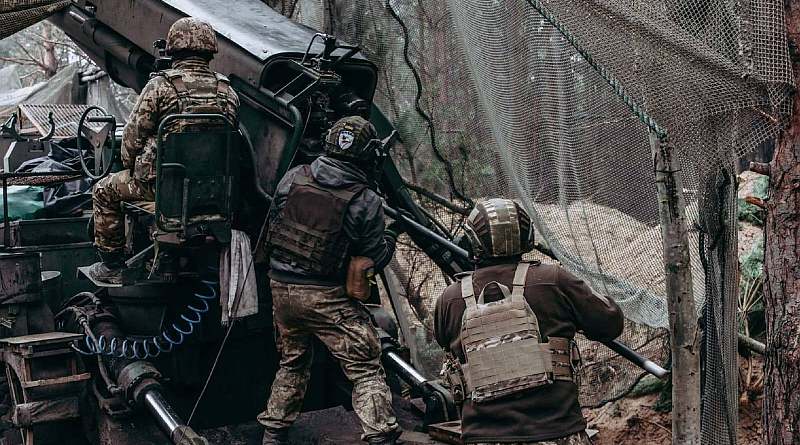
Photo: 27th Separate Artillery Brigade named after Koshovyi Otaman P. Kalnyshevsky
