

Information on Russia’s current losses due to sanctions as of 02/23/2026.
1. Ukrainian drones struck the Kaleikino oil pumping station in Tatarstan — the starting hub of the Druzhba main oil pipeline — on the morning of February 23.
– The facility is a key point for collecting and pumping raw materials from the Volga and Western Siberia fields towards the western border. “Kaleikino” serves as the main station where oil flows from several pipelines converge before entering the Druzhba system.
– Disruption of such a hub potentially creates risks for transit and export deliveries, which are critically important for Russia’s foreign currency earnings.
– Additionally, threats of attacks were announced at night in Nizhnekamsk and Yelabuga — an area near the special economic zone “Alabuga,” home to one of the largest drone manufacturing facilities in Russia, producing “Geran” type strike drones.
– This indicates an expansion of the geography of strikes on strategic infrastructure and facilities related to Russia’s military-industrial complex.
– The strike on the Druzhba starting station highlights the growing vulnerability of Russia’s energy infrastructure even deep in the rear and creates additional risks for the stability of export flows.
2. Russian oil is trading at the largest discount since spring 2023.
– The average discount on Urals crude from Russia’s western ports has increased to $30.62 relative to the benchmark Brent (Dated), the largest gap since April 2023. The actual price of Urals at the export point is slightly above $40 per barrel.
– Such a level is significantly lower than the parameters set by the Russian government in the 2026 budget, where the average oil price was forecasted at $59 per barrel. Accordingly, there is a risk of shortfalls in federal revenue, which critically depends on oil and gas income.
– By the time shipments reach India, the discount narrows to over $12 per barrel against Brent. However, the significant spread between the export price and the delivery price casts doubt on which part of the margin actually remains with the Russian side and which goes to traders, carriers, and intermediaries.
– The increase in the discount indicates heightened sanction pressure and limited sales markets.
– Sales conditions are increasingly determined by buyers, forcing Moscow to sell oil under less favorable conditions and intensifying fiscal risks.
3. The volume of so-called “parallel imports” to Russia in January 2026 fell to a historic low of about $1 billion.
– This is almost half of the average monthly figure for 2025, which amounted to approximately $1.9 billion. At the end of 2025, goods worth over $23.1 billion were imported into the country through parallel import mechanisms.
– Formally, the government explains the sharp decline by citing “successful import substitution” and reorientation towards supply from “friendly” countries.
– However, a nearly twofold drop in one month rather indicates a narrowing of opportunities to bypass sanctions and an increase in transactional risks for intermediaries.
– Parallel import has become a key mechanism for supporting the Russian market after the exit of Western brands, but its reduction means less access to technological products, components, and consumer goods.
– Considering that a significant portion of “parallel” supplies involved machinery, electronics, and auto parts, further volume reduction exacerbates structural constraints for Russian industry and increases dependence on a limited circle of suppliers.
4. The volume of logging in Russia — one of the key indicators of the forest industry’s condition — decreased by 10% to 176 million cubic meters in 2025, which is significantly below the average figures for the past 10 years.
– The current level will become one of the lowest in recent years, and this decline is occurring against the backdrop of an already recorded significant reduction in timber exports from Russia: revenues from wood products fell by more than 20% compared to pre-war levels.
– Such a decline points to serious structural problems in the industry, which are already being reflected in industrial enterprises: Russian wood processing companies were forced to reduce production, decrease output volumes, and even lay off employees.
– The decline in logging amid Russia’s overall economic weakness is yet another signal that the country’s industrial sector cannot sustain sustainable development without external technological and financial inflows — which Russia lacks amid sanctions isolation and shrinking external markets.
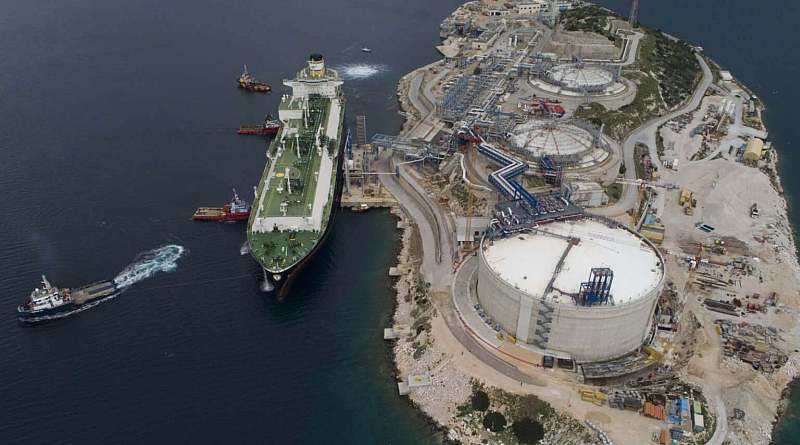
5. Greece is preparing to occupy the niche that Russia is rapidly losing in the European gas market.
– The country positions itself as the southern “gateway” to Europe for importing liquefied natural gas, primarily from the USA, amidst the EU’s preparations to completely phase out Russian gas by 2027.
– Athens is betting on its advantageous geographic location, expanding LNG capacity, infrastructure modernization, and close energy ties with Washington. Energy Minister Stavros Papastavrou openly promotes the idea of deepening cooperation with the USA, viewing energy as a key element of the transatlantic partnership amid growing tensions between Washington and Brussels.
– Essentially, this involves a market redistribution where Russia is gradually being phased out due to sanctions and the EU’s political decision to abandon Russian supplies.
– Over 80% of Greece’s LNG imports in 2025 already came from the USA, demonstrating a rapid redirection of flows. Despite discussions about the risk of new dependency — now on American gas — the strategic trend is clear: Russian pipeline gas is losing ground in Europe, while infrastructural and trade connections are being reformatted without Moscow’s involvement.
– For Russia, this means a further decline in its share of one of its key export markets and the loss of long-term contractual positions that have formed the basis of its foreign currency earnings for decades.
6. Iran has entered into a secret deal with Russia worth about 500 million euros for the purchase of portable air defense missile systems “Verba”.
– The contract was signed in Moscow in December, and it includes the delivery of 500 launchers and 2,500 9M336 missiles over three years — approximately from 2027 to 2029.
– According to some data, part of the systems could have been delivered earlier. “Verba” is a modern Russian MANPADS with infrared guidance, capable of targeting cruise missiles, low-flying aircraft, and drones. The system is designed for mobile units, allowing for dispersed air defense without relying on stationary radars.
– Meanwhile, even if deployed, these complexes are unlikely to significantly alter the overall balance of power in the event of a large-scale conflict. The agreement was concluded between “Rosoboronexport” and a representative of the Iranian Ministry of Defense and Armed Forces Logistics.
– Documents indicate that the missiles are sold at 170,000 euros per unit, and the launchers at 40,000 euros. The package also includes 500 “Maugli-2” night vision devices.
– The need for new air defense systems arose after a 12-day conflict with Israel, during which Iran’s integrated air defense suffered significant losses. Tehran officially approached Moscow with a request as early as July last year.
– In recent weeks, flights by Russian military transport aircraft between Russia and Iran have been recorded, and in January, reports indicated that Iran received up to six Mi-28 attack helicopters.
– Such deliveries will not make Iran equal in capabilities to leading military powers, but they can complicate and prolong potential future conflicts.
7. The relaunch of the “Nord Stream” pipelines is being discussed behind the scenes between Moscow and Washington, and this is considered not a technical project but part of geopolitical consultations.
– Representatives from Russia and the USA may be holding unofficial negotiations regarding the possible resumption of the “Nord Stream” pipelines under American control, without the EU’s involvement. In the discussion
it seems to involve scenarios where Washington would gain a significant role or even control over supplies through these pipelines.
– Such consultations are being conducted “behind the scenes,” bypassing international institutions and involving possible participation of American investors in the restoration or acquisition of part of the infrastructure.
– There are no official confirmations from the governments of Russia, the USA, or the EU, but the fact that such narratives appear in leading European media indicates that energy infrastructure remains a subject of strategic bargaining, not just technical restoration.
– This could have serious consequences for Europe, as even the discussion of a possible launch of the “Nord Streams” under American control undermines European unity regarding energy security and increases dependency on external interests, rather than a stable partnership with Moscow.
8. The European Union extended sanctions against Russia until February 24, 2027, establishing the long-term nature of restrictive policies in response to aggression against Ukraine.
– In addition to extending existing measures, the EU Council expanded personal sanctions to include representatives of the Russian security and judicial apparatus.
– Restrictions affected three prison colony chiefs, a pre-trial detention center head, two judges, one prosecutor, and a senior investigator. The decision entails maintaining asset freezes within EU jurisdiction and banning entry to bloc countries.
– Expanding the list demonstrates Brussels’ focus on holding not only the political leadership accountable but also representatives of the repressive system involved in persecutions and human rights violations.
– Extending sanctions until 2027 signals the absence of prerequisites for their easing and establishes long-term economic and personal restrictions for Moscow.
9. Hungary blocked the adoption of a new EU sanction package against Russia due to Ukraine not resuming oil supplies through the “Druzhba” pipeline.
– Brussels had aimed to agree on the sanctions by Tuesday — the fourth anniversary of the full-scale war. The proposed package includes a ban on providing sea services — insurance, repair, and maintenance — to ships carrying Russian oil, as well as strengthening mechanisms to counter sanction circumvention through third countries, including Kyrgyzstan. Separate proposals suggest limiting cryptocurrency transactions with Russia, which may be used to minimize sanction pressure.
– Budapest also linked its position with blocking a €90 billion EU loan for Ukraine, claiming that Kyiv allegedly did not resume full operation of “Druzhba” after damage caused by Russian attacks at the end of January.
– Prime Minister Viktor Orban stated that Hungary “will not be idle” while the pipeline is halted and threatened countermeasures, including reducing diesel fuel supplies to Ukraine, which is critical amidst Russian strikes on energy infrastructure.
– The Ukrainian mission to the EU stated they are ready to resume pipeline operations as soon as it becomes safe for energy sector workers under current shelling conditions. Alternative routes for oil transportation using existing infrastructure are also being considered.
– Despite Budapest’s stance, EU diplomats hoped that the sanction package could still be agreed upon by the symbolic date of February 24, when European Commission President Ursula von der Leyen plans to visit Kyiv.
– Meanwhile, in Brussels, therecognize that Hungary’s political unpredictability complicates the assessment of the chances for a swift veto lift, which effectively plays into Moscow’s hands and weakens European unity on the issue of sanction pressure.
In the image: A liquefied natural gas (LNG) tanker docked at the Revithousa terminal on the island of the same name in Greece
