
Alexander Kovalenko / Obozrevatel
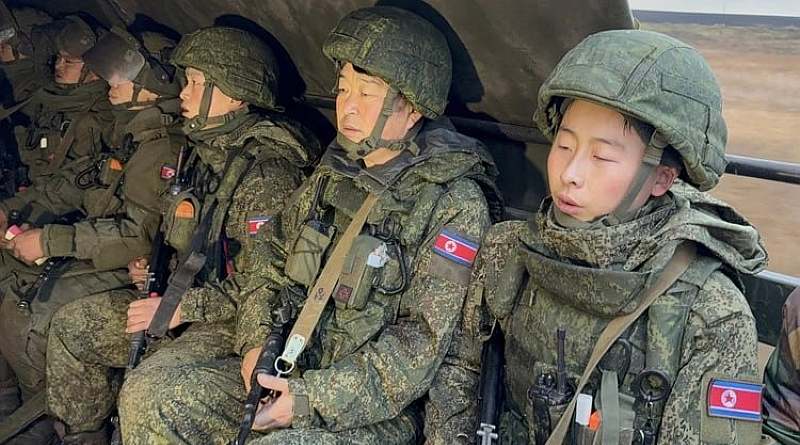
North Korean troops have been involved in the war with Ukraine since the fall of 2024. Since then, the KPA losses have amounted to 6,000, and about 11,000 military personnel remain on the territory of Russia in the border zone with the Sumy region.
What is the current role of North Koreans in the war against Ukraine, and why do they continue to remain in the Kursk region? Let’s find out.
How Many KPA Soldiers Were Involved in the War
It is worth noting that throughout the deployment of the North Korean contingent in the war against Ukraine, about 1,100 military personnel have returned to Korea from Russia, according to South Korean intelligence. Considering the losses and the contingent maintained in the Kursk region, over 18,000 North Korean troops were involved in the war against Ukraine.
Another important point is that from the day the KPA troops were engaged in combat operations, they participated in the occupation of Ukrainian territories only indirectly. Instances where North Koreans directly entered Ukrainian territory were isolated.
Given that they were recorded in the border zone of the Kursk and Sumy regions, it is possible that this was either a mistaken entry by North Korean units or a deliberate deployment by Russian command—without the agreement of the Korean People’s Army commanders for such actions.
The KPA units are currently mainly stationed in the Kursk region, taking part in artillery shelling of the Sumy region, as well as raids using tactical drones, thereby improving their skills in operating fpv. However, they are not engaged in active combat operations on Ukrainian territory.
It is evident that this is an integral part of the agreements between Pyongyang and Moscow—not to use North Koreans outside of Russia. Whether this is because Pyongyang adheres to certain international restrictions regarding the deployment of its contingent in the Russian Federation, or simply because Kim Jong Un demanded significantly more compensation from Putin for sending North Koreans into Ukraine, is difficult to say. But the fact remains that KPA soldiers try not to leave the Kursk region. At least for now.
The Effect and Effectiveness of the KPA in 2024
Information about the possibility of North Korean troops participating in the war with Ukraine began to appear as early as June 2024. Western media reported that during a meeting with Kim Jong Un, Vladimir Putin requested not only the supply of ammunition and equipment but also engineering troops.
There was speculation that 3-4 engineering brigades might be sent for the needs of the Russian occupation forces, given the catastrophic losses in the engineering troops of the Russian army.
However, the raid operation of the Ukrainian Defense Forces in the Kursk region of the Russian Federation in August 2024 apparently forced a radical reconsideration of Putin’s request. The discussion shifted not to 3-4 engineering brigades, but rather to such a number of infantry. The reason is the same as during the first request: the catastrophic situation with the defense of the Kursk region in the ROF and the inability to quickly increase the Russian grouping on the failed bridgehead.
The involvement of KPA troops became a vivid demonstration of Russia’s limited ability to independently cope with unexpected challenges, even in the category which seemed to have always been trouble-free for the Russian army – the recruitment of human resources.
Thus, all expert conclusions and opinions that Russia possesses unlimited human resources, and it is impossible to oppose it in this matter, were shattered. It was always possible, given the right approach.
The effect of deploying KPA soldiers in the Kursk region exposed the clear underestimation of the North Korean military machine in terms of training military personnel.
When the first reports about the transfer of KPA units to the Kursk region began to appear, the Ukrainian information space was filled with absurd, clickbait headlines claiming that half of the North Koreans had scattered, others had indulged in drinking, and that no one was ready to fight.
Reality turned out to be different.
North Korean military personnel were simultaneously desperate, brave, and well-prepared. KPA soldiers had a high level of firearms training, confirming that a lot of attention is paid to infantry training in the DPRK. This was not just propaganda videos, but a fact. Along with skills training, there was also deep ideological indoctrination of soldiers, who, even when wounded and unable to be evacuated, ended their lives by suicide.
In North Korean units, high coordination of actions was noted at the company-platoon level. Even with insufficient communication and support, they operated much more organized and effectively than Russian occupiers. High organization combined with fearlessness and desperation truly yielded results where Russians were losing a company with zero efficiency.
All this led to the fact that KPA units played a decisive role in regaining ROF control over part of the Kursk region. Without the support of North Korean units, which in terms of training were better than ROF units and suffered losses largely due to the mindless use of their resources by Russian commanders, Russian troops would have hardly managed to regain full control over KUNR by the end of 2025.
Why KPA Remains in Russia
In the meantime, it might seem that if the ROF regained control over the Kursk region, then why do North Korean troops remain on Russian territory, and only 1,100 soldiers returned to the DPRK?
The answer lies in the very reason why North Koreans appeared in the Russian Federation in the first place: Russian troops are critically lacking personnel to cover all front-line areas. And as soon as a critical situation arises somewhere, a collapse or at least a drop in defense capabilities immediately begins.
If the KNA units are withdrawn from Kursk Oblast tomorrow, the entire grouping will suddenly weaken and will not be able not only to carry out offensive actions in Sumy Oblast but also to defend even the occupied territories.
Last week, the Commander-in-Chief of the Armed Forces of Ukraine, General Oleksandr Syrskyi, noted that in January, the ROV experienced a significant imbalance: they lost more personnel than they managed to mobilize. The difference was 8,000 people!
At first glance, this seems insignificant, but it is not. Since the second half of 2025, the Russian occupying force has not increased, maintaining an average number of 700-715 thousand personnel, including reserves. However, since 2022, the ROV has been increasing annually by 110-130 thousand through mobilization efforts.
It is clear that the Russian army is sinking into a mobilization crisis, which can only be resolved by declaring a general mobilization in a strict, repressive format. However, the Putin regime is not in a hurry to do so, fearing internal destabilization in the country.
For this reason, North Korean troops remain in Russia and possibly even plans to increase this contingent may be raised.
The ROV is plunging into a crisis, which they managed to avoid for four years with “partial” mobilization and one-time payments to contractors. But the number of those willing to go to Ukraine to kill for a few million rubles, with a high probability of returning in a zinc coffin, is decreasing. Gradually, the hope for the continuation of the war for the Putin regime becomes foreign troops and recruitment in third world countries.
Material prepared as part of a joint project by OBOZ.UA and the group “Information Resistance”.
