
On the night of November 24, according to Polish media reports, the Polish air border was again crossed by a Russian drone. This is not the first such incident. Last week, on November 20, Polish airspace was violated by three Russian cruise missiles, X-101.
How do Poland and NATO plan to respond to these Russian provocations, and is there a chance for joint patrolling of part of the Ukrainian airspace with NATO aviation, as proposed by Polish Foreign Minister Radoslaw Sikorski back in September 2025?
On Friday, November 20, three Russian cruise missiles, X-101, crossed into Polish airspace. This was reported on the evening of Sunday, November 22, by the district prosecutor’s office in Lublin, which is conducting the investigation. Polish media reported on the crossing and explosion in a field near Novy Lipovets in the Lublin Voivodeship on the day of the incident, initially with no certainty about the number and nature of the objects. It was first assumed to be two missiles and a reconnaissance drone, but investigators have now established that it was three X-101 missiles. Fragments were found in three locations: Novy Lipovets (Lublin Voivodeship), Rudnik nad Sanem, and Młodicz (both Subcarpathian Voivodeship). According to preliminary findings, all missiles were manufactured in the IV quarter of 2026 in Dubna, Moscow Region.
Meanwhile, Poland had not yet completed the investigation into the Friday incident when Polish media reported that on the night of November 24, Polish airspace was again violated by a Russian drone. Deputy Minister of National Defense Pavel Zalewski commented to Polish media that Russia deliberately directed the drone to Poland.
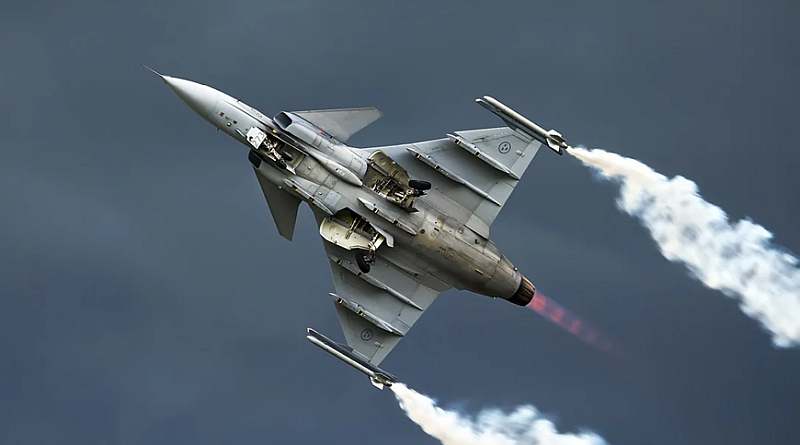
Already on Friday, the operational commander of the Polish Armed Forces, Ireneusz Nowak, told the Polish publication Rzeczpospolita that the three enemy objects were in Polish airspace for about three minutes before hitting the ground. Two Swedish Gripen fighters, participating in the patrolling of Polish airspace as part of NATO’s airspace protection mission, attempted to intercept the missiles. They received permission from NATO’s Combined Air Operations Center to open fire on the objects under certain conditions; however, the pilots were unable to confirm the identification of the objects in time, mainly due to “extremely difficult weather conditions.”
Within the Ukrainian information space, discussions have once again emerged about why the military in Poland did not shoot down objects that could pose a deadly threat to their country’s citizens. Meanwhile, discussions in Poland have intensified about how to better protect themselves, given that this is not the first border crossing by Russian missiles and drones. Furthermore, only a few weeks ago, Prime Minister Donald Tusk reported provocations from Russia at the border. According to the politician, Warsaw “mobilized the necessary forces and resources there and was able to prevent the provocation.”
After the incident on Friday, Warsaw is also trying to garner support from NATO. Poland spends the highest percentage of its GDP on defense among Alliance countries, so it clearly hopes for greater support. On Monday, November 23, in the afternoon in Brussels, a meeting of the NATO North Atlantic Council — the highest decision-making body in the Alliance — was held at Poland’s initiative, dedicated to airspace violations over Poland by Russian missiles.
Poland was represented by Deputy Minister of National Defense Pavel Zalewski, and he highly praised the results at the briefing following the meeting, as reported by Polish media. Zalewski stated that some of Poland’s proposals to enhance NATO’s air defense capabilities “received a very positive response.” For example, Poland will be provided with an AWACS early warning aircraft (an aircraft equipped with an electronic system that allows for the detection of objects and guiding of, for instance, missiles. This system also helps in coordinating allies).
Meanwhile, some Polish publicists are questioning whether Poland and NATO are reacting too mildly. It seems that Poland is ready for more radical steps, while the Alliance as a whole is not yet. This unpreparedness likely played a role in why NATO pilots participating in the patrol of Polish airspace could not intercept the missiles.
Starting October 1, 2026, Poland made changes to its airspace defense procedures. According to them, the military has the right to shoot down foreign flying objects without visual identification (a rule that was in place in Poland and applies to NATO countries in peacetime). Now, Polish military personnel need only so-called “positive identification,” which means they can use radar data and other systems, including information from the Ukrainian side, to make a decision to shoot down. Warsaw implemented these changes after a Russian Kh-101 missile fell in the Lublin Voivodeship on July 30.
However, these requirements do not apply to Alliance operations involving foreign aircraft. “To make this possible, an agreement with air mission participants is needed with NATO’s consent, and we are far from that — although Zalewski hinted that the Alliance might go down this path,” writes Polish analyst Marek Świerczyński on the Polityka website.
Another Polish analyst and former military pilot, Major Michał Fischer notes that considering this, there is already an information attack underway in the Polish information space, but this time it has an anti-NATO rather than anti-Ukrainian character. The Deputy Minister of Digitization of Poland, Pawel Olszewski, reported on a new wave of disinformation. For example, one of the theses spread by Russian disinformation in Poland is that the rocket debris was brought in by special services and that the Polish army cannot independently take measures to reduce the threat without Germany’s consent.
Considering the increase in Russian air attacks, it seems logical to return to the proposal expressed by the Minister of Foreign Affairs of Poland, Radosław Sikorski, back in September 2025 (after 19 Russian drones flew into Polish territory).
However, judging by publications and comments, there is currently a lack of political will for such a step—likely both within Poland and even more so among NATO allies.
“There is no conviction among NATO allies that this is necessary and sufficiently safe—to protect at least part of Ukraine. I would say that there is not only no consensus but even no political will to discuss it,” says Polish publicist Michał Potocki in a comment to Tygodnik.
Polish analyst and former military pilot, Major Michał Fischer, in his publication after the attack of Russian missiles on Poland, also returns to the topic of shooting down Russian missiles over the territory of western Ukraine. In his opinion, such steps from Warsaw “mean an obvious and undeniable entry into the war.” At the same time, he warns that if Russian missiles are not shot down over the territory of western Ukraine, Poles will have to “come to terms with the fact that at best they can intercept a target only 3–6 minutes after it enters their airspace.” It is simply impossible to do so faster, Fischer believes.
In any case, Warsaw will continue to push the Alliance to find better solutions for its own defense. A meeting of foreign ministers of the Alliance countries is scheduled for December 2, and Poland expects it to bring new changes for them as well. At the same time, without political will, it seems that the Alliance will not achieve truly breakthrough decisions.
On the cover: Gripen aircraft. Photo: Sweden Air Force
