
Dobropillia Direction
The enemy (Russian forces) continues offensive actions in the operational zone of their “Center” troop group (TG) as part of the Slovyansk-Kramatorsk offensive operation. The enemy command focuses its main efforts in the areas of its 2nd and 51st Combined Arms Armies (CAA), in the center and on the right flank of TG “Center”. It is evidently seeking to eliminate the Dobropillia defense district of the Ukrainian Armed Forces, break through with its forward units to the Dobropillia-Kramatorsk road northeast of Dobropillia, and also advance with the forces of TG “Center”, in coordination with the troops on the left flank of the 8th CAA TG “South”, to the near approaches of the city of Druzhkivka along the Kazennyi Torets River from the southwest.
Currently, the enemy has not yet managed to penetrate significantly with its assault groups into Dobropillia, nor break through to the mentioned road and reach the near approaches to Druzhkivka. Despite the fact that the forward units of the Russian 2nd and 51st CAA had previously reached the near approaches to Dobropillia, at this moment their main forces have evidently been forced into tough counter-battles along the Matyasheve–Svitlye line, in the directions of Dorozhne–Novyi Donbas and Nove Shakhove–Vilne. As a result, the enemy has not only failed to break into Dobropillia “on the move” with significant forces, but the overall pace of their advance in the tactical zone has significantly decreased over the month (starting October 21), and in some sectors has completely “stalled”. The intensive infiltration actions of the forward Russian units and formations have not yet yielded significant results, even from a tactical standpoint, although in some areas they allowed their assault groups to infiltrate the battle formations of the forward Ukrainian units.
1. In this direction, the enemy operates with the following forces and means (approximately):
The 2nd CAA operates in this direction with the main forces:
– 27th Motor Rifle Division (MRD) – 433rd, 506th, and 589th Motor Rifle Regiments (MRR), 268th Self-Propelled Artillery Regiment (SPR);
– 15th Separate Motor Rifle Brigade (SMRB);
– 30th SMRB;
– 385th Artillery Brigade (AB).
The 41st CAA mainly operates to the west and northwest of Pokrovsk, but part of its forces has evidently been regrouped to the right flank of the TG “Center” group to break through to the Dobropillia-Kramatorsk road and reach the near approaches to Druzhkivka from the southwest:
– 35th SMRB;
– 55th SMRB;
– 74th SMRB;
– 120th AB.
The 51st ZVA, after regrouping on the right flank of the “Center” Operational Group of the 41st ZVA, has apparently reinforced its operational structure and is now fully aimed at Dobropillya:
– 1st Separate Motorized Rifle Brigade (MSBR);
– 5th MSBR;
– 9th MSBR;
– 110th MSBR;
– 114th MSBR;
– 132nd MSBR;
– 14th Artillery Brigade (ABR);
– up to 7 separate rifle regiments (SRR) of the “mobilization reserve” (MR);
– up to 4 separate assault/reconnaissance/special-purpose battalions (SAB/ORB/SB SpP);
– up to 11 separate rifle battalions (SRB) of the MR.
Additionally, on the right flank of the “Center” Operational Group (towards Druzhkivka), there may be separate units and subunits from:
– 90th Tank Division (TD) – probably one battalion each from the 228th Motor Rifle Regiment and 239th Tank Regiment;
– also in the Dobropillya area are separate units from the 61st Russian Separate Marine Brigade (OMBRM) or the 177th Separate Marine Regiment (OMR).
2. Current Situation on the Dobropillya front is characterized by a high level of infiltration and assault actions by Russian forces at the tactical level across almost the entire operational zone of the “Center” Operational Group, as well as their persistent efforts in the operational-tactical sense to not only break through to Dobropillya with significant forces of their assault infantry but also to surround this area from the flanks.
As a result, the enemy managed to infiltrate their assault infantry in several tactical sectors and directions, but the advancement of their main forward units and subunits appears much more modest. Specifically:
– In the Shakhove–Toretske direction, the enemy attempted to fully take control of the latter, but so far unsuccessfully. During the reporting period, they captured Sofiivka, but the numerous small Russian infantry groups that previously penetrated towards Pavlivka, Novopavlivka, and even Novomykolaivka, were likely completely “cleared” by the Ukrainian Armed Forces. Currently, the presence of some “ultra-small” Russian assault groups has been detected only 1-1.5 km north of Toretske and within it.
– Constant “penetrating” actions by the enemy also continue in the Pankivka – Kucheryv Yar and Noveshakhove – Vilne directions (and further towards Zolotyy Kolodyaz). Russian assault groups persistently attempt to reach the Dobropillya – Kramatorsk road (T-0514) near the village of Novotroitske and northwest of the village of Zolotyy Kolodyaz.
Currently, Ukrainian forces continue to hold the line Stepivka – Kucheryv Yar, engaging in fierce counter-battles with the Russian assault infantry in the Vilne area, the “Dacha Vilne” area, and south of the Kucheryv Yar village (“Quarries” area). In reality, the enemy managed to penetrate with several infantry groups only into Vilne village and a few forest strips south of the villages of Zolotyy Kolodyaz and Kucheryv Yar. So far, the Russian command has not managed to advance north towards the road with the main forces of their forward units.
– The situation is similar in the Noveshakhove – Hannivka and Dorigne – Novyy Donbas directions. The enemy, operating mainly along the Byk River from Noveshakhove and along the railway from the Dorigne village past Novyy Donbas towards Dobropillya, conducts almost continuous intensive infiltrations and assault actions, trying to break through their assault groups directly into the city of Dobropillya.
However, currently, the enemy, in this sense, can only boast the presence of its small infantry groups in the village of Novyi Donbas and in the area around the reservoir on the Byk River east of Hannivka. It is evident that during the reporting period, Ukrainian forces managed to eliminate several Russian infiltrator infantry groups directly in Hannivka, near the spoil heap on the northeastern outskirts of Dobropillia, and in the city itself. It is very likely that there is no Russian infantry in Dobropillia (or at least there is so little, possibly in the form of separate infantrymen, that it is simply not detected).
– South of Dobropillia, the enemy’s results are more successful. It is apparent that during the reporting period they managed to fully capture the villages of Matyasheve, Svitle, and the town of Bilytske, as well as infiltrate a significant portion of their assault infantry in the directions of Bilytske – Chernihivka, Svitle – Vodyanske, and Matyasheve – Novohryshyne.
Additionally, the enemy’s “very small” infantry groups and even individual infantrymen have been recorded in forest belts along the highway and railway from Dobropillia to Pokrovsk (in the area between Novyi Donbas and Dobropillia), near Novofedorivka, and in several forest areas west of the city.
However, fighting in the area of Dobropillia, Nadiia, Vodyanske, Chernihivka, Novohryshyne, and Novyi Donbas (to the south and southeast of the city) continues; it is currently inappropriate to speak of complete and stable control of these settlements by the enemy.
– The enemy is also conducting certain infiltration actions in the directions of Vasyliivka – Myrne, as well as west of Hryshyne. Their small infantry groups have already been recorded in the Myrne area, south of Vasyliivka, and a few kilometers west of Hryshyne. In the direction of Kotlyne – Serhiivka, Russian forces are also attempting to advance with their small infantry groups.
It is quite likely that this enemy activity in the 41st CAA’s zone is due to the Russian command’s desire to cover the left flank of its offensive group, which is conducting heavy offensive battles south of Dobropillia, from possible (probable) counterattacking actions by the AFU in the general tactical direction of Serhiivka – Hryshyne.
So far, Ukrainian forces have not shown such intent, but they managed to completely “clear” Russian assault groups in this direction, which had previously broken through to Serhiivka and Novopidhodne. Perhaps only in the village of Molodetske have a few Russian assault “bodies” been hiding.
3. Regarding further prospects for the development of the situation in the Dobropillia direction, I would like to highlight a few operational-tactical factors, namely:
– The “maneuver” by part of the 41st CAA, regrouped at the beginning of autumn by the command of OVG “Center” on its right flank, obviously led to completely different results than expected. Theoretically, these forces SHOULD HAVE already completed their two main tasks – breaking from the southwest into the area of Novomykolaivka – Novohryhorivka – Rayske – Torske and cutting the Dobropillia – Kramatorsk road near Novotroitske and northwest of Zolotyi Kolodiaz. This would have allowed both Russian OVGs (“Center” and “South”) to sharply accelerate the pace of the entire Sloviansk-Kramatorsk offensive operation.
Meanwhile, the regrouped forces are currently engaged in exhausting counterattacks near Toretsk and are unsuccessfully trying to break through via Vilne and from Shakhove to the north. It is clear that the element of surprise, when these units suddenly intensified their activity in these directions, has passed. Accordingly, the Armed Forces of Ukraine managed not only to block their advance but also successfully eliminated all instances of Russian assault groups penetrating towards Novomykhailivka, Pavlivka, and Novopavlivka (i.e., towards Druzhkivka). Currently, they are effectively blocking the northern advance of these forces towards the T-0514 road in the area of Zoloty Kolodyaz – Kucheri Yar – Vilne – Stepy.
– On the other hand, this regrouping had a certain positive effect for the Russian command. It allowed the command of the Russian Group “Center” to consolidate the operational structure of its 51st Combined Armed Army and focus its troops exclusively on the Dobropil defense area of the Armed Forces of Ukraine. This quickly influenced the overall situation to the south-east of Dobropillia (the enemy successfully completed battles for Bilytske and broke through from the south and southeast up to Dobropillia).
Considering that currently the Group “Center” and the troops of the left flank of the Group “South” remain the only ones progressing, albeit in the tactical zone, within the entire Slovyansk-Kramatorsk offensive operation of the Russian forces, it is likely that we should expect further strengthening of these groups.
Another question is how exactly this reinforcement might happen. However, this is a topic for a completely different, separate discussion.
– Another factor worth noting is the variability of further actions of the command of the Russian Group “Center” during the upcoming assault on Dobropillia, which is likely to occur soon.
It is clear that the command of the Russian Group “Center” has been unable to break through into Dobropillia “on the move” with substantial forces of its assault infantry when its forward units reached the outskirts of the city. This is now a fact.
This means that a systematic and gradual assault on Dobropillia (in terms of the infiltration and accumulation of Russian assault infantry directly in the city) is inevitable. In this context, there are two very likely elements: encircling the city from the flanks and “cutting off” its communications leading to it from the north and northwest, as well as from Kramatorsk.
Therefore, in my opinion, in the near future, the opponent will try, if not to physically capture, then at least to take under heavy fire control the areas of Sviatohorivka, Hannivka, and to break through to the area of Hruzke and Novotroitske. At the same time, the Russian command will probably try to completely block the roads to Dobropillia from Bilozerske using drones and artillery, possibly with dense remote mining. Immediately after, intensive “infiltration” directly into the city will begin.
– Another factor, undoubtedly, is the possibility (probability) of active Ukrainian resistance to these enemy plans. In my opinion, the most effective option in this regard would be counterattacks by the Armed Forces of Ukraine on the flanks of the Russian group deployed towards Dobropillya. For example, their advance to the Vasylivka–Hryshyne line, or even a breakthrough to the western outskirts of Pokrovsk, which is currently the main transshipment and accumulation center of logistics for Russian troops concentrated and deployed in the Dobropillya direction, primarily for the Russian 2nd Combined Arms Army (in this context, it is worth noting that the forward positions of the Armed Forces of Ukraine are currently located less than 7 km from the western outskirts of Pokrovsk).
Recent actions by the Russian command of the “Center” Group in the area of its 41st Combined Arms Army indicate that it not only understands this threat but also tries to eliminate it in advance by maximally pushing Ukrainian forces to the west of Pokrovsk.
Another point is that it clearly does not fully grasp the real scale and number of other threats throughout the ENTIRE operational zone of its “Center” Group. The Armed Forces of Ukraine have repeatedly demonstrated, in this respect, that they are capable of acting quite unconventionally, even with rather limited forces. So far, the Russian command, engrossed in its “assault on Dobropillya,” has managed to see only one such threat. However, this does not mean the real absence of other opportunities for the Armed Forces of Ukraine to disrupt this assault through their own active actions.
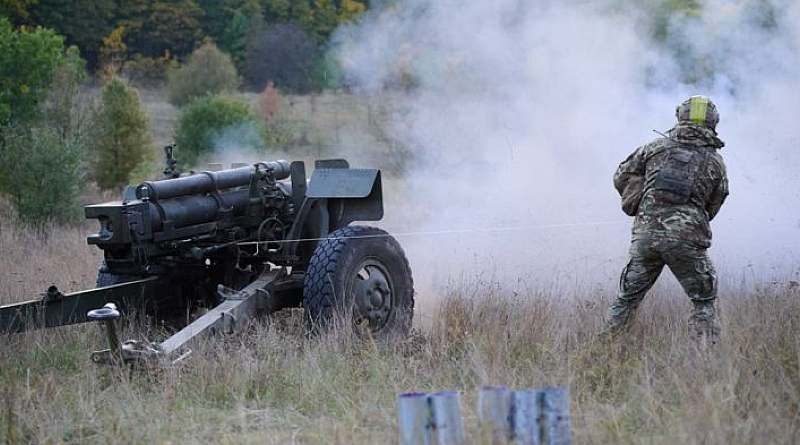
Photo: 66th Mechanized Brigade named after Prince Mstyslav the Brave
