
Phillips P. OBrien / Translation by iPress
Renowned American historian, Professor of Strategic Studies at the University of St Andrews (Scotland), Phillips O’Brien believes that Russia, lacking decisive success on land and struggling increasingly to defend against Ukrainian long-range strikes, is betting on massive attacks on civilian infrastructure to render Ukrainian cities uninhabitable and force Kyiv to make concessions. Simultaneously, in his opinion, Operation “Vivaldi” shows how Ukraine is increasing the role of robotic systems in logistics and combat operations, reducing its own losses, and intensifying pressure on Russian forces. He also links the Trump administration’s policies toward Ukraine with business deals between Trump and Putin, seeing in this a broader exchange of political concessions for economic benefits.
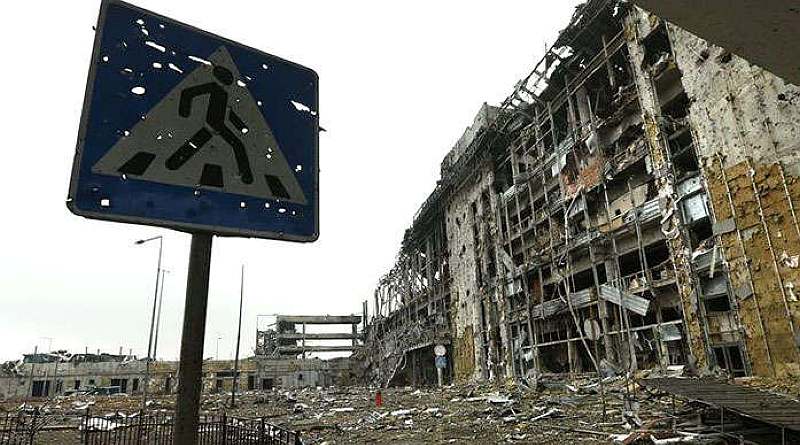
Well, the Russians have serious problems both on land and at sea, and are increasingly less able to defend against Ukrainian long-range strikes. They effectively have one strategic “advantage” left, and this is likely what we will see in action over the coming months. As has become clear from reports this week, Russian strategy now aims to render Ukraine uninhabitable, primarily its major cities. If reduced to two words, it’s a strategy of war crimes.
I think it’s worth trying to place this Russian strategy in a broader context. As is known, on land the Russians are stalling, whereas Ukraine is increasingly adept at conducting its own long-range campaign. Therefore, Russia is increasingly relying on its own long-range campaign in an attempt to achieve a strategic effect and force Ukrainians to agree to a deal that aligns with Russian interests, not forgetting the US assistance in this.
In recent days, Ukrainians, notably President Zelensky, have started openly discussing what they expect from this Russian strategy: initially in the Financial Times and later directly. The prospect is extremely grim.
Last week, new details emerged about Ukrainian successes in Operation “Vivaldi,” which also pushed Russia toward such a plan. More tasks are being performed by robots, reducing Ukrainian losses. Meanwhile, Russian losses are increasing, and the number of prisoners also seems to be rising. If Russia couldn’t escalate war crimes, it would become increasingly apparent that it is losing the war.

Finally, material has emerged detailing an agreement that has long been suspected at least here on this blog, but which remained opaque until now. Some details of the Russian “rewards” promised in exchange for an arrangement that would allow Russia to obtain the desired Ukrainian lands and people have become known. This can be called a real “win-win” deal by Jared Kushner. It is as opportunistic as one could imagine in our extremely opportunistic times.
Russia’s strategy in two words: war crimes
“He said that there are no longer any rules.”
By “he,” Zelensky here, of course, means Putin. The interesting part is not that Putin supposedly previously followed any “rules” of war – which is, of course, nonsense. In any reasonable sense, the Russians have not adhered to legal norms in conducting warfare. If they have imposed any restrictions upon themselves, it was due to the fear of Ukrainian retaliation, international reaction, or repercussions for their own army or population.
Here, by the way, is Zelensky’s post, in which he discusses this statement.
For example, Russians have so far not made direct strikes on Ukrainian nuclear power plants not out of respect for legal norms, but because they understood that such a strike could backfire on them. It could provoke a sharp reaction across Europe and even create a radiation threat to their own army and population. Ukrainian intelligence now says they have direct data that this winter, essentially from now on, the Russians intend to abandon almost all existing self-restraints to force the Ukrainian government into an agreement favorable to Russia. They will target Ukraine’s energy, transport, and even water supply systems to make civilian life impossible. The main targets of Russian attacks will be Kyiv, Kharkiv, Odesa, and Lviv, and the types of targets we have been discussing here for several months.
Moreover, the Russians have a specific timeline in mind: they hope to make Ukrainian cities “unlivable,” cause a new wave of refugees, and force the Ukrainian government into a deal in the first half of 2027.
It is worth discussing potential strikes on nuclear power plants separately. In a sense, this could simply escalate a tactic already familiar to Ukrainians: not blowing up the plants themselves, but disconnecting them from the power grid, which in itself is extremely dangerous. The risk of increased Russian attacks on Ukrainian NPPs has been discussed for years; in 2025, RUSI published a detailed report on this topic.
Details released last week, including in a New York Times article, suggest that Russians might sharply increase the danger of their previous operations – for example, trying to cut off the water supply to three operating Ukrainian NPPs, thereby jeopardizing cooling systems. These three plants are undoubtedly the most crucial part of the surviving Ukrainian energy system. Russians have destroyed almost all other large non-nuclear generation sources – from dams to power plants. After this, a significant portion of Ukraine’s electricity supply relies on nuclear generation and on the growing solar energy.
And last week is unlikely to have reassured those who believe the Russians would not take such a step.
Last week, we already saw glimpses of that new Russian “lawlessness” being discussed now. The Russians attacked two key Kyiv bridges. First, they attacked the South Bridge twice in one week, possibly the most important transport artery between the city’s right and left banks, which also has a metro line running over it.
And over the weekend, there were reports of attacks on the North Bridge: the strike hit the supports holding the structure.

The Russian Ministry of Defense gladly took responsibility for the attack, claiming that the strikes were supposedly aimed at objects that were intended to “facilitate troop movements and logistics for military deliveries.” In reality, the goal is to make life as difficult as possible in Kyiv, especially for the numerous residents of the left bank, and to initiate their departure process.
Another indication of the new strategy was the Ukrainian side’s reports that the Russians used specially modified “Geraniums” to destroy power line supports.
The overall logic of these attacks is not surprising. The Russians might be starting earlier than planned. The reason could be their concern over the progress of Ukrainian counter-drone systems, particularly those created to combat reactive drones. Or they might believe that implementing their plan will take time.
Nevertheless, the general direction of the Russian campaign is clear. Russia is attempting to provoke a significantly larger civilian crisis this year than before, to force the Ukrainian government to accept Russian demands and European states to pressure Ukraine into concessions.
The reason why the Russians resort to this can actually say a lot about the course of the war. They are currently unable to advance on land, and personnel losses are becoming catastrophic. Furthermore, Russia is finding it increasingly difficult to counter Ukrainian long-range strikes—several large refineries were hit again last week. In many aspects, the war is developing in a strategically advantageous direction for Ukraine, and Russia’s inability to adapt to these changes might push Putin to rely even more on war crimes.
In sum, the Russian calculation seems quite simple. Now, Russia can strike Ukraine, and war crimes are the tool through which Russia hopes to intimidate Ukraine and force compliance. Furthermore, Putin might be willing to take the risk, expecting that Ukrainians will not respond with similar crimes, or that pressure from the US and Europe will limit Ukraine’s response.
The logic is brutally simple. Currently, war crimes are what Russia sees as its technological and military advantage. Moreover, the previous reactions of the USA and Europe have already shown the Russians that they can commit terrible war crimes, and fundamentally nothing changes. From a strategic point of view, war crimes not only seem rational to them—Russia is actually encouraged to commit them.
This is the kind of war we have created in the modern world. Do not look away.
Operation “Vivaldi”: Even More Robots
As already noted, one of the reasons why the Russians intend to rely even more on war crimes is that the situation at the front is deteriorating for them—and it seems to be getting even worse.
The overall Russian losses have reached extraordinary levels. According to the General Staff of Ukraine, in September, Russian military losses exceeded 46,000 people. This is not only a monthly record but also almost 50% more than the monthly Russian losses at the beginning of the year. Below is a monthly chart of Russian losses in 2026 according to Ukrainian assessments.

At the same time, the recruitment of personnel in Russia apparently cannot even approximately compensate for such losses. According to economist Janis Kluge from the German Institute for International and Security Affairs, in the first quarter of 2026, Russian forces were recruiting from 800 to 1,000 soldiers per day, whereas in the first quarter of 2025, it was from 1,000 to 1,200 per day.
If we assume that this figure has not decreased even further since then, Russia faces a real and increasingly deep reduction in troop numbers.
And “Vivaldi” will not improve the situation for Russia. Ukrainians believe that directly as a result of this operation, the Russian losses amount to at least 5,000 people—and this is only the data of the 3rd Army Corps, hence the lower limit of the estimate. Interestingly, the number of prisoners is also increasing. Last week, reportedly, up to 250 Russians surrendered; photos of these soldiers spread on the net, including from the Ukrainian army.
Of course, it’s not worth getting too carried away with reports of the collapse of the Russian front or large-scale Ukrainian breakthroughs. Ukrainian advances are consistent, but by the standards of military history over the last 150 years, they are still slow. At the same time, even the rather restrained DeepState reports that in some places Ukrainian forces have pushed the Russians back 5-10 kilometers. Here is their latest map, where the liberated territories are marked in light blue.

Important last week were not only the gradual Ukrainian advances but also the reports of how they were achieved. Ukrainians are clearly increasingly using unmanned ground vehicles—both new systems and converted old military equipment.
I don’t want to return to my favorite topic again, but logistics seem to have largely transitioned to robots. Ukrainians deliver about 80% of cargo using unmanned means and evacuate about 90% of the wounded with them. In past wars, a huge number of losses were associated with such logistical tasks; now these losses are significantly fewer.
This is extraordinary. The future of military logistics is changing right before our eyes. I will definitely write about this separately soon.
But it’s not just about logistics. Robots also perform strike tasks—from converted old equipment to entirely new systems. One example of the week is Ukrainian reports on the use of modified manned vehicles, old Soviet BTR-60s, as unmanned strike kamikaze machines. They were filled with explosives and directed as robotic assault platforms at Russian positions.
Every day, ground-based robotic complexes of the new generation (RCGs) are at work, specially designed for such tasks. One of the most intriguing reports was the use of new robotic grenade launcher platforms. They approached Russian positions, fired upon them, then moved to shelters and detonated inside.
Perhaps the most interesting detail of these attacks is the Ukrainian claim that these machines could be remotely controlled by operators who were in safe positions “tens of kilometers” from the front line.
Given the pace of technological development and adaptation in this war, this distance is likely to increase, resulting in fewer Ukrainian casualties and growing problems for Russian forces. Zelensky himself spoke about how such operations reduce Ukrainian losses.
Therefore, “Vivaldi” continues and increasingly shows how Ukraine has been preparing over the past months. This is an example of how technology can change the dynamics of war. The success of the operation is yet another reason why Russia increasingly relies on war crimes.
Quid pro quo between Trump and Putin
In the least surprising news of recent days, the New York Times reported on business deals between Putin and Trump that are being prepared and will continue to be implemented by their subordinates. I recommend reading this article.
Here is a brief summary for those who do not have time.
Anton Troianovski and Eric Lipton
Reporting from WashingtonOctober 3, 2026, 5:02 AM Eastern Time
The Trump administration’s negotiations with Russia to end the war in Ukraine have expanded and now encompass a multibillion-dollar oil deal that could benefit Middle Eastern businessmen linked to the two chief American negotiators – Steve Witkoff and Jared Kushner.
The deal, which requires approval by the US government and the Kremlin, involves an extensive network of oil fields, refineries, and gas stations worldwide owned by “Lukoil” – one of Russia’s largest energy companies.
The leading group pushing for the deal includes American investor Todd Boehly, who donated $2 million to President Trump’s political projects; two Middle Eastern groups that have done business with Kushner or the Witkoff family; and a structure within the US government itself.
These business arrangements are not new—they are part of a longstanding quid pro quo, i.e., mutual exchange of services. Why do you think Trump effectively left Ukraine without sufficient air defense? Why is the US government putting immense pressure on Ukraine to give up even more land and territories, even when Ukrainians are pushing back the Russians? Why does the Trump administration repeatedly leak that it wants to lift sanctions on Russia as soon as possible? I also advise reading the article from The Atlantic.
To really get the big money, the Trump administration has to secure for Putin the victory he desires, while simultaneously obtaining what it wants for itself. This is the true “win-win” deal that Jared Kushner (see the above New York Times material) spoke about in his infamous interview. Moreover, to make this clear even to the most stubborn deniers, Kushner directly stated: the obstacle to the agreement is Ukraine’s intransigence, i.e., unwillingness to cede more land and people to Putin.
“President Putin outlined the line he wants to reach. If Ukraine agreed to retreat to that line, then obviously the rest of the agreement would already be settled and pieced together.”
I do not understand how and why this surprises anyone. The Trump administration has made the USA an accomplice in Russian war crimes to enrich its circle and itself. All these materials only confirm this. The dishonesty lies with those who pretended for 20 months that Trump could genuinely help Ukraine.
The real big money will flow when Ukraine is surrendered. This is what defines US policy.
Cover photo: UAINFO.ORG
