

Information on current Russian losses due to sanctions as of 21.09.2026.
1. Ukrainian drones attacked Ufa in Bashkortostan on the morning of September 21.
– Local residents reported explosions in the northern part of the city, where a large “Bashneft” oil refining complex is located. A column of black smoke appeared over the industrial zone after the attack.
– The Ufa oil refining complex of “Bashneft” comprises three refineries: “Ufaneftekhim,” “Novoil,” and Ufa refinery, with a total capacity of about 23.5 million tons of oil per year.
2. Diesel sales on the Russian exchange fell by 30% in a week due to the shutdown of three refineries.
– The reduction in oil product production in Russia after the shutdown of three refineries led to a sharp decline in diesel sales on the Russian exchange. This involves the cessation of processing at the Saratov, Syzran, and Yaroslavl refineries, which were recently attacked by Ukrainian drones.
– The volumes of wholesale sales of AI-95 gasoline and summer diesel fuel on the St. Petersburg International Commodity and Raw Materials Exchange from September 14-18 decreased by 10.4% and 29.0% respectively, compared to the previous week.
– AI-92 gasoline sales increased by 1.3%. At the same time, its average trading volume this week was 7,320 tons per session, which is 13% less than in August.
– Wholesale sales of AI-95 averaged 4,030 tons per session, which is 25% lower than average daily figures in August. The average sales volume of summer diesel fuel from September 14-18 fell to 15,860 tons per session compared to 40,140 tons in August and 22-24,000 tons per session during the first two weeks of September.
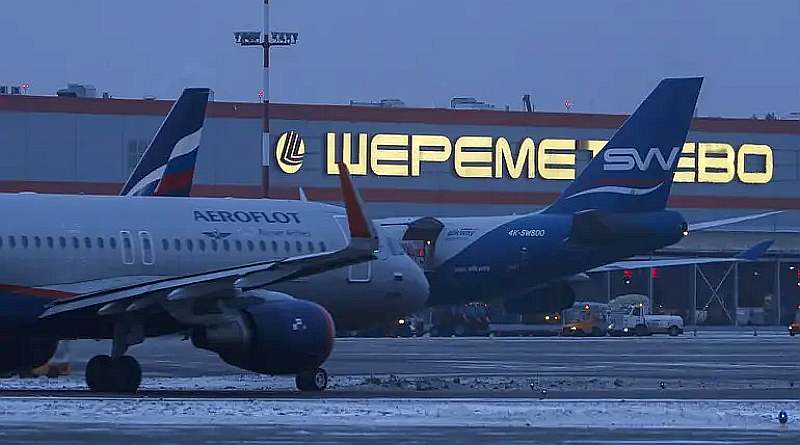
3. Over 400 flights were delayed or canceled at Moscow airports due to a large-scale drone attack.
– In Sheremetyevo, more than 30 flights were canceled by noon on Sunday, with more than 240 delayed for arrival and departure. Some planes were redirected to Nizhny Novgorod, Kazan, Cheboksary, and St. Petersburg.
– In Vnukovo, 11 flights were canceled and 129 delayed, in Domodedovo one flight was canceled and 27 delayed. In Zhukovsky, two flights were canceled and seven more were delayed.
– Disruptions affected both domestic and international flights, including to Antalya, Istanbul, Sharm El Sheikh, Cairo, Yerevan, Minsk, and Almaty. Mass cancellations and delays mean additional costs and financial losses for airlines due to disrupted flights, redirected planes, and forced passenger services.
4. Russia plans to sharply increase the production of strike drones in Tatarstan.
– At the Alabuga-Fiber plant, a new production line is planned to be launched by 2027, and by 2029, the output of aviation carbon fiber is expected to increase by 500 tons per year (carbon fiber is a strategically important material for the production of drone bodies).
– According to preliminary estimates, the additional volume may enable the production of up to 28,000 strike drones per year — a 78% increase.
– Simultaneously, underground production facilities are being built in Alabuga. According to Dnipro Osint, the area of the structures has already reached 42,000 sq. m. Construction likely began after the first Ukrainian strikes on the enterprise.
– Russia is simultaneously trying to increase production capacity for strike drones and protect them from Ukrainian attacks by relocating part of the production underground.
5. A classified Russian government document revealed a large-scale plan to deepen Russia-Iran cooperation in the financial, energy, nuclear, aviation, and transport sectors for 2024–2026.
– The 44-page document marked “For official use” was approved on September 2, 2024. Russia and Iran planned to increase the share of bilateral trade in national currencies from 68% in 2024 to 71% in 2026, expand their financial systems, and use central bank digital currencies for cross-border transactions.
– The plan also involves “Rosatom” in the operation of the Bushehr nuclear power plant, cooperation in the development of Iranian oil and gas fields, and the creation of a production facility in Iran for certain parts for Russian aircraft.
– Separate projects pertain to the Rasht–Astara railway route, logistics infrastructure, IT, telecommunications, and media.
– The document indicates an attempt by Russia and Iran to create long-term economic and financial ties less dependent on Western infrastructure and sanctions. However, some of the planned projects have not yet confirmed implementation status.
6. Several foreign refineries of Lukoil reduced production or shut down due to uncertainty with the sale of the company’s assets.
– The American Carlyle Group has been negotiating for about a year to purchase Lukoil’s assets in 17 countries valued at about $20 billion. In early 2026, the parties reached an agreement approved by OFAC, but the deal stalled in Donald Trump’s administration due to approvals between the National Security Council, the State Department, and the U.S. Treasury.
– Specifically, the Petrotel refinery in Romania is not operating after scheduled maintenance. According to a negotiation participant, completing the deal would allow returning additional processing capacity of 100-150 thousand barrels per day to operation.
– Meanwhile, OFAC continues to extend licenses allowing the operation of Lukoil enterprises.
7. Indian refineries may reduce purchases of Russian oil due to the threat of new U.S. tariffs.
– Producers have already started looking for alternative cargoes for shipments in November. Russia remains the main supplier of oil to India: about 40% of the country’s imports in 2026 will account for Russian oil. In September, deliveries may amount to about 1.9 million barrels per day — over 35% of imports and the lowest figure since April.
– A new US law allows the president to impose tariffs of up to 100% on goods from countries purchasing Russian energy. India is already monitoring whether Washington will apply these measures against China as well.
– At the same time, quickly replacing Russian volumes will be difficult due to high oil prices and limited availability of alternative supplies. India’s demand for oil is also growing, and imports may reach a record 5.4 million barrels per day.
8. Hungary is asking the US for exemption from possible sanctions for the purchase of Russian oil during a transition period.
– Chairman of the Hungarian Parliament’s Foreign Affairs Committee, Marton Hajdu, stated that he made this request during a meeting with representatives of the Republican and Democratic parties in the US.
– The new government of Peter Magyar declared its intention to abandon Russian gas and diversify oil imports; however, the country remains dependent on Russian energy resources.
– In November 2025, Hungarian authorities received an exemption from the US regarding sanctions on the purchase of Russian energy. Now Budapest is trying to retain it for the transition period.
