
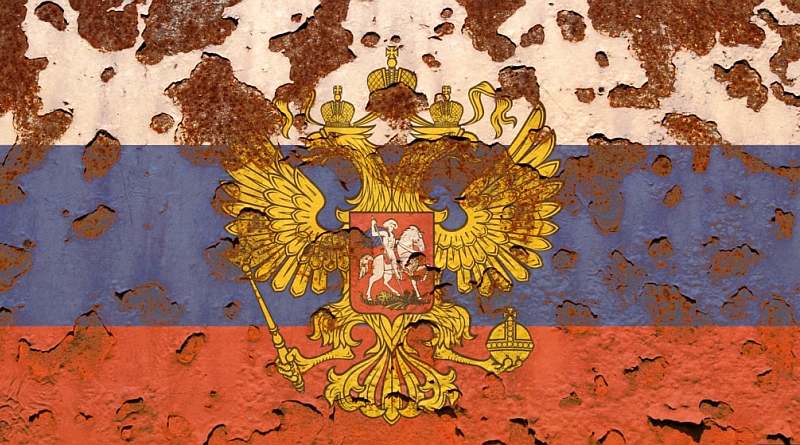

For centuries, Russian history resembled a worn-out record. Creaks, cracks, bloody chaos, nullification — and again the old song about the main thing. The Romanov empire collapsed — and from its remnants, bathed in blood, an even scarier red empire was built. The Soviet Union died, the country tasted freedom in the nineties — and then happily dived back into the warm swamp of personalist dictatorship.
Due to this damned track effect, many people today feel defeated. It seems like a vicious circle. That when the current regime collapses, a new ghoul with epaulettes will inevitably emerge from its ruins, tighten the screws, and drive the country onto another round of historical hell.
Relax. And simultaneously — be horrified.
There will be no new circle. The track has ended. It has crashed into a concrete wall of physical, biological, and historical impossibility. What we are witnessing today is not another spiral that can lead to a new turn of greatness. It is the death throes of a once-mighty cannibal empire. The Leviathan will die. And there are five reasons for this, against which political technologists and security forces are powerless.
FIRST REASON: Feast on the Corpse, or the End of Soviet Inertia
It must be honestly acknowledged: in the last twenty-five years, Russia hasn’t built a new empire. It has been consuming the corpse of the previous one.
All this imperial cosplay, geopolitical posturing, and saber-rattling were based solely on the colossal resources left by the Soviet Union. Infrastructure, power plants, bridges, railway hubs, and hydroelectric stations were built by grandfathers. Enormous arsenals of armored vehicles and millions of tons of shells, which are now joyfully burned, have been lying in warehouses since the seventies. Scientific schools, space, aviation — all of this was consuming old fat.
They haven’t laid their own foundation in a quarter of a century. The regime only knew how to pump oil from Soviet wells through Soviet pipes and buy loyalty and Western technologies with this crazy money.
Today this fat is exhausted to the bottom. Infrastructure is degrading, technological disasters are becoming the norm, warehouses are being emptied. A colossal starting capital is needed for a new imperial leap. And it doesn’t exist. The till is empty. Machines are worn out, pipes are rusty. Inertia is over.
SECOND REASON: Demographic Sentence
Any aggressive autocracy, capable of mobilization leaps, is built on excess biological energy. It needs young, cheap, passionate “meat.”
In 1917, Russia was a country of peasant boys. The average age was about 20 years. Families had five to seven children. The women would have more. It was this boiling, illiterate, young mass that the Bolsheviks could throw into the furnace of the Civil War, drive to build socialism, and into the Gulag. The empire had an endless human resource that cost nothing.
Look at today’s Russia. It is an aging urbanized country. The average age has surpassed 40 years. It is a nation of divorced women, retired women, and men with hypertension, mortgages, and prostatitis. The fertility rate has hit rock bottom.
A society that is aging is physically incapable of building totalitarian empires. It lacks the testosterone and the people. Whom would a new hypothetical dictator send to dig the White Sea Canal or develop Siberia? Forty-year-old sales managers with bad backs? To kick off a new totalitarian cycle, you need millions of aggressive twenty-somethings with nothing to lose. They simply do not exist in Russia.
THIRD REASON: Technological Impotence and the Death of the “Stalin Myth”
The favorite wet fantasy of turbo-patriots is “we need to do it like under Stalin.” Conduct a tough industrialization, shoot the saboteurs, and rebuild everything from scratch.
This is a diagnosis. These people are stuck in the first half of the 20th century.
How did the Stalinist leap work? The state squeezed the countryside dry, extracted grain, and sold it to the West for gold. With this gold, they hired the best American and German engineers (the giant factories in the USSR were designed by the firm of American Albert Kahn), purchased advanced machines, and millions of disenfranchised prisoners and peasants dug pits with shovels. The formula of the industrial era is simple: import technology + millions of slaves = a factory.
In the 21st century, this formula is dead.
We live in an era of complex economies and information technologies. You cannot take a programmer or a microelectronics engineer, put a Mauser to his head, and order: “Make me a modern chip, or I’ll shoot you.” Under conditions of fear and terror, you can swing a pickaxe. But you can’t engage in high-tech creation.
A complex economy requires the free exchange of ideas, venture capital, independent courts, and ironclad protection of property rights. None of this exists in Russia, and the remnants of human capital — those same people capable of creating a complex product — have massively fled from war and repression. Without them, no “mobilization leap” is possible. The country simply falls into technological medievalism, where the peak of innovation is relabeling Chinese drones.
FOURTH REASON: The Collar with Hieroglyphs
 For a new turn around the circle, the Empire must be sovereign. It must be a pole of power. The Soviet Union, despite all its monstrosity, was such a pole — technologically and economically autonomous.
Today’s Russia is sovereign only on TV. In reality, it is completely, totally, humiliatingly dependent on China.
China buys Russian raw materials at a discount. China supplies everything: from cars and smartphones to machines and microchips for the military-industrial complex. The financial system is held together by the yuan.
Attention, question: Why would Beijing want the revival of a powerful, aggressive, independent Russian empire on its northern borders? Why would they want an unpredictable monster with a nuclear club that might suddenly start laying down the law?
Answer: China doesn’t need this. They need a stable, quiet, obedient gas station. A resource vassal. As soon as someone with ambitions of “restoring former greatness” appears in Moscow after the current regime collapses, comrades from Beijing will simply cut off technological and financial oxygen. And the new empire will suffocate before it can even be born. External management, albeit informal, will forever block imperial revanche.
REASON FIVE: Ideological Null
Any great historical project requires a Great Idea. Something for which people are willing to endure poverty and die.
The Russian Empire had God, Tsar, and Homeland. The Bolsheviks had a powerful, global idea of world revolution and social equality that mesmerized half the planet.
What’s there now? What idea can the regime offer for a new round?
A schizophrenic mix of Ilyin, Soviet flags, priests with censers at cosmodromes, and hatred of gays? This is not ideology. This is white noise. The whole essence of the current system is total cynicism. Money conquers evil.
It’s impossible to launch a new imperial cycle on cynicism. The loyalty of law enforcement and officials depends solely on access to the feeding trough. As soon as the money runs out (and it is running out), this loyalty will evaporate overnight. No one will willingly die for the yachts of oligarchs and the palaces of officials. The ideological fuel has burned out completely.
FORK IN THE ROAD: What Awaits Us?
So, the fuel is exhausted. There’s no demography. No technology. No ideas. No sovereignty. The Soviet legacy has been devoured.
The spiral of history for this form of statehood has come to an end. Zeroing out and a new cycle are physically impossible. But does it mean a happy democratic future awaits?
Not at all.
At the point of collapse, the system will have exactly two paths.
The first path — complex.
A realization by regional elites, business, and the remaining competent law enforcement that survival is only possible through agreement. A true, enforced federalization. Abandonment of the tsar in Moscow. Construction of a strict, pragmatic Republic, where regions retain their taxes, judges are elected, and the parliament becomes an arena for disputes, not stamping out cannibalistic laws. This is a chance to create a complex economy. But this path requires immense effort, trust, and the emergence of a class of true citizen-sovereigns. And in an atomized, traumatized Russia, this seems like a miracle.
The second path — realistic. Degradation.
Since there are no institutions for building a Republic and no resources for an Empire, this vast territory will simply begin to slowly, painfully rot and disintegrate.
This won’t necessarily be a cinematic collapse with nuclear war between principalities. It will be a creeping Somalization. Infrastructure degradation.
Primitive economy. The emergence of regional barons with their private armies and their own laws. Moscow will lose control over the outskirts, turning into just one of many cities, deprived of trillion-dollar subsidies. China will silently and pragmatically take Siberia and the Far East under its economic umbrella — without a single shot, just by buying up assets.
This will be a long, gray, hopeless fading into the world’s technological backwater.
A rotting Leviathan, unable to attack anyone anymore, as its teeth have fallen out and its muscles have atrophied.
The choice will most likely not be between Empire and Democracy. The choice will be between the arduous labor of creating a Republic from scratch — and sinking into a warm, stinking, primordial swamp.
And, judging by the state of society, the mire has every chance to win.
