
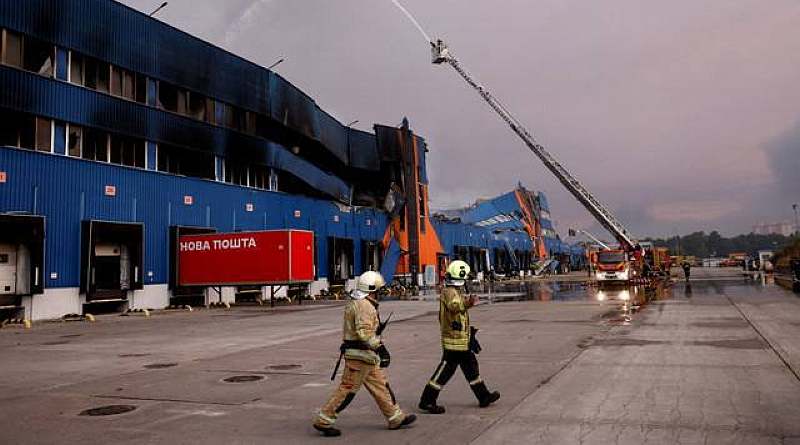

Russia is deliberately targeting specific businesses that we all know. In recent weeks, the largest Rozetka warehouse in Brovary was burned, resulting in over two billion in damages, along with the Nova Poshta sorting center, Epicenter logistics and ceramics plant, Silpo and Novus distribution centers. Books that you consistently purchase from publishers such as Ranok, Knigolav, BookChef, Zhorzh, Fabula, Osvita, Gramota, and dozens of others, printed on Konvi, PET, Faktory, have seen over 13 million destroyed. This is essentially a third of the annual market volume, which was already struggling to survive last year.
The state can help fairly quickly without spending additional budget funds.
Most importantly, allow businesses not to pay profit tax while reinvesting it in recovery. This is the Estonian model, known to us as the capital withdrawal tax: profit is taxed when the owner withdraws it from the company, and as long as the money works within, the rate is zero. Estonia has lived this way since 2000. For bombed businesses, it is the most direct way to rebuild with their own funds: investing profit in a new warehouse, confident that there will not be an additional 18 percent.
We have been discussing this model for years, and now is the best time to adopt it.
Next, deregulation, and there is no need to invent anything. Every sector knows its challenges. For example, book publishing is exempt from VAT, but due to a loophole about ’48 pages,’ children’s books are still taxed. It is enough to change one order from the Ministry of Culture.
On imported equipment to replace what burned, VAT is charged on top, although this is also book publishing. Permits for rebuilding and inspections take months while production stands still. All this can be removed without any budget expenses, simply by removing outdated (often still Soviet) norms and “crutches” added over decades.
The third is war insurance and preferential loans. No one will insure a warehouse that a missile might hit again tomorrow, and without insurance, businesses won’t get a reconstruction loan. The market cannot handle this itself, so the state should assume part of the risk together with international partners: the World Bank’s MIGA, the American DFC, Aon’s mechanism, and “Kniazha” for small companies are already working. The logic is the same as with tax – a small state participation unlocks large private financing not available in the budget.
All these companies are already rebuilding on their own, with their funds. The state does not have the means to help everyone now. But things can be done that have long been overdue, which will give businesses a push not only for rebuilding but also for further development.
