
Fabian Hoffmann / Translation by iPress
Researcher at the University of Oslo, Fabian Hoffmann, notes that over the past six weeks, Ukraine has suffered one of the most powerful waves of missile attacks from Russia since the beginning of the full-scale war. Unlike previous waves of attacks, the current salvos are dominated by high-speed ballistic missiles from ground and air bases, and Ukraine’s exhausted air defense reserves no longer allow them to hold off these attacks as effectively as before. In this material, the expert discusses the causes and consequences of Ukraine’s missile defense crisis, as well as what to expect in the coming months and whether there is hope for an improvement in the situation.
In the last six weeks, Ukraine has experienced powerful missile attacks from Russia – possibly the largest since the start of the war.
In recent months, Russian strikes have increasingly been dominated by high-speed systems, particularly ground and air-based ballistic missiles. The depleted reserves of Ukraine’s missile defense systems seem to no longer provide effective protection.
This publication examines the causes and consequences of the crisis in Ukraine’s missile defense sector, as well as outlines what to expect in the coming months, including whether the situation may improve.
The Threat of Russian Ballistic Missiles: “Iskander”, “Kinzhal”, and “Tsirkon”
In recent months, the main Russian missile threat has shifted towards high-speed systems. The key players here are Russia’s ballistic missiles – primarily the 9M723 short-range ballistic missile complex “Iskander-M” and the air-launched aeroballistic missile Kh-47M2 “Kinzhal”.
The 3M22 “Tsirkon” missile is also increasingly featured in these attacks. Officially presented in 2019 as a hypersonic cruise missile with a scramjet engine, in practice, it appears to be another aeroballistic missile, quite similar in combat characteristics to the 9M723 and the “Kinzhal”. Approximately 15 such missiles were launched in June and July.
Russia complements these ballistic strikes with launches of S-400 anti-aircraft missiles, retrofitted for ground targets. These missiles are less accurate and less lethal but pose a real threat to civilian infrastructure, especially when aimed at densely populated areas.
The Ukrainian defense is increasingly struggling with this threat. According to data from the Ukrainian Air Force, compiled by my colleague Pavlo Krasnomovets, in July, Russia launched 180 ballistic and quasi-ballistic missiles (9M723, “Kinzhal”, “Zircon”, modified S-400 interceptors), of which 143 were not intercepted by the Ukrainian defense. August looks even worse: out of 52 launched ballistic missiles, only one successful interception has been confirmed so far.
Why defense against ballistic missiles is such a difficult task
Ukraine seems to be increasingly unable to effectively defend against the growing number of ballistic missiles launched by Russia. Largely, this is a natural consequence of the structural limitations inherent in high-speed missiles.
Firstly, countering ballistic missiles is an extremely complex technological challenge. It requires highly advanced interceptors capable of protecting a specific zone from targets approaching from great heights at high speed and actively maneuvering to evade defense systems. The interceptor must quickly gain altitude, maintaining high maneuverability and exceptional accuracy in the final stage of approach.
Secondly, due to the high-tech nature of these solutions, missile defense is very costly: the price of one interceptor reaches millions of dollars. Moreover, such high demands on individual components of these systems make it difficult to scale supply chains for mass production of interceptors, especially in a short timeframe.
Thirdly, unlike other types of missile weaponry, operational ingenuity cannot compensate for the lack of technology. Even the most skilled defense forces cannot organize reliable protection without access to appropriate high-tech systems. This fundamentally distinguishes the situation from, say, countering long-range drones, where Ukraine’s operational experience has allowed it to build an extremely effective defense even without the most modern weaponry. It is not possible to achieve the same result in missile defense.
Fourthly, the speed of the missiles, and thus the speed of their convergence with interceptors, is so high that to increase the chances of success, the defender is forced to apply the so-called “salvo launch” doctrine, launching several interceptors at one target in succession. In contrast, the “launch-evaluate-launch” approach is only possible against slower threats, where the decision-making window is significantly wider. In the medium and long term, this makes the cost imbalance particularly pronounced against missile defense.
Therefore, the difficulties Ukraine faces in repelling Russian ballistic strikes are neither temporary nor the result of unfortunate circumstances (although short-term factors, such as the war with Iran, which further limits global interceptor availability, only exacerbate the problem). This is the result of structural conditions that the field of ballistic missiles imposes on the defending side.
Short-term Solutions: Passive Defense and Deep Strikes
What can Ukraine and its partners do to alleviate this pressure? In the short term, improving the situation will be difficult, and there are almost no opportunities to extend active defense—effectively intercepting ballistic missiles mid-flight.
European stocks of Patriot interceptors are depleted to the point where military and political leaders find it increasingly challenging to justify the transfer of additional missiles from their reserves. Notably, the last confirmed delivery of PAC-3 MSE interceptors—only 35 units, approximately in March 2026—has been secured only thanks to significant political efforts from the German Ministry of Defense, highlighting how limited European stocks have become.
Therefore, the most realistic action Ukraine can take for defense in the short term is to strengthen passive protection. This involves enhancing the resilience of key facilities by dispersing and fortifying them, particularly by accelerating the relocation of critical infrastructure underground. Equally important will be proactive ordering and stockpiling of spare parts for the rapid restoration of damaged facilities.
Additionally, Ukraine can continue to expand and improve its capabilities for deep strikes, focusing on destroying key targets in Russia to ensure that depletion is mutual rather than one-sided. Where possible, Ukraine will continue striking Russian production capacities, although it is unlikely that any single strike or even a series of strikes can fundamentally disrupt Russia’s production of ballistic missiles.
Long-term Solutions: Production of PAC-2 GEM-T and Supply of SAMP/T NG
By 2027, the situation may improve—at least compared to the catastrophic situation of mid-2026, which serves as a reference point here.
Later this year, the licensed production facility of MBDA Germany will begin manufacturing PAC-2 GEM-T interceptors for the Patriot systems, fulfilling an order for 1,000 units placed in January 2024 through NATO’s Support and Procurement Agency (NSPA) for Germany, the Netherlands, Romania, and Spain.
Initially planned production capacity suggests the German plant will likely produce between 120 and 170 PAC-2 GEM-T interceptors per year, although efforts to expand these volumes might already be underway. In any case, once the plant starts delivering fully equipped missiles to customers—around 2027—this will create a continuous flow of new interceptors, reducing the reliance on increasingly limited existing stocks. However, even then, Ukraine will likely be able to count on only 80-90, or at most slightly over 100, additional interceptors per year, while Russia is currently estimated to be capable of producing 700 to over 800 ballistic missiles annually.
In addition to the PAC-2 GEM-T, Ukraine ordered four firing units of the SAMP/T NG system – a next-generation system developed by the Franco-Italian competitor to Patriot, set to begin delivery in 2027. France has also committed to bridging the supply gap with two firing units of the current-generation SAMP/T, which will likely arrive by the end of this year (in the joint declaration of the Presidents of France and Ukraine on July 14, 2026, it is stated that this is not a completed order, but Ukraine’s intention to order four SAMP/T NG systems; financing is planned to be requested within the framework of Ukraine Support Loan tranches for 2026-2027 – iPress).
Together with SAMP/T NG, Ukraine will also receive the advanced Aster 30B1NT interceptor, which can provide improved protection specifically against ballistic threats, particularly thanks to the Ka-band seeker head, which offers higher resolution and accuracy in the terminal flight phase compared to the current version of the Aster 30B1.
After 2027, longer-term projects may yield results – including Project Freya and other European programs to create affordable interceptors for ballistic missiles, although the current state of these programs remains unclear and difficult to assess. Quick solutions should not be expected here either.
Conclusions
The missile defense crisis in Ukraine is structural in nature. In the ballistic sphere, the advantage in terms of cost, production rates, and scale currently lies with the attacker, and no short-term supplies or operational decisions can eliminate this imbalance. Until a new stream of interceptors appears, passive defense and systematic deep strikes on Russian territory remain Ukraine’s only effective levers of influence.
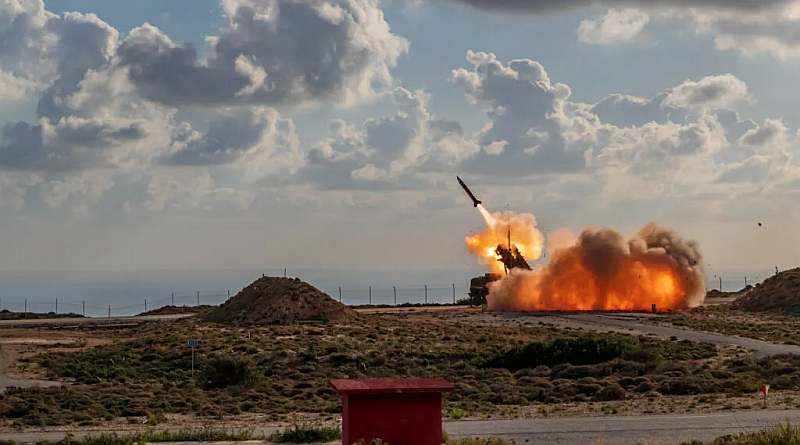
Cover photo: Launch of GEM-T missile from Patriot. Photo: Bundeswehr/Lars Koch
