
August in Russia is considered a “cursed month,” and for good reasons. The August coup of 1991 led to the eventual collapse of the Soviet Union. I had just arrived to work as The Economist’s Moscow correspondent when the August financial crisis of 1998 erupted. Russia defaulted on its debts and devalued the ruble. Most of my colleagues were on vacation. But I had a job.
A year later, in August 1999, a conspiracy arranged in Moscow brought Vladimir Putin to power. The long-suffering Boris Yeltsin appointed a man who was then a nobody in politics as prime minister. A mysterious terrorist attack in Dagestan that same month became the first in a series of staged atrocities blamed on Chechen terrorists. Putin’s tough response to these crimes turned him into a national hero.
In August 2000, the nuclear submarine “Kursk” sank, revealing the KGB-like methods of the new Russian leader—his soulless incompetence. August 2008 was marked by the war in Georgia, proving that Russia could attack other countries with impunity: a fatal lesson. Subsequent Augusts brought deadly floods and forest fires, plane crashes, and other disasters. As my New Yorker colleague Julia Ioffe wrote in 2011: “Every year, in August, Russians await history and are rarely disappointed.”
At the beginning of this August, Putin faced the worst mix of diplomatic, economic, financial, political, and military troubles in all 26 years of his rule. A fuel shortage, caused by Ukraine’s targeted strikes on oil refineries, is not just an inconvenience but an inflationary and recessionary shock for the Russian economy. Accordingly, political tension is growing: while ensuring supplies to Moscow—a city where coups occur—regions are fuming.
This is partly why the political cost of war is rapidly rising. Normalcy—the reassuring awareness that today will be the same as yesterday and tomorrow—was a major achievement of the Putin years. Now it has collapsed. Ukrainian strikes on Wildberries warehouses (roughly: the Russian equivalent of Amazon, but of even greater significance) have not only affected the usual online shopping of tens of millions of Russians but have also destroyed the livelihood of e-commerce. The banking system, already groaning under the burden of bad loans, is also disrupted.
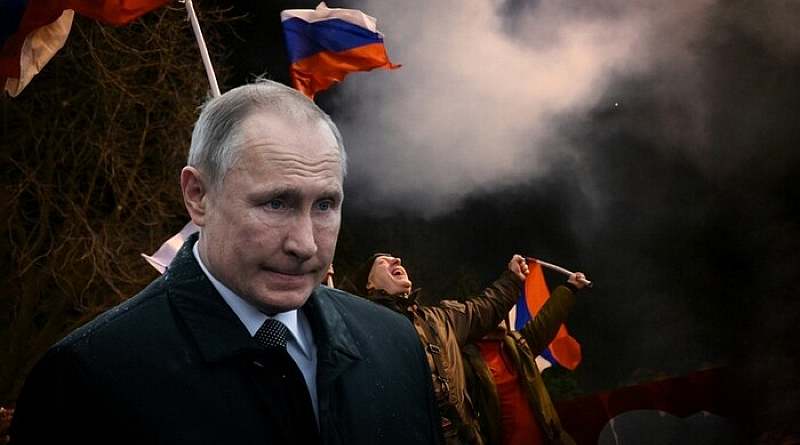
All this is happening while Putin’s hopeless war demands ever more effort and sacrifice. Rumors circulate that the authorities plan to convert deposits into war bonds, as well as about (at least) partial mobilization in the coming months. On August 22, Russia celebrates Flag Day—a supposed national holiday. However, due to the risk of Ukrainian drone strikes, there will be no public celebrations: yet another humiliation for the Kremlin.
Such a bouquet of problems would be a serious test for Putin’s leadership even at the peak of his power and popularity. However, for an ailing, aging leader whose rare and shaky public appearances increasingly provoke ridicule, this may be the last straw. He is not only politically and physically exhausted. The system he controls has become so rigid that it can no longer withstand stress. Now it is fragile.
Beneath the pomp and theatrics of Russian politics, the forces at play are mostly fear and greed. How much can you steal? How afraid are you that it will be taken from you? What can you do to stop them? For a quarter of a century, the answer to these three questions was one: stay as close to Putin as possible. He allows you to steal. Loyalty to him allows you to keep it.
A new paradigm is now forming. The boss seems doomed. Nobody wants to go down with him. The question is not if to jump, but when. We don’t know when and how Putin’s system will collapse, but when greed outweighs fear, change will happen swiftly.
Collage: RadioTrek
