
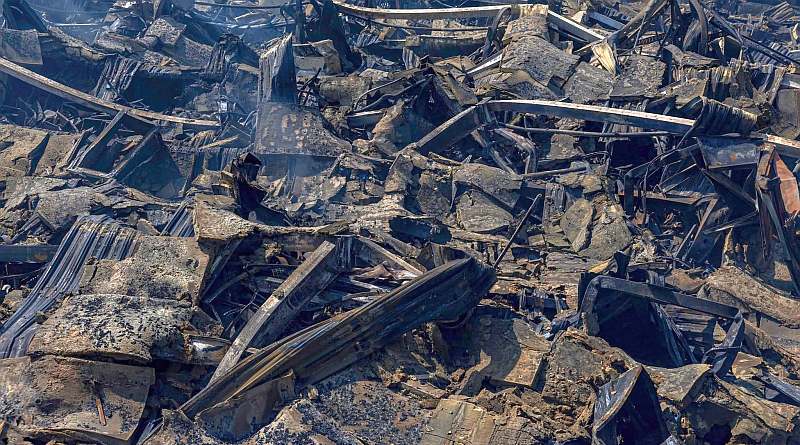

A day has passed since one of the largest attacks on Ukrainian business.
Yesterday, Prime Minister Serhii Koretskyi announced an urgent meeting with businesses to develop solutions for ensuring the uninterrupted operation of logistics and trading companies.
It would seem that at least the first declared solutions should have already appeared.
So far, only two main directions have been publicly announced – development of war risk insurance and business credit support. I haven’t heard anything else yet.
These are important tools. However, in my opinion, they are not a quick help for a business that has lost production, a logistics center, a warehouse, or a store today.
That’s why we decided to analyze what the business itself is talking about today. Not the government. Not officials. But the company owners who have directly experienced these blows or are working under the same risk conditions.
And here common priorities begin to emerge…
Businesses most frequently talk about seven things:
▪️ accessible war risk insurance;
▪️ stable and predictable tax rules;
▪️ deregulation and reduction of bureaucracy;
▪️ access to financing;
▪️ addressing staffing issues and reservations;
▪️ support for logistics;
▪️ digitalization of state-business interaction.
That is, businesses today are not asking for compensation. The business says: “Give us the opportunity to work.”
I don’t know if there was an open conversation with the companies that are effectively holding the economic front.
Unfortunately, members of parliament are not included in such events, although it’s absolutely clear that this is where the “national rescue coalition” should be forming.
P.S. By the way, I would add to the list of business needs the more effective ones. Because it’s obvious that the monitoring included previous posts, before this terrible night.
* * *
It’s important that this topic is not just talked over and forgotten again.
It concerns significant losses recently suffered by logistics, warehouse, and other facilities of several leading Ukrainian companies.
I see that in social media, new proposals and initiatives on what to do next are very cautiously starting to appear.
Very cautiously. And it shouldn’t be like that.
Some proposals from businesses today definitely deserve attention:
– compensation for incurred losses through tax mechanisms;
– tax holidays for enterprises whose property was destroyed or significantly damaged as a result of enemy attacks;
– maximal deregulation for the restoration of destroyed capacities;
– simplification of permit procedures for construction and network connections;
– simplification of international logistics.
I’ve already talked about some of these solutions before. Moreover, I’m now thinking about how to fix some of them specifically through legislative changes, rather than leaving them at the level of statements and wishes.
The government’s initiatives after the meeting with businesses might be correct. But firstly, they still need time to become really effective. And secondly, they are categorically insufficient.
Now, joint work of the government, parliament, and business on specific solutions is needed, not only regarding the losses already incurred.
We must understand in advance what we will do after the next hits, and not just on large enterprises. Because it’s not about supporting a single business.
We need options to maintain the economy, which means revenue for the budget, which means opportunities to finance our armed forces.
It’s desirable to understand this now and not waste more time, as things are already very complicated.
P.S. And I ask to talk less about the impossibility of helping with something from the budget. A complex of actions is needed, and it needs to be prepared.
In the background: remains of the Epicenter warehouse. Photo: Nick Tymchenko/Rubryka
