

In 1917-1920, the Russian Empire and hopes for Russian democracy perished under the blows of the Bolsheviks. Power shifted to a dictatorship that relied on three components: the party apparatus that governed the new state, the security service that conducted the Red Terror, and the army that won the civil war.
Conflicts between these three groups began almost from their very inception. Stalin, who took control of the party apparatus, was able after Lenin’s death to neutralize the army led by Trotsky and the terror apparatus led by Dzerzhinsky, who died unexpectedly, and later Yagoda, who was executed.
But Stalin feared the strengthening of the party apparatus and therefore bet on an alliance with the Chekists, whose new representatives practically destroyed a large portion of the nomenklatura of that time, as well as a significant part of the military commanders of the already marginalized army.
The Second World War brought the army to the forefront again. After the war, Stalin, with the help of the Chekists, tried to marginalize its influence and the popularity of the most famous “marshals of victory.” However, after Stalin’s death, the party apparatus, now dominated by Khrushchev in alliance with the military led by Marshal Zhukov, virtually dismantled the state security organs and placed them under party control. Within five years, Khrushchev got rid of Marshal Zhukov and marginalized the army once more.
An era of all-powerful party apparatus ensued, lasting until the late 1980s when the Chekists took revenge and created conditions for the ban of the CPSU.
In the new Russia, they could not come to power immediately and engaged in preparation against the backdrop of economic collapse and the redistribution of property in favor of the Chekist agency. In 1993, the army emerged again, ensuring President Yeltsin’s victory over the deputies’ congress and being considered the main tool of the Chechen war. However, the terror that resulted from this war allowed the Chekists to strengthen their positions—power briefly fell into the hands of the Federal Guard Service, and in 2000, the FSB ultimately came to power.
Now, as Russia itself turns into a zone of attacks, the Federal Guard Service is trying to take revenge, and the generals of the increasingly marginalized army are watching the situation closely.
In the future, the struggle for power in Russia will occur between these three forces. Whoever wins this struggle will lead the endless wars in the post-Soviet space because there is a consensus among all groups on the need to restore Russian statehood within the borders of the former USSR.
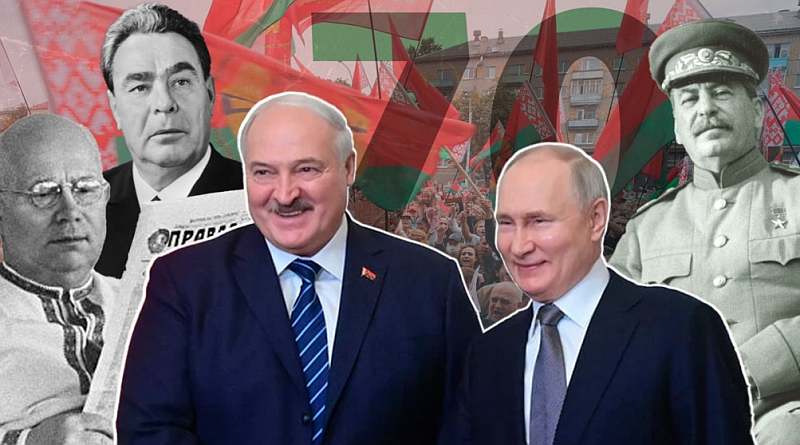
Collage: Crimea.Realities
Copyright © 2020 RFE/RL, Inc. Republished with permission of Crimea.Realities (Radio Free Europe/Radio Liberty)
