

Information on current losses of the Russian Federation due to sanctions as of 20.05.2026.
1. On the night of May 20, Ukrainian drones launched new strikes on the Russian chemical and oil refining infrastructure.
– In the Stavropol Territory, drones attacked the industrial zone of Nevinnomyssk. After the strike, a fire was reported at the “Azot” chemical plant. The enterprise belongs to the “EuroChem” group and in previous years supplied raw materials for the production of explosives used in Russian artillery shells. The plant has repeatedly been a target of attacks since the beginning of the full-scale war against Ukraine.
– Simultaneously, drones attacked the city of Kstovo in the Nizhny Novgorod region. According to the Ukrainian monitoring project Exilenova+, the “Nizhny Novgorodnefteorgsintez” oil refinery, owned by “Lukoil,” was hit. This is one of the largest oil refineries in Russia. The enterprise is critically important for the internal fuel market of Russia. The refinery had already suspended processing after previous attacks in April.
2. The Moscow Refinery of “Gazprom Neft” completely halted processing after a drone attack on May 17.
– The equipment of the enterprise did not suffer critical damage, but the plant was temporarily shut down to minimize the risks of new strikes and possible accidents. It will take a few days to return the enterprise to full operation.
– The Moscow refinery became the eighth Russian oil refinery which, since the beginning of spring, was forced to suspend operations due to drone attacks. In 2024, the plant processed about 11.6 million tons of oil and was one of the key suppliers of fuel for the Moscow region.
– The enterprise produced nearly 2.9 million tons of gasoline and over 3.2 million tons of diesel fuel.
3. On the eve of Putin’s visit to Xi Jinping, Russia was forced to further lower the projected gas prices for China and revise its expectations for gas exports overall downward.
– According to a confidential macro forecast by the Russian government until 2029, in 2027-2029, China will purchase Russian gas at $224–236 per thousand cubic meters, which is more than 7% lower than Moscow’s previous forecasts.
– Meanwhile, the price for China will remain about 30% lower than for European buyers and Turkey. Due to the loss of a large portion of the European market, China has already become the main buyer of Russian pipeline gas. That’s why the Kremlin is increasingly dependent on Beijing’s terms and forced to agree to long-term discounts to maintain export volumes.
– At the same time, the Russian authorities have also lowered the forecast for pipeline gas exports beyond the former USSR. While Moscow previously expected to supply up to 87 billion cubic meters in 2028-2029, the forecast has now been cut to 82–84.5 billion cubic meters.
– Additional pressure comes from the EU’s plans to completely abandon Russian gas by the end of 2027. Turkey has also extended part of its contracts with Gazprom for only one year, highlighting the growing uncertainty for Russian gas exports.
– Although after 2027, shipments to China may increase by almost 47% — to 56 billion cubic meters per year, this does not guarantee the Kremlin’s former revenues. Due to low prices and large discounts, Moscow is effectively trading the lost European market for a much less profitable Chinese one.
4. Despite the U.S. decision to temporarily extend the exception for trading Russian oil, Moscow is no longer able to sharply increase exports.
– The Russian oil infrastructure is effectively operating at its limits. According to traders, in the first half of May, exports through Russia’s western ports increased by about 9% — to 2.35–2.4 million barrels per day. But these volumes are already close to the ceiling of the Transneft system’s capacity.
– The reason for the increase in supplies was not the success of the Russian economy, but the mass strikes of Ukrainian drones on refineries. Due to damage to plants, Moscow is forced to redirect crude oil for export as domestic processing declines.
– A wave of attacks on Russian energy infrastructure in the spring seriously disrupted oil refining. In just the first months of the year, dozens of installations were hit, and some refineries stopped repeatedly.
– The Kremlin is trapped: strikes on refineries reduce processing and hit the domestic fuel market, while the export infrastructure is already overloaded and does not allow significant compensation for losses with additional foreign supplies.
5. Despite the temporary increase in oil prices due to the conflict around Iran, Russia’s oil and gas revenues remain significantly lower than last year’s levels.
– According to calculations, in May the Russian Federation’s budget revenues from oil and gas may increase by 39% year-on-year to 700 billion rubles. However, this growth is situational and primarily linked to the spike in global oil prices due to the crisis in the Middle East.
– Compared to April, the Kremlin’s revenues will decrease by about 17% due to a drop in tax revenues and increased expenses to support Russian refineries.
– From January to May, the oil and gas revenues of the Russian budget fell by about a third — to 3 trillion rubles. This reflects systemic issues in the Russian economy amid sanctions, attacks on energy infrastructure, and rising military expenses.
– Additional pressure is created by subsidies to refineries, which Moscow is forced to increase after a series of Ukrainian drone attacks. The budget loses funds due to cushioning payments and compensations to refineries affected by operational interruptions.
– Last year, the Russian Federation’s oil and gas revenues fell by 24% to their lowest since 2020. Even the current short-term increase in oil prices cannot compensate for the structural deterioration of the Russian energy sector.
6. Russia continues to bypass Western aviation sanctions through third countries.
– In mid-May, a second Airbus A320 aircraft, brought in through Oman, arrived at Moscow’s Vnukovo airport. This refers to the Airbus A320-232 of the 2011 release with factory number 4934. The aircraft was previously operated by Etihad Airways from the UAE, later transferred to the American GA Telesis, and then leased to Albanian Air Albania.
– In 2025, the aircraft was returned to its owner and was stored in Istanbul. According to aviation channels, on April 14, the aircraft was flown to Muscat in Oman, and on May 15, it arrived in Moscow with Russian registration RA-73899.
– The new owner is reportedly the airline “Severo-Zapad.” This is already the second such case in the past year. In June 2024, an Airbus A320neo was delivered to Russia through Oman following the same route, ending up with North-West Air Company, which specializes in VIP transport services.
7. The European Union is preparing to increase sanctions pressure on Russia following Viktor Orban’s resignation.
– In Brussels, there are discussions about transitioning from the current six-month mechanism for extending sanctions to a yearly one. The decision is planned to be presented at the EU summit in June.
– Currently, sanctions against Russia require unanimous extension every six months, allowing Orban to use veto power as a leverage tool on Brussels for years. After his defeat in the elections in April, the situation for the Kremlin sharply worsened.
– European diplomats acknowledge that certain risks remain due to the positions of the Prime Ministers of Slovakia and the Czech Republic — Robert Fico and Andrej Babiš, who previously supported Orban on sanctions against Russia.
– Meanwhile, in Brussels, it is believed that the potential for blocking the sanctions regime will be significantly reduced.
– Concurrently, the EU is working on the 21st package of sanctions against Russia. In addition, a separate package of restrictions against the Russian “shadow fleet,” used by the Kremlin to circumvent oil sanctions, may be adopted even before the June summit.
8. The United Kingdom has allowed the import of diesel and aviation kerosene produced from Russian oil in third countries.
– The license issued on Tuesday provides exceptions if the fuel is processed in third countries but includes conditions such as record-keeping requirements for companies.
– The new rules take effect on Wednesday and will remain in force indefinitely, although they will be periodically reviewed and may be changed or revoked, according to a government statement.
– The reason was the war around Iran and the blockade of the Strait of Hormuz, through which about 20% of the world’s oil supplies previously passed.
– The sharp reduction in supplies from the Middle East led to a new surge in fuel and aviation kerosene prices in Europe. Against this backdrop, the British authorities have effectively acknowledged that they are currently unable to completely abandon Russian energy resources without serious economic consequences.
– Fuel prices in the UK have already reached their highest levels since the start of the Middle East escalation. The price of gasoline rose to 1.5852 pounds per liter compared to approximately 1.32 pounds before the strikes on Iran. Diesel became more expensive, reaching 1.86 pounds per liter.
– Separately, on Tuesday, the UK issued a time-limited license for the maritime transportation of liquefied natural gas from Russia’s Sakhalin-2 and Yamal projects, as well as related services including shipping, financing, and brokerage operations, under Russian sanctions rules effective until January 1 of the following year.
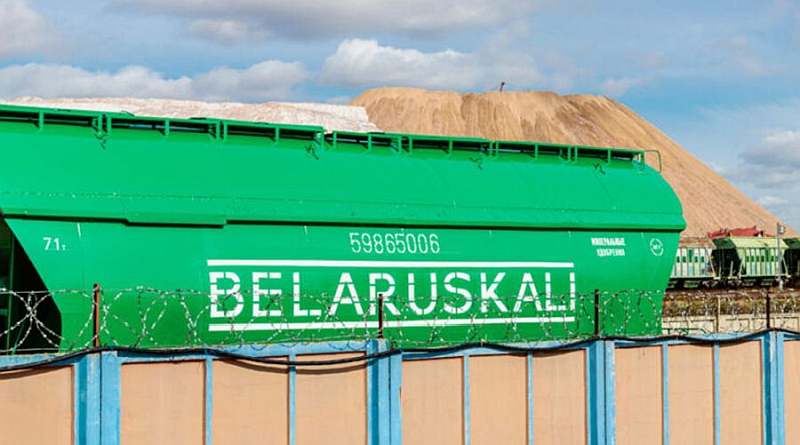
9. The US pressures Ukraine and European countries to ease restrictions on imports of Belarusian potash fertilizers.
– Washington asks Kyiv to convince EU partners to agree to soften sanctions against Belarusian potash. The American side explains this by the desire to partially detach Minsk from Moscow and improve relations with the Lukashenko regime.
– At the beginning of the year, the US already eased some of its own restrictions as part of agreements for the release of Belarusian political prisoners. However, the real effect of these decisions remains limited. Due to EU sanctions, Belarus cannot use traditional export routes through the Baltic Sea and is forced to depend on Russian ports and railways.
– It was precisely after the 2021 sanctions that Belarusian potash exports were redirected through Russian infrastructure, which only increased Minsk’s economic dependence on the Kremlin.
– Lithuania and Poland play a key role in potential transit. Lithuanian Foreign Minister Kęstutis Budrys admitted that countries in the region are already feeling additional pressure from the US on the issue of Belarusian potash transit. At the same time, Vilnius stated that they do not plan to change the current restrictions due to national security concerns and EU sanctions policy.
– The European Union is not yet showing readiness to ease sanctions against Belarus. The reason remains Minsk’s support of Russian aggression against Ukraine and the continued close military cooperation with Moscow, including conducting joint nuclear exercises.
