
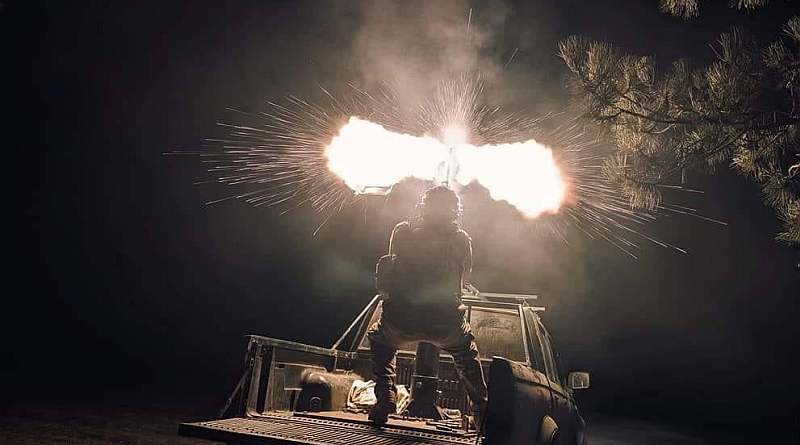
On May 13 and 14, our enemy launched massive air strikes. While the high efficiency of air defense around Kyiv is no surprise, in one western region of the country, 11 out of 12 “Shahed” UAVs hit their targets.
It is clear that there is no country in the world capable of reliably protecting its entire territory from air strikes. The solution implemented in Ukraine is that the Anti-Aircraft Missile Forces of the Air Force intercept ballistic and cruise missiles, which are the most complex targets, while everything else is focused on UAVs. Naturally, the air situation regularly requires the redistribution of tasks, so different means engage different targets, not just those for which they are specifically designed.
On the other hand, air defense battles of the Gulf countries’ air forces have occurred under even stranger scenarios: they fired two to three Patriot system missiles at a single “Shahed” UAV. There have been reports of eight missiles being fired at one UAV.
But let’s return to the country’s territory that needs to be protected (specifically the objects located there). So, we approach the problem of mobile fire groups.
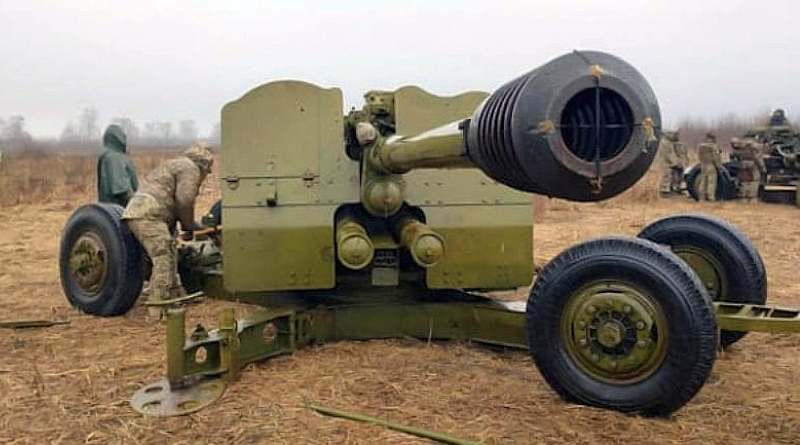
Automatic anti-aircraft guns KS-19 (100 mm, in service since 1948) and S-60 (57 mm, in service since 1950), as well as anti-aircraft machine gun systems ZPU-1 (one 14.5 mm KPV, in service since 1949), ZPU-2 (two 14.5 mm KPV on a carriage suspiciously similar to the German from the 2 cm Flak 38 anti-aircraft gun, in service since 1949), and ZPU-4 (four 14.5 mm KPV, in service since 1949) were brought from storage (and almost from museums) to the troops. Informed people have said that KS-19 and S-60 are operated by border guards’ fire groups. By the way, the trusty friend of the infantry DShK has been in service since 1939.
All of this weaponry is repelling strikes from air attack weapons created in the last 10–20 years. Such an interesting picture has emerged.
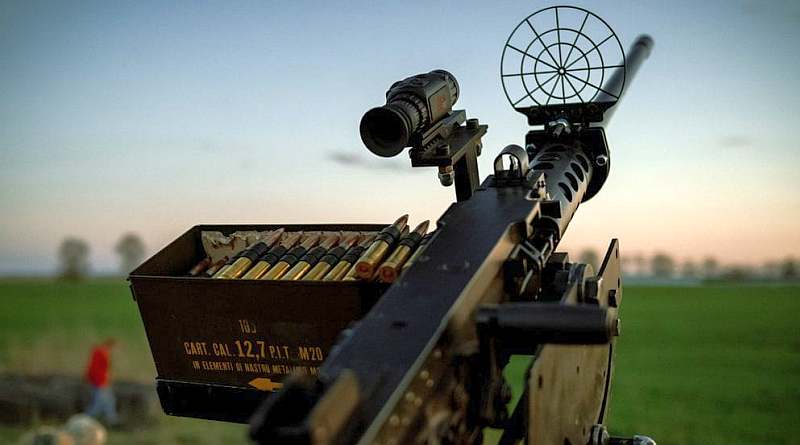
And about MVG. The usual look—a jeep with a .50 caliber machine gun (or 12.7 mm). In recent years, thanks to efforts by concerned individuals, older machine guns (the American M2 has been in service since 1932, while machine guns from 1932 and 2025 are somewhat different, though both are M2) have received optical sights, thermal imagers, tablets connected to the air defense command and control system, ballistic calculators, and much more. So, it’s quite decent.

Pavlo Elizarov, Deputy Commander of the Air Force of the Armed Forces of Ukraine, responsible for the development of small-scale air defense (including MWG), noted in an interview with “Ukrainska Pravda” on April 30 that 170 out of more than 300 drone interceptor crews have not shot down a single “Shahed” in a year, and only 66 have more than 10 downed. The Deputy Commander also noted that the MWG is not being canceled, they remain an important component of air defense, but there is no universal solution to the problem of strike UAVs; the successful solution is comprehensive: MWG + drone interceptors + specialized radars. They aim to change the approaches to assessing the combat effectiveness of MWG: as many “Shaheds” enter the region, that many should be shot down or jammed.
Elizarov highlights the following problems: training, motivation, resource distribution, control. A separate issue is that many units operate on a residual principle. The military emphasized efficiency instead of scaling: it’s not just about providing more people, but about properly utilizing those available, analyzing, and building the structure.
The perspective on MWG issues from the bottom, the opinion of the troops, is regularly voiced by Roman Donik, head of the training and instructor group of the 151st training center of the Armed Forces, with the main message that MWGs can be effective, but for this, systematic, quality training, resources and result control are needed, not imitation of activity and waiting for “magic drones.”
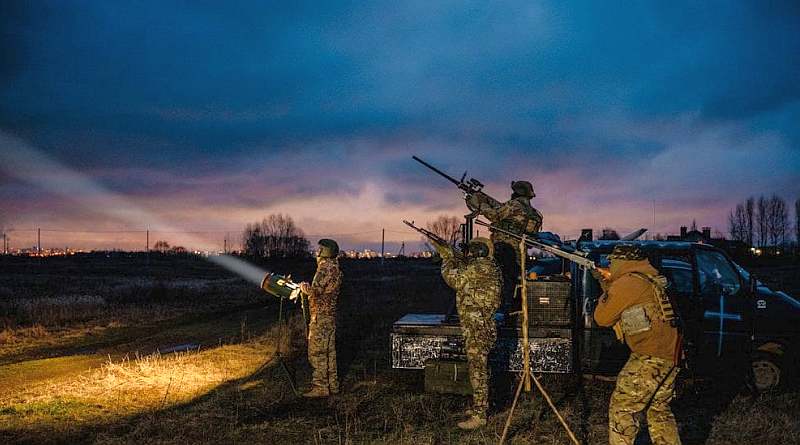
He criticizes not the people on the ground (who are often motivated and well-trained) but the system and leadership that have not developed the direction for years.
Other problems affecting the training of MWG personnel:
- lack/quality of preparation — the main reason for low effectiveness of MVG. Many crews are formed on a residual basis, without basic military training, machine gun shooting skills, especially at night, with thermal sights, without understanding aerial targets. People want to, but do not know how;
- lack of systematic work in the Air Force: MVGs are “not needed” by the leadership of the large air defense. Lack of programs, schools, training centers, simulators (purchased but not used “to avoid breaking them”). Training relies on the enthusiasm of the lower ranks and individual generals (e.g., General Turinsky), but without scaling experience and training results. Exceptions appear to be the personnel of the Air Command “South”, National Guard members responsible for the security of Ukrainian nuclear power plants, the National Police of Ukraine brigade “Lut”;
- bureaucracy and imitation: money is spent on paper preparation, not on real sights, vehicle equipment, field practice. Initiative is punished. Military leaders transition to new magical pills (interceptor drones), again forming untrained groups on a residual basis;
- results of quality training — contrast: graduates of the 151st training center (not an advertisement) show high results in two weeks, including protecting energy infrastructure. Even a small number of well-trained MVGs radically changes the situation. Effectiveness is higher in groups with infantry experience/veterans rather than in specialized groups formed from PPO personnel.
Taking advantage of having many acquaintances in the troops, I delved into the topic of MVGs. And it turned out like this:
- The turret construction for the machine gun is not standardized, and everyone solves this problem as they can. However, 151 NC generalized the experience of its students and proposed a decent design that mechanically increases shooting accuracy. The Logistics Forces Command implemented this design in their MVGs, significantly enhancing their effectiveness. During training for shooting at aerial targets, thanks to this innovation, they achieve 12–15 hits on UAVs for every 25 rounds instead of two or three with other designs. Shoulder supports for the machine gunner are also must have;
- Placing the machine gun on a turret in the bed of an off-road vehicle is no longer the best solution, as the machine gun is powerful, and even the first burst causes the vehicle to sway, reducing shooting accuracy. This problem, for example, is mechanically solved on the BM-21—by installing a spring suspension locking mechanism on the base vehicle. For “Shahedomobiles” and other “guntrucks,” jack supports at the edges of the vehicle bed or mounting the weapon on a regular trailer, which is also secured with jacks before shooting, appear budget-friendly;
- Well-trained personnel for combating aerial targets regularly demonstrate wonders: there are noted cases of “Shaheds” being shot down using small arms. However, this doesn’t fit the big air defense picture, so only a small circle of military personnel directly defending the low skies know about such cases. By the way, during the Second World War, a soldier was awarded the Order of the Patriotic War 1st class for shooting down a plane with personal weapons (machine gun, rifle, anti-tank rifle, etc.). And how about us?
- Sight: should have both day and night capabilities. Leaders are AN/PAS-13C(V)3 and Archer (again, not an advertisement). Civilian versions (hunting scopes) don’t last long in MVGs, despite their high cost. They just can’t withstand vibrations;
- Control: having a tablet is not enough; you need Starlink or at least mobile internet. Without this, control is interrupted. Look at the state of the enemy’s control system after Starlink was disabled in eastern Ukraine. Many of our MVGs face the same problem, but created by us. 170 have not shot down any “Shaheds” in a year — not forgotten?
Another problem is that many local governments haven’t even started forming MVGs within their LDTGs or ignore issues in providing MVGs that operate within their administrative-territorial divisions.
Therefore, for the entire transition period from today’s state of limited air defense to a state where all objects will be covered by interceptor drones, we are guaranteed flyovers of enemy UAVs across the territory of Ukraine. Not all will reach their targets, of course, but will the damage caused by those not shot down be any less?
In the illustration: Mobile fire groups of the Armed Forces of Ukraine. Photo: 126th Separate Brigade of Territorial Defense of the Armed Forces of Ukraine
