
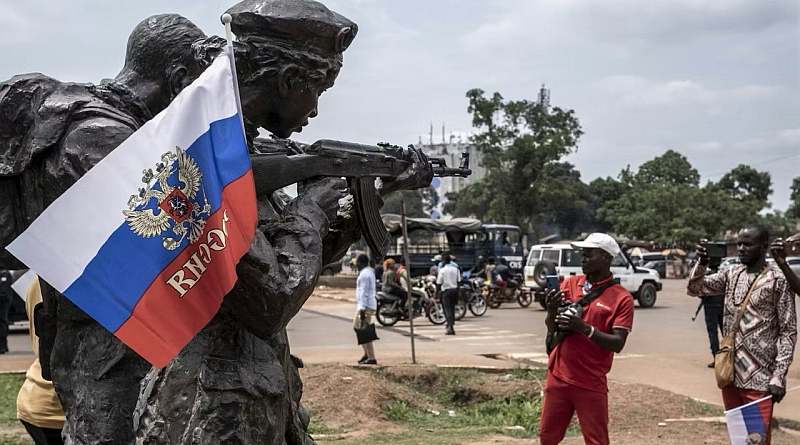

Following the Africa Forward 2026 summit held on May 11-12, 2026, in Nairobi, a statement by France’s Foreign Minister Jean-Noël Barrot in an interview with Le Monde about the “strategic defeat of the Russian Federation on the African continent” caused a significant stir.
Despite Moscow’s desperate attempts to strengthen its presence and impose an alternative agenda on African countries, real economic indicators confirm the dominance of the French partnership model over the Russian one.
Today, France’s trade volumes with African countries are three times, and investments are 8-10 times greater than Russian figures. As emphasized by France’s Foreign Minister, Putin’s Russia is unable to offer the continent anything besides “security services,” which are cynically exchanged for the exploitation of African resources, while Moscow’s real contribution to the region’s development equals zero.
Russia’s apparent geopolitical fiasco in Africa became a natural consequence of redirecting the lion’s share of the country’s resources toward financing military actions. The Kremlin’s budgetary policy, entirely subordinated to the needs of the “SMO,” has finally deprived Russian diplomacy of any sustainable financial foundation in faraway lands. While France is implementing a large-scale reset of its partnership relations with African countries and directing €14 billion in investments towards constructive projects, Russia’s participation is shamefully limited to sending mercenaries from the “African Corps.”
But even the current attempt to finance the imitation of global influence and patronage is paid for at the highest price by ordinary citizens within Russia. Every billion dollars “forgiven” to African countries in exchange for fleeting loyalty from local regimes is a direct and cynical diversion of funds from infrastructure, healthcare, and education arrangements. While the authorities spend colossal resources creating the illusion of a presence abroad, Russian regions face catastrophic deterioration of heating networks, an acute shortage of modern hospitals, and the rapid degradation or complete disappearance of entire small towns and villages.
Paying for the Kremlin’s African ambitions involves not only rubles but also blood. The strengthening of Russia’s military presence in unstable regions of Africa leads to an avalanche-like increase in the number of dead and injured among Russian citizens.
The lack of clear geopolitical prospects and full government support in these hybrid conflicts means that the number of “cargo 200” arriving in Russia from countries in turmoil such as those in the Sahel, like Mali, will only grow. Meanwhile, the families of deceased servicemen and mercenaries face predictable silence about the circumstances of their loved ones’ deaths in distant wars, the true goals of which remain completely unclear to Russian society.
Russia’s expansion on the continent lacks historical perspective also because Moscow has completely lost the battle for “soft power.” France is making a long-term bet on the education of thousands of African students: the number of young Africans in French universities is eight times higher than in Russia. In 10-15 years, key leadership positions in Africa will be occupied by people who are mentally and professionally loyal to Paris.
Therefore, the current colossal efforts, financial expenditures, and human sacrifices by Russia on the continent, particularly in Francophone Africa, are temporary and meaningless. All current investments, including military ones, will be completely nullified once the generation of elites changes in the Sahel.
Without a strong economic base, Russia’s military presence in the African Sahel and Africa in general becomes essentially unprofitable and doomed to failure. Ultimately, Russian structures and agents will find themselves completely blocked in an unstable region without the support of the local population, who will predictably choose European money, technology, and development over the endless chaos made in Russia.
