

The story about a series of explosions in Belarus and the execution of Konovalov and Kovalyov was a prelude to the topic – what is Ukraine fighting for?
Because Ukraine is primarily fighting not for the flag or the language. Not for the heritage of Kyivan Rus, Trypillia culture, or Polubotok’s gold. The flag and language are important because they represent a different way of life.
In the spring of 2022, some people from outside asked me: does it matter to a farmer in the Kherson or Mykolaiv regions under which flag he tills the land, sows, and harvests crops?
Don’t ask why it was specifically about farmers. I don’t know. Perhaps because the tractor looks peaceful, apolitical, and not too prone to “nationalism.”
Tractor in the field dir-dir-dir,
Everyone for their own cause, and we – for peace!
I recalled these questions later on Pushkin Street in the village of Arkhangelske, right in the Kherson region, where the family of farmer Valentyn Pavlenko lived. A person who had been building his home for years – large, beautiful, made with love. Lawns, bushes, a patio, a playground for grandchildren, a separate house for the elderly mother, even a pool. Seed polishing machines stood in the yard – “so when you take it in your hands, it doesn’t get dirty.”
“He put so much soul into all of this that he couldn’t leave. He said: we’ll survive, we’ll wait for ours. Oh, Valyk… He didn’t wait,” his cousin told me.
Once, Russian soldiers settled in the house. They settled in as if they had booked through Airbnb. They sat in front of the plasma TV, drank and snacked. And they were surprised: “You seem to live too well.”
A few days later, Valentyn was shot in the forehead in the basement of his own house. His wife was beaten with a rifle butt.
So, there was a certain difference.
And the question about the flag came to me at the very beginning of the invasion from a country that had no idea what a dictatorship was.
The difference between it and democracy was considered purely cosmetic. Something that doesn’t affect ordinary people. Just another state with slightly different decorations. It might even be more efficient – due to a simplified decision-making mechanism.
Those who ask such questions imagine democracy as a fashionable, advanced design. In principle, not very necessary. Something from the realm of interface, not system settings.
Fewer freedoms, which supposedly not everyone needs, but order.
Don’t meddle in politics, and everything will be fine. Cheap sausage. Clean streets. Safe metro. Stability. Possibly even good internet and trendy cafes. If you’re lucky, they’ll even add an IT sector on top, to make it look more modern.
This is a very naive perception. The difference is much deeper and scarier.
It’s actually about the everyday architecture of reality. The basic physics of human existence.
The difference is that under a dictatorship, a person is utterly defenseless against the state. Not “less protected.” Not “has fewer rights.” No. Completely defenseless.
If the machine suddenly decides to grind you down, there is nothing to cling to. No one to call. No emergency exit.
And most importantly, this machine doesn’t have to hate you personally. It doesn’t even need anything against you specifically. You might end up under it by accident.
In a dictatorship, your life has no intrinsic weight. It only weighs as much as the state machine requires at a given moment.
Errors happen everywhere. Abuses of varying degrees happen too. Corruption, cronyism, stupidity, greed, office politics, the human desire to save one’s own skin, falsifications for better statistics, institutional laziness, fear of responsibility, etc. — these exist in almost any system in different proportions.
There are also local despots capable of removing you from their path to seize your property or silence you. Anything can happen.
But in democracies, these are glitches. The feature of a dictatorship is the absence of any buffers between a person and the state. It’s a building without emergency exits.
Dictatorships don’t necessarily kill or repress someone every day. The problem is that they can. At any moment. Without explanation. And everyone around will pretend that’s how it should be.
In democracies, there are courts, media, lawyers, public opinion, international structures, procedures, reputational risks, the right to make noise. They may work poorly. They may break down. But they exist.
In a dictatorship, the very idea that a small person can create problems for the system seems almost indecent. There, it’s the system that creates problems for you. And you must adapt silently.
In Belarus, even in Soviet times, there was a famous incident described by director Viktor Dashuk in a text about the “Vitebsk case” — one of the scariest judicial conveyor belts of the late USSR. At that time, innocent people received huge sentences for a series of murders committed by a real maniac.
In one case, the conviction of an innocent person was based on testimony about a “German Shepherd dog” supposedly seen with the suspect. A photo of the accused’s dog was carefully pasted into the case files. A small mongrel that resembled a cat more than a German Shepherd. The court swallowed it. The person received fifteen years behind bars. And served the full term. Incidentally, the man’s last name was Kovalev.
Dashuk recalled that what struck him most was not even the number of broken lives but the responses of people who confessed to crimes they did not commit. He traveled to former prisoners, interviewed them for his film, and asked the same question: how? How could someone sign up for a fifteen-year sentence for someone else’s murder? They weren’t tortured with medieval methods. Didn’t break bones every day. Didn’t tear out nails.
And almost everyone answered him the same way. When the iron doors of the detention center close behind you, you suddenly realize that you have completely disappeared from the world of the living. That no one will help you. Neither parents, nor friends, nor a lawyer, nor God. And the investigator calmly explains the rules of the new reality: “You’re not getting out of here. I’ve been ordered to close the case at any cost to calm the public.”
And people broke down.
This existential feeling of absolute abandonment, psychological capitulation to inevitability — are traits completely unfamiliar to people who have not lived under a dictatorship.
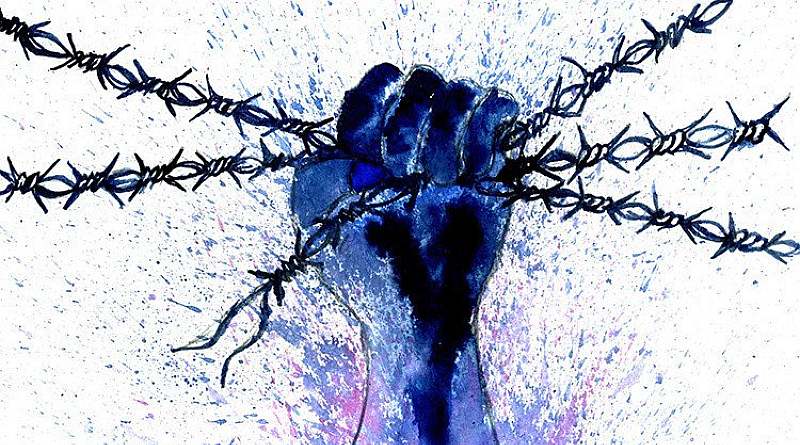
This is the main nerve of the totalitarian experience. Not the absence of an iPhone or elections. But the moment when the iron doors close behind you, and you suddenly realize that you have ceased to be a human and become an object within a mechanism. A mechanism where all elements work against you.
Moreover, they may not even be sadists. This is very important. They can be ordinary officials of the system. People who are “performing a task.”
“The city must sleep peacefully.” This eerie phrase was quoted by Dashuk. It explains everything. Not to find the truth. Not to protect society. Not to stop a maniac. But to ease the nervous reflexes, so to speak.
In such a system, society is not regarded as a collection of citizens but as a nervous mass to be administered. And if it requires imprisoning the innocent, breaking someone psychologically, obtaining a false confession, or executing someone at random, it is considered an acceptable management technology.
In the case of Konovalov and Kovalyov, there was a “kitten” called a “shepherd dog,” and there was Interpol that legitimized this. When the whole world around agrees with a lie, you start to believe it yourself just to survive another day…
First, they turn a small mutt into a shepherd dog in a court protocol. Then they turn an entire country into a bridgehead, without asking the population’s permission. And then they come to the neighbors to teach them this “mathematics,” where two plus two equals “a bullet in the back of the head.”
Ukraine is fighting for the right to reality. For the right for a cat to be a cat, a shepherd dog to be a shepherd dog, and for a person to have the right to say “no” and be heard.
Ukraine is fighting for iron doors to never mean doom.
So no one can ever say: “Even God cannot help you because I was ordered to close the case.”
So that every person, regardless of their status, has an “emergency exit.”
Ukraine is fighting for the right to a society where public tranquility is not bought at the cost of innocent lives.
Ukraine is fighting against a system where the “designated shepherd dog” is the norm, and “doom” is the main feeling of a citizen.
