
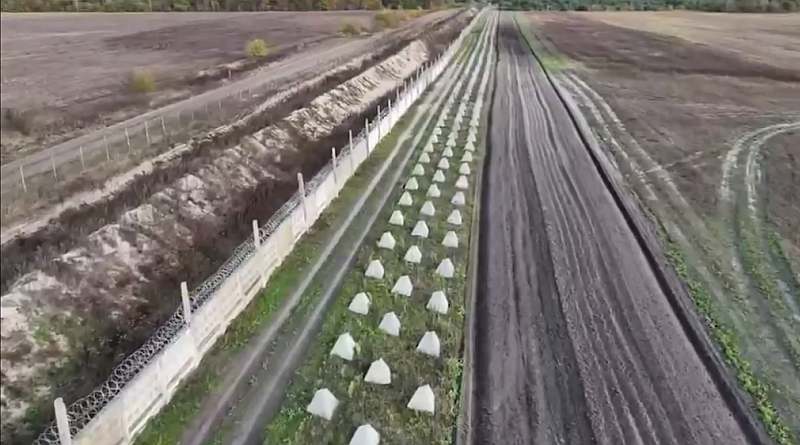
Oleksandr Kovalenko / Obozrevatel
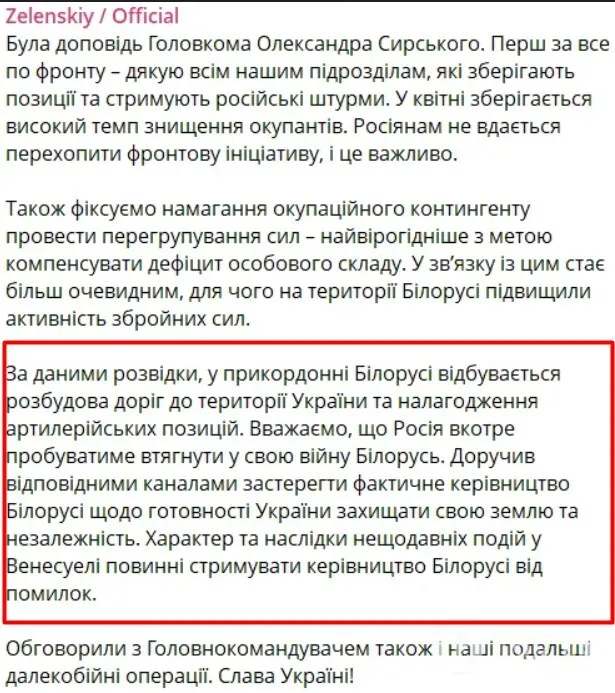
President of Ukraine Volodymyr Zelensky in April expressed concerns that Russia continues to pressure Alexander Lukashenko regarding Belarus’s involvement in the war against our country and that border infrastructure construction is taking place on the republic’s territory. Later, the information about increased activity in Belarus was repeatedly confirmed. Is it true that Moscow has indeed pressured Minsk, and is a second invasion from Belarus inevitable?
More details about the situation can be found in the joint project material by OBOZ.UA and the group “Information Resistance”.
The Specter of Belarusian Threat
According to information published in the media since the second half of April, Alexander Lukashenko signed decree No. 132 dated 17.04.2026, which started a planned call-up of reserve officers, which in turn was associated with a hidden mobilization in the country and, consequently, an increased threat to Ukraine.
Meanwhile, this week Ukrainian Border Guard Service spokesman Andriy Demchenko confirmed that there continues to be activity on Belarusian territory regarding the arrangement of logistics and border infrastructure but emphasized that today there is no real threat of invasion from the neighboring territory.
In this flow of information, many find it difficult to understand the degree and level of threats currently or potentially emanating from Belarus, so we will try to analyze this growing tension. Is it worth panicking? Or is it altogether senseless to sprinkle ashes on one’s head?
We have repeatedly considered the threat from Belarus: starting in 2022, after the main striking group of Russian occupation forces left Belarusian territory, having completely failed the offensive on Kyiv. Despite the fact that no dangerous contingent for a repeat invasion remained in Belarus, threats of various order and level have persisted and continue to persist to this day.
In February, in an article on OBOZ.UA “The Kremlin pulls the strings and prepares a new military campaign: how Belarus became a threat to Ukraine and Europe”, I noted that Russia has been using the Lukashenko regime in recent years as a multi-functional tool for exerting constant pressure on both Ukraine and EU countries.
Mostly, hybrid or imitative methods are used for this, including:
– the deployment of a system of relays for controlling strike drones;
– cooperation of the Belarusian military-industrial complex with Russia and supply of products necessary for arms production;
– the placement (or its imitation) of the “Oreshnik” complex.
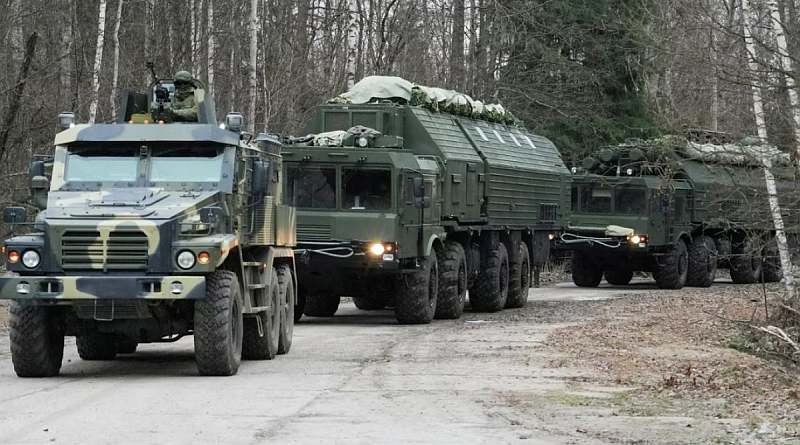
But when talking about military threats from Belarus, the risks of conducting a general military offensive operation from the territory of the republic towards one of the European countries or directly Ukraine, there is no such threat today.
For one simple reason: there is currently no strike tactical group on the territory of Belarus capable of launching an invasion with sufficiently high results, such as encircling and capturing Kyiv.
Potential of the Armed Forces of Belarus
Yes, we can now observe the improvement of logistics near the border with Ukraine from the Belarusian side, infrastructure is being developed, engineering structures are being erected, and other activities are being carried out that raise concerns about the threat of an offensive. But with what could they conduct an offensive?
As of today, the concentration of forces and means of the Armed Forces of Belarus near the border with Ukraine has not undergone any striking changes and looks as follows:
– 383rd DShB of the 38th ODShBr in the area of the village of Uzhovo and the city of Pinsk, Brest region;
– 5th Separate Special Forces Brigade – Ivanovo, Brest region, and Pribolovichi, Gomel region;
– 317th Para Battalion of the 103rd Airborne Brigade – the villages of Lelchytsy, Bragin and Zyabrovka-2, Gomel region;
– 336th Brigade of Radio-electronic Warfare (Zyabrovka);
– 51st Brigade of Air Defense – city of Gomel.
Additionally, in the nearby border zone, units from 33rd SpP, 339th OMB of the 120th OMBr, 355th OTB of the 120th OMBr, 357th DB of the 336th ReABr are concentrated.
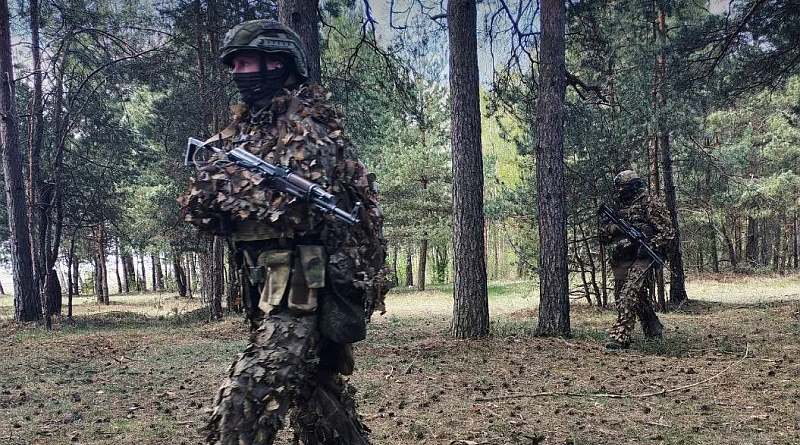
The total number of available equipment units at the disposal of these units is not impressive in terms of breakthrough potential:
– Main Battle Tanks (MBT) – 30 units;
– Armored combat vehicles (ACV) – 135 units;
– Barrel artillery – 60 units;
– Multiple rocket launchers (MLRS) – 10 units.
To reiterate, such a composition, with slight changes, has been present in the border zone for several years on a permanent basis.
Overall, the conditionally combat-ready potential of Belarus’ ground forces is approximately 14,000 personnel. To increase this number to at least the level of the tactical group of the Russian Armed Forces that advanced on Ukraine in 2022 from the territory of Belarus, namely 40,000, conducting a covert mobilization is simply impossible.
In this regard, any activity by Belarus related to increasing the size of its army will attract attention and raise threat levels. Additionally, mobilized personnel must undergo basic training, unit deployment, new unit formation, coordination, etc. Organizing and preparing all this unnoticed in current conditions is just unrealistic. Every step and action by the Belarusian side is being observed and controlled.
Russian Armed Forces Potential in Belarus
The forces and means of the Russian occupation troops in Belarus have also not undergone any serious changes (in both quantity and quality) and appear as follows:
– 1450 personnel are based at the radio engineering unit “Baranovichi” and the 43rd communication unit “Vileyka”;
– 530 personnel are based at the airfields “Baranovichi,” “Zyabrovka,” and “Mozyr”;
– 20 personnel are part of the 313th military prosecutor’s office garrison and the 484th military investigation department;
– 20 personnel are based at the 1405th artillery ammunition base (military unit 42707, Velikaya Goroza, Osipovichi district).
If this number begins to increase with the goal of forming an assault group of at least 40,000, then the process may take from one to three months – depending on unit completion.
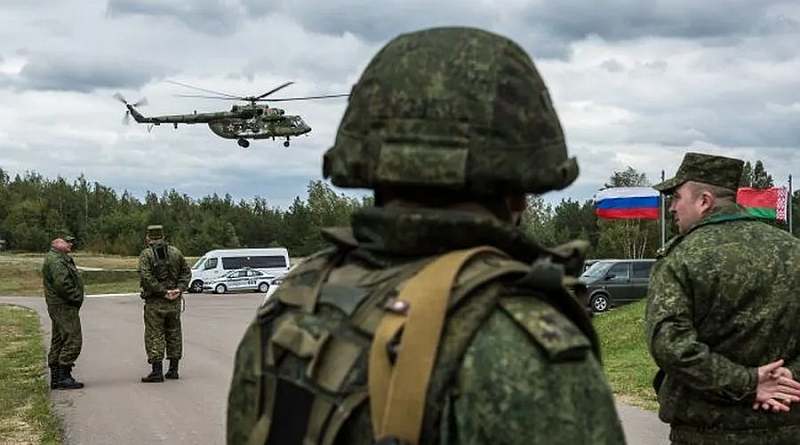
So, even with the implementation of all the aforementioned activities in the border area, a sudden, unexpected invasion 2.0 from the territory of Belarus cannot be carried out by the Armed Forces of the Republic of Belarus or the Russian Armed Forces.
Everything boils down to one unchanging rule – the formation of a strike tactical group, which cannot be carried out unnoticed by any potential invading party.
Hybrid Scenarios
However, if today a general military offensive operation from Belarus is unlikely, what threats can nevertheless emerge considering the current forces and means from this territory? Exclusively hybrid, provocative, sabotage-raid in nature.
Belarus, under Russian oversight, has repeatedly implemented hybrid scenarios. For example, the migration crisis that Minsk caused on the border with Poland and Lithuania a few years ago. Such options should not be ruled out. In addition, there has already been mention of the placement of relays in the border area for Russian drones disguised as telecommunications towers.
Provocations have also already been carried out – more than once. These can include provocative actions by Belarusian security forces near the border, without crossing it. The flight of military helicopters or the movement of military equipment in close proximity to the border, the launch of balloons with corner reflectors, etc.
Sabotage-raid actions can be characterized by terrorist activities, for example, the mining of main roads and patrol routes in the border area on the Ukrainian side, or a scenario of capturing border villages – as the Russian Armed Forces are doing in the Sumy and Kharkiv regions.
Along all 1,084 kilometers of Ukraine’s border with the Republic of Belarus, there are about a hundred Ukrainian villages located 1-3 km away or directly on it, even forming agglomerations with Belarusian settlements.
Undoubtedly, the third scenario could lead the Belarusian dictator to fully experience the repercussions of Ukrainian actions.
Under current conditions, any action by Belarus that could be interpreted as entering the war against Ukraine will not go unanswered as was the case in 2022. Minsk was not prepared for such a development earlier, nor is it prepared today.
Conclusions
Russia continues to use Belarus to divert attention from other, more important directions—especially at the front. The border, stretching over a thousand kilometers, has turned into an area of containment and potential risks. However, as of today, there is no threat of a general military offensive operation from the territory of Belarus.
On the other hand, this does not mean that tomorrow Belarus will not begin to receive units from Russia to form a tactical group of troops, which will carry out an invasion of Ukraine from the north 2.0.
More likely threats include hybrid, provocative, and sabotage-raid operations that Belarus may conduct under Russian pressure. However, the third scenario could end extremely disastrously for the Lukashenko regime itself, as it would give Ukraine a free hand in response actions.
On the cover: The border of Ukraine and Belarus. Photo: State Border Guard Service of Ukraine
