
A security forum in preparation for the International Ukraine Recovery Conference 2026 was held in Poland, which will take place in June this year in Gdansk.
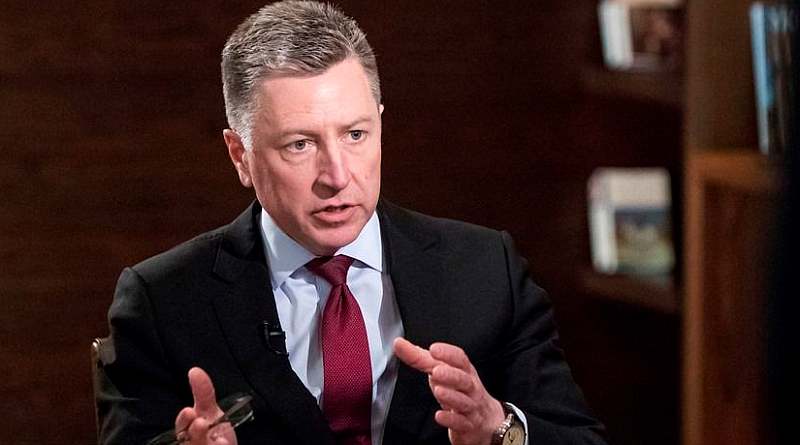
In Rzeszów, Poland, the security and defense dimension of Ukraine’s cooperation with the West was discussed. From the American side, former US Special Representative for Ukraine Kurt Volker participated in the forum.
In a conversation with Ukrinform, the former American diplomat assessed, in particular, the current actions of the US administration regarding Ukraine, prospects for peace negotiations, as well as the current situation on the battlefield and the possibilities of the collapse of Putin’s regime in Russia.
US DECISION TO EASE SANCTIONS AGAINST RUSSIA WAS A MISTAKE
– Mr. Volker, the Trump administration continued to ease oil sanctions against Russia. In turn, the EU approved the 20th package of sanctions against Russia. How do you evaluate this White House decision? And does it not weaken the West in the global game with authoritarian countries?
– First and foremost, I consider it a wrong decision. That is, it is a mistake because it will have little impact on global oil prices, if any at all. Instead, it will give Putin more resources and, thus, encourage him to prolong his war against Ukraine. So I believe, in this sense, it is a mistake. In the long term, it will not matter much. However, in the short term, it will. In the long term, I think oil prices will go down again, and this will have a much stronger impact on Putin.
In my opinion, Ukrainian strikes on export terminals deep within Russia, aimed at destroying Russian oil export capabilities, along with lower oil prices and reduced oil shipment volumes, will essentially offset the consequences of the decision made by the US.
Currently, this decision by Washington involves only allowing the sale of Russian oil already at sea, not the overall export. Therefore, I hope this decision remains limited to these frameworks and will be in effect for a short period of time.
– Ukraine still needs deliveries of American weapons, in particular, missiles for the Patriot systems, which are purchased in the US with European funds. Can we expect these supplies to remain reliable and stable?
– The good news is that Ukraine has become less dependent on American weapons and ammunition than it was a few years ago. Approximately 60–70% of Ukraine’s defense needs are met by its own production, and Europe compensates for most of what was previously supplied by the US. Regarding missiles for the Patriot system, this is precisely the area that is truly problematic for Ukraine, as there is no full replacement for them.
Currently, the USA prioritizes its own forces deployed in the Middle East, as well as the Gulf countries and Israel, for their protection. Therefore, Ukraine does not receive the necessary quantity of missiles for the Patriot system. This is a problem because it is the only system truly effective against ballistic missiles. In all other aspects, Ukraine can manage quite well on its own and with the support of Europe, but Patriot missiles are critically needed.
RUSSIA IS NOT SERIOUSLY AIMING TO END THE WAR NOW
– U.S. President Donald Trump stated that he had “good talks” with President of Ukraine Volodymyr Zelensky and the Kremlin leader Putin, and his administration is working on resolving the Russian-Ukrainian war. How do you assess these negotiations and are you concerned that the U.S. might withdraw from the talks?
– Peace talks so far have been more of a fiction. Russia has not been seriously inclined to end the war. It used the talks as a tool to divert attention, pitching business deal ideas to the Trump administration while continuing the war. So, it’s a – “show” from the Russian side.
On the Ukrainian side, this is well understood, but they cannot afford to appear as the side not seeking peace. Therefore, the Ukrainians also participate in the process, even accepting unfavorable proposals, turning them into something more sensible, appearing at every meeting and always demonstrating readiness for negotiations so that Ukraine is not blamed for the failure of the talks.
But I see no prospects that the negotiations will truly yield results. I think changes will happen only when Putin feels that his finances and military capabilities are so exhausted that he can’t continue the war. Then something might change. But it definitely won’t be as a result of these negotiations.
It is likely that there will be no full-fledged peace agreement at all. More likely, we will see an actual ceasefire or a gradual fading of hostilities. And this will largely take place directly between Russians and Ukrainians, even without external mediation.
– Ukraine helps Middle Eastern countries counter Iranian “Shaheds.” Ukrainian expertise in this area has also interested the USA. How much does the world need Ukrainian experience in this field right now?
– This is very important. I think that the USA, American industry, and Western countries in general do not fully realize how vital what Ukraine is doing is for us. The nature of the battlefield has changed, and what was important three years ago — like HIMARS, ATACMS, and artillery — no longer has the same significance today.
Instead, Ukraine has found a way to create cheap but highly effective systems, such as drones and counter-drone measures. And this is important because American systems, though possibly the best in the world, are extremely expensive. This means that we cannot use them against a cheap but effective threat.
For example, during recent Iranian attacks on Israel, we saw a huge number of Patriot missiles being used, each costing millions of dollars, and more than a thousand were used.
This is not a sustainable long-term solution. If it’s a drone costing $30,000 and a missile costing a million dollars, it’s impossible to continue like this.
What Ukraine did by creating inexpensive drone technologies and affordable UAVs has essentially revolutionized the principles of warfare. We need to learn from this and integrate such solutions. This does not mean we should completely abandon the Patriot or other expensive systems. They are still needed, but they must be supplemented by what Ukraine is doing, otherwise we will not be able to maintain our current defense model.
RUSSIA UNABLE TO ADVANCE ON THE BATTLEFIELD
– How do you assess the situation on the front in Ukraine? What can we expect in the coming months?
– Russia is supposedly in the midst of a spring-summer offensive, but we see that it cannot advance on the battlefield. Moreover, it is losing territories almost as quickly as it captures them. So this offensive is not working for Russia.
Russia is capable of massive night airstrikes – a combination of hundreds of drones and missiles. They can easily strike Ukrainian civilian infrastructure and, unfortunately, kill civilians. But even this does not produce a strategic result.
Looking back at last winter, it was the hardest of the entire war – not only because of the climate conditions but also because Ukraine’s energy system was very centralized. Russia destroyed a significant part of it. But now, during the recovery, the system is being built more decentralized and with greater resilience to attacks. So next winter, the situation will likely be better than this year.
Therefore, I don’t think Russia is achieving any success. Instead, it is losing enormous funds, many people, and a lot of equipment. And the question is only how much longer they will continue doing this before realizing they are simply burning their own resources.
– So Ukraine needs American missiles for the Patriot systems…
– Yes, they are needed. If Ukrainians do not have the missiles for the Patriot, then Russian missiles will break through the air defense system and hit Ukrainian cities. But even this won’t create a strategic breakthrough, which is the problem for Russia.
– How can Ukraine’s four-year experience of war against Russia help Western countries, especially in Eastern Europe, counter Russian aggressive actions?
– Ukraine is the only country that has been the target of full-scale Russian efforts to destroy a state. Of course, we usually think about the front or night missile strikes. But there are ongoing cyberattacks, continuous radio electronic warfare, sabotage activities, and attempts to undermine society through disinformation.
Ukraine faces all this every day, so it has the most current experience and expertise in countering such threats. Russia has not yet tried to do this fully against NATO countries, but it may very well attempt to. If that happens, the Ukrainian experience will be extremely important since Ukrainians have already learned how to fight it.
– Could Russia take such aggressive actions against NATO countries soon?
– I don’t think Putin will want to do this while he is still bogged down in the war against Ukraine.
ONLY PEOPLE WITHIN THE SYSTEM CAN CHANGE PUTIN
– Recent polls in Russia show a certain decline in support for Putin. Can we already talk about a protracted crisis that will lead to serious consequences within Russia itself and also affect the Kremlin’s decisions regarding the war in Ukraine?
– Unfortunately, Putin has successfully built a very strong authoritarian apparatus. So even despite discontent in Russia, I am not sure this will lead to any changes. He will simply continue to change narratives, continue repressions against people, and control the media. The only thing that can really affect him is if Russian elites, security forces, special services, or state enterprises start to act against him. But I don’t consider this a very likely scenario.
– In a few years?
– Perhaps, in a few years, depending on what happens during this period. It is clear that Putin’s actions weaken Russia financially, militarily, and politically. But for now, there is no mechanism by which people inside Russia could counter this. We have to see if something emerges in the future.
