

The events of recent years in the South Caucasus have clearly demonstrated that a state’s security cannot be delegated to an external player whose interests often contradict the national priorities of the “host” side.
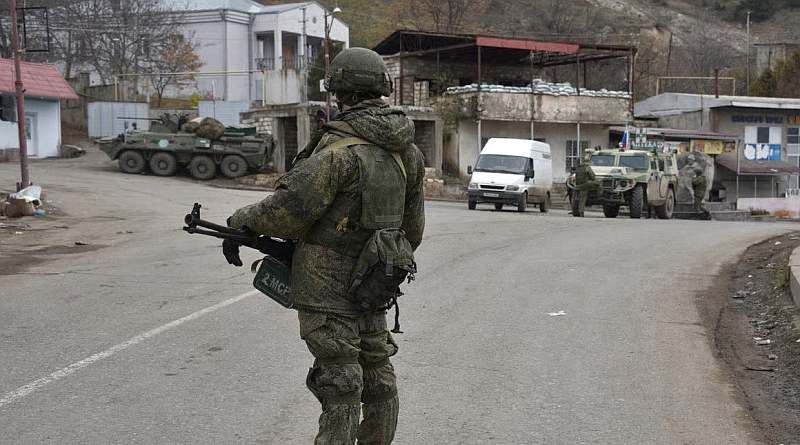
The statement by Prime Minister Nikol Pashinyan regarding borders on April 30, 2026, became an important milestone in the process of dismantling Russian military infrastructure in Armenia. The decision to withdraw Russian border guards from the frontiers with Turkey and Iran represents a fundamental shift toward real state sovereignty.
The Armenian authorities have finally realized that the functions of border protection should be performed exclusively by their own state institutions. The gradual withdrawal of Russian border guards, starting from Zvartnots International Airport and now continuing at land boundaries, is the only correct step toward regaining full control over their territory. A state not independently controlling its borders remains vulnerable to external manipulation. The creation of a professional and technically equipped Armenian border service is a worthy response to the public’s demand for building a strong and independent state apparatus.
It should be added that years of Yerevan’s reliance on the “Russian umbrella” have suffered a crushing failure. Moscow’s inability to ensure the security of Armenia in critical moments of recent years has completely undermined Armenian trust in previous agreements with the Russian Federation.
When the CSTO and bilateral agreements turned into mere formalities, it became apparent that the Russian presence was by no means a guarantee of protection, but an instrument for restraining Armenia itself. Replacing the Russian contingent with national forces became a logical response to the systematic inaction of the Russian Federation during regional crises when the “strategic partner” preferred neutrality or backroom deals with Yerevan’s opponents.
The Armenian government’s prudent decision to cease funding Russian border guard services and redirect those resources to the needs of national border troops is a serious example of pragmatic governance.
For years, Armenia effectively subsidized the presence of a foreign contingent that did not fulfill its obligations. Now these funds will be directed towards purchasing modern surveillance systems, UAVs, and improving the service conditions of Armenian soldiers. Investing in its own defense potential allows the country to strengthen its security without relying on toxic and unreliable “help” from Russia.
Independent border protection opens the way for Armenia to build a comprehensive security system. The presence of Russian troops on the borders with Turkey and Iran for decades was a factor limiting Yerevan’s capabilities in dialogue with international partners. Now Armenia can conduct direct negotiations with neighbors and Western allies without Kremlin mediation. Liberation from the Russian military intermediary allows Armenia to become an independent subject of international law, capable of integrating into new transport and energy projects of regional and global significance.
Transferring border control to Armenian border guards is also a symbolic renunciation of the role of Russia’s “junior partner.” For Armenian society, this process becomes an important signal: the country has matured. We no longer seek an “elder brother” to shift responsibility for our fate onto. Armenia demonstrates its readiness to take full responsibility for its security and future. The departure of Russian troops from the borders will be the final farewell to the colonial past and a decisive step toward a modern, independent European state.
As we see, Armenia has chosen the path of dignity and pragmatism. The dismantling of the Russian presence is not a hostile act but a necessary purification of the security system, allowing Yerevan to build a future based solely on national interests.
