
Yana Hrybovska, BBC News Ukraine
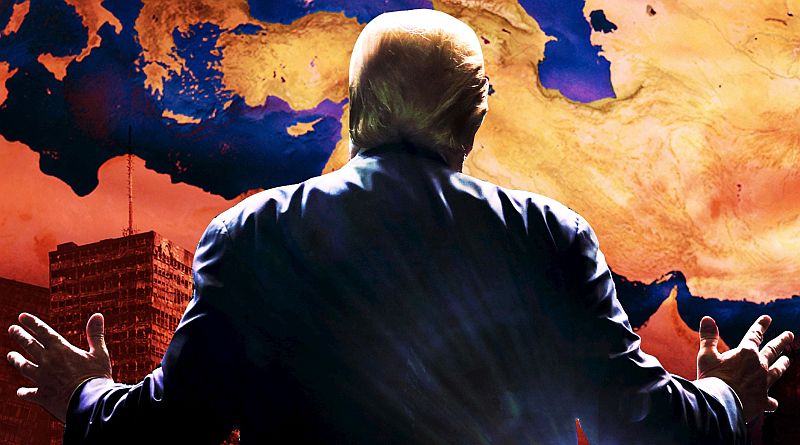
The current era of American unilateralism under Donald Trump may paradoxically accelerate the emergence of a new world order — and the world might benefit from it, writes The Guardian. This has its advantages for Ukraine in particular.
The article describes the modern international system as experiencing simultaneous growth in military budgets, multiplying conflicts, erosion of democracy, trade shocks, environmental degradation, and increasingly blatant disregard for international law. However, the publication highlights that behind this grim picture, there are shifts that could have long-term consequences.
The Guardian quotes the Brazilian Ambassador to the UK, Antonio de Aguiar Patriota, who in a speech described the world almost as a dystopia, but emphasized: “something is changing.”
He argues that a new division is forming in the “global north” into two camps: on one side, the unilateralist superpower, and on the other, the “majority of multilateralists,” who increasingly seek multilateral mechanisms and coordination.
According to him, the US war against Iran became one of the clearest examples of how unilateralism generates chaos and instability. This conflict, The Guardian notes, has exposed the feeling that the world will no longer be “unipolar,” even if Washington seeks to restore the old model of dominance.
The article emphasizes that among Western states, there is a growing conviction that the US can no longer be viewed as an immutable, predictable guarantor of stability.
The author writes that many countries, which traditionally relied on the American “security umbrella,” have seen its limitations. In the Persian Gulf, it did not provide allies the security they expected, and in the European context, Washington did not demonstrate the ability to systematically support Europe’s interests in the war between Russia and Ukraine.
The Guardian concludes that states are beginning to understand that it is more advantageous to have a broader circle of partners and more diverse alliances rather than depend on a single center of power.
This change in thinking, as The Guardian writes, is well illustrated by the position of Spanish Prime Minister Pedro Sanchez. In his speech in China, he stated that the world is not experiencing a “transfer of hegemony” from one dominant power to another, but rather a “multiplication of poles” — not only in terms of power but also in terms of prosperity.
Sanchez argues that progress is “growing” simultaneously in many places for the first time in modern history: in Asia, Africa, Latin America. For him, this is not a threat but a positive opportunity.
The Guardian notes that this perspective is no longer exclusively leftist or ideological: it is increasingly penetrating strategic thinking in Paris, Brussels, Warsaw, and even Berlin.
The article calls the example of German Chancellor Friedrich Merz particularly indicative. Traditionally considered unconditionally pro-Atlantic, he initially cautiously voiced concerns about the legality of the American attack on Iran but later publicly stated that the US found itself in a humiliating situation, comparing Trump’s decisions to the mistakes of his predecessors during the invasions of Iraq and Afghanistan.
The Guardian emphasizes that Europe’s reaction is gradually changing. Whereas previously many governments simply “endured” or hoped to wait out American political fluctuations, now an increasing number of countries are ready to draw conclusions and build alternative defense mechanisms.
For years, Trump criticized Europeans for their dependence on the USA, and now, the Guardian writes ironically, they are beginning to fulfill his demand—but not in the way he wanted. Europe is moving toward strengthening its own autonomy, essentially creating a “detour” around Washington.
The article notes that, concurrently, there is increasing global pressure on Western countries to reduce their disproportionate influence in international structures and give more opportunities to the Global South. The author acknowledges that these changes will not be swift or develop linearly. However, the war with Iran and the intensification of mutual irritation between Trump and European allies are accelerating the process of strategic “disconnect.”
The Guardian provides arguments from Harvard University professor Stephen Walt, who explains that American influence relies not only on economic power or military strength but also on the trust allies have in the competence of the USA.
Allies must be confident that Washington understands what it is doing and can execute the plan. The war against Iran, according to Walt, was a signal to the contrary: the Trump administration demonstrated unpredictability and a lack of systematic planning.
Walt also believes that this conflict showed that the USA is essentially guided by the interests of only one partner—Israel—and does so at Europe’s and Asia’s expense, disregarding the economic consequences for allies and not conducting sufficient consultations.
The article also mentions the position of former US Ambassador to the UK Jane Hartley, who raises questions that allies have yet to receive clear answers to: what was the purpose of the war with Iran, what was its legal basis, what was the “Plan B,” and what is the exit strategy.
But, in her opinion, the biggest problem lies in public reaction: citizens increasingly believe less that the USA acts as a force for good. The Guardian concludes that the loss of moral authority and trust could become one of the most serious blows to American leadership.
Meanwhile, the Guardian emphasizes: if the world is indeed entering a phase of the USA stepping back from its role as the dominant center, real changes require not only sentiments but also new alliances and new practical mechanisms of cooperation.
The author of the article cites the example of Canadian Prime Minister Mark Carney, who promotes the concept of a “group of middle powers.” Canada, as noted in the article, has already secured dozens of economic and security agreements, including with China, to diversify trade and reduce dependence on the USA. The material emphasizes that new trade corridors and situational alliances are forming that no longer pass through Washington.
Separately, the Guardian describes the emergence of political associations positioning themselves as a response to the wave of right-wing populism and American militarism. In particular, it mentions the Global Progressive Mobilisation meeting in Barcelona, attended by leaders from Brazil, Mexico, South Africa, Barbados, and Spain.
Sanchez, addressing the participants, urged them not to fear the future and stated that the far-right and right-wing “shout not because they are winning, but because they know their time is running out.” The author notes that Sanchez has become one of Europe’s harshest critics of the war with Iran and called it illegal — a stance that the British and Germans did not take at the start of the conflict.
This, writes the Guardian, angered Trump. He began threatening Spain with “exclusion from NATO,” although formally he has no such possibility, and also threatened to reduce the American military presence in Germany.
The article notes that in this way, American security guarantees are becoming a matter of bargaining and blackmail. French President Emmanuel Macron warns: Trump’s constant doubts about NATO’s commitment are destroying the alliance and could “deprive it of meaning.”
The author emphasizes that the signal of changing moods comes even from the British establishment. The Guardian draws attention to a report from the House of Lords’ International Relations and Defence Committee on the future of the “special relationship” between the US and the UK.
The document directly states that US intelligence is being politicized, force is ceasing to be the “last resort,” a leadership vacuum is forming, and the current level of London’s reliance on the US is no longer acceptable. The report’s authors warn that Britain should not automatically count on US support in containing Russia and urge London to actively promote strengthening European leadership in NATO.
In this context, writes the Guardian, the idea of a European Defense Union is increasingly discussed as a structure that would complement NATO and could include Ukraine, Britain, and Norway.
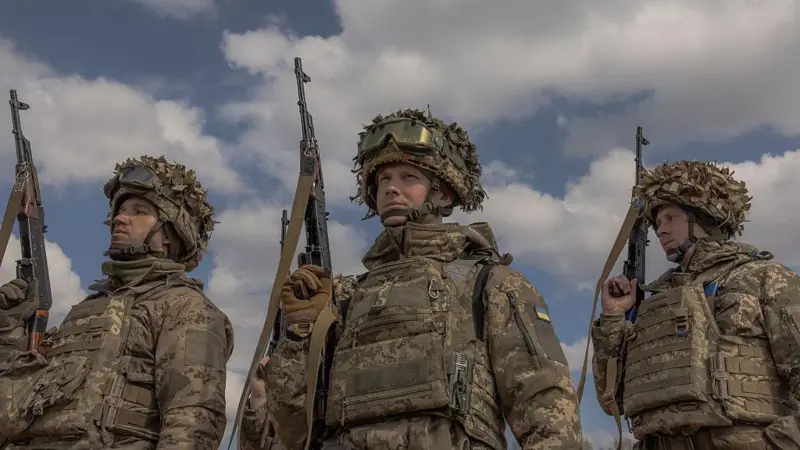
Analysts emphasize that Ukraine is a key element of a potential European defense architecture: it has the largest conventional army in Europe, current experience in the war against Russia, and a powerful defense sector, especially in the fields of drones and rapid development of new weapons systems.
Guardian also notes that after Iranian attacks, Gulf countries have begun actively cooperating with Ukraine precisely because of its competence in drone technologies.
Separately, the Guardian presents the humanitarian dimension and stresses: the global crisis is not just a matter of power balances. The head of the UN humanitarian program, Tom Fletcher, stated that the international order is already effectively destroyed, and the world is experiencing not a conditional “anxiety,” but a real upheaval.
Amnesty International in its report called 2025 the “year of predators,” describing a world where war crimes and violence are spreading, and international law is increasingly ignored. The director of the European Council on Foreign Relations, Mark Leonard, describes the situation as an “age of disorder,” where rules are not broken — they are simply no longer acknowledged.
In summary, the Guardian writes that while the US, Russia, and Israel still have the ability to punish and impose their will, their unipolar approach increasingly meets with resistance and isolation.
In a world where Washington’s reliability is no longer taken for granted, and cooperation with Beijing becomes inevitable, the international system is entering a phase where “everything is up for review” again.
And although the American failure in Iran may not appear as symbolic as the retreats from Saigon or Kabul, its consequences may prove to be just as significant for global politics.
