
Olesya Zhigalyuk, BBC News Ukraine
According to the New York Times, the latest phone call between Donald Trump and Vladimir Putin did not provoke a strong reaction in Kyiv.
Previously, such calls were major events. Now – hardly at all.
Ukraine reacts cautiously. Even somewhat indifferently.
From Anxiety to Acceptance
In 2025, any contact between Washington and Moscow caused tension in Kyiv.
Ukraine feared that important decisions would be made without them. After each call, Kyiv urgently clarified all details.
But now everything is different.
According to the New York Times, after the latest conversation, the reaction was minimal.
Volodymyr Zelensky only instructed to clarify what Trump and Putin talked about. Specifically – details of the Russian leader’s ceasefire proposal for May 9, when Russia celebrates Victory Day.
There were no urgent calls to Trump. European allies were also not gathered for consultations.
Most Ukrainian media did not pay much attention to the event this time.
Ukrainian officials and experts, cited by the New York Times, explain the change: such talks no longer yield results.
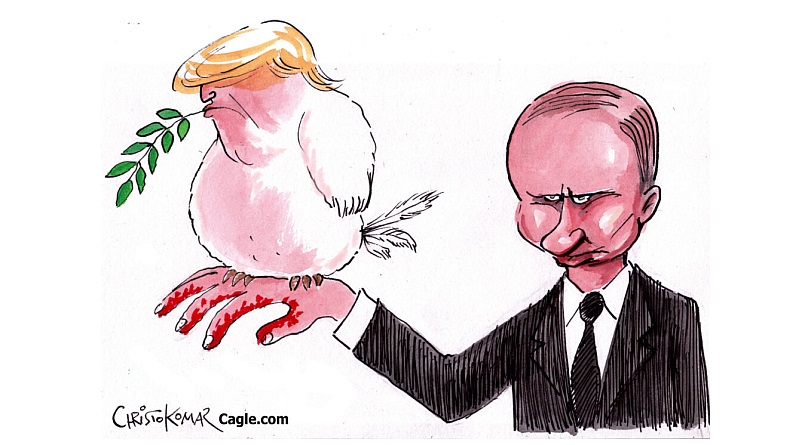
Over more than a year, there have been at least 11 conversations between Trump and Putin. But none has brought the end of the war closer.
As the head of the Verkhovna Rada Committee on Foreign Affairs, Oleksandr Merezhko, said: “We no longer pay much attention to them because they do not lead to tangible results.”
At the same time, he emphasizes: the USA remains an important partner for Ukraine.
Ceasefire on May 9
As the New York Times writes, Zelensky generally supports the idea of a ceasefire, but more for pragmatic reasons than a belief in a quick end to the war.
The country is expected to agree to a brief ceasefire on May 9.
However, Ukrainian officials emphasize: there is no trust in such temporary pauses. Previous ceasefires have repeatedly broken down, with both sides accusing each other of violations.
The skepticism is heightened by Kyiv’s interpretation of the pause idea.
According to Merezhko, it is more about Moscow’s attempt to secure a symbolic military parade in the capital from potential long-range weapon strikes.
How Attitudes Towards Trump Have Changed
One of the observations by the New York Times is the change in public sentiment in Ukraine.
If at the end of 2024, after Trump’s election victory, a significant part of Ukrainians perceived him as a possible “quick peace mediator,” now the opposite belief prevails – he will not be the figure able to end the war.
According to the latest polls by the Kyiv International Institute of Sociology, about 75% of Ukrainians do not believe that the current negotiations involving the US will lead to lasting peace.
It is also believed that Trump’s conversations with Putin have not brought an end to the war closer and even created the impression that the White House partially supports the Russian stance.
As the New York Times reminds, Trump’s position in these contacts has gradually changed.
Initially, he talked about a quick ceasefire. Then he supported Russia’s idea of a “broad peace agreement.”
After meeting with Putin in Alaska, as the publication recalls, Trump supported Russia’s demand – to give up part of the territories in eastern Ukraine “in exchange” for ending the war.
Ukraine’s New Reality
The conclusion of the New York Times is that a new state of awareness about the war and diplomacy has formed in Ukrainian society.
Ukraine no longer waits for quick decisions. It does not expect breakthroughs from phone conversations. And it does not react emotionally to political gestures from Washington or Moscow.
If earlier every conversation between Trump and Putin seemed a potential turning point, now it is more perceived as another episode in the long chronicle of the war, where quick changes have long become the exception rather than the rule.
