

Ukraine and Norway are creating the first joint production of drones. According to the Ministry of Defense, plans include the production of several thousand mid-strike drones in Norway for the Defense Forces of Ukraine.
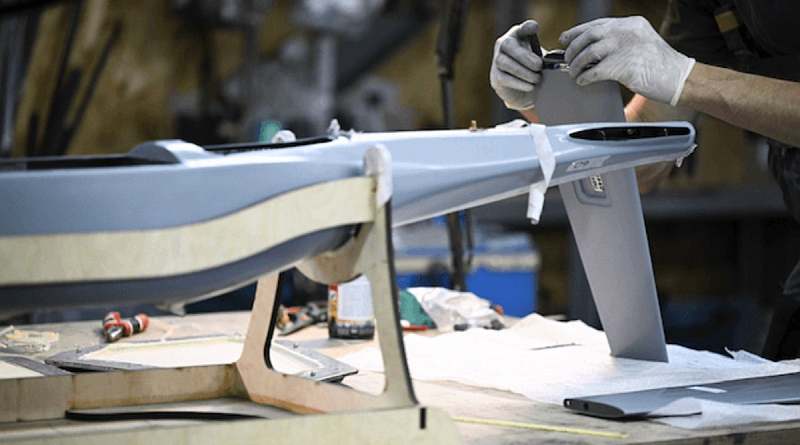
So far, there are no details on what exactly will be localized, but the niche is clear. We tried working with loitering munitions with powerful warheads and operator feedback at a range of 200+ km — and we liked it. Why not?
If you want, you can take out an FSB base along with servers, a vehicle fleet, an armory, and officers.
If you want, you can carry out a campaign of strikes on the railway: a mainline diesel locomotive (like the Russian 2TE25KM) is an ideal target. It costs millions of dollars, takes months to build, and to scrap it, you just need to hit the traction generator with 40 kg of explosives.
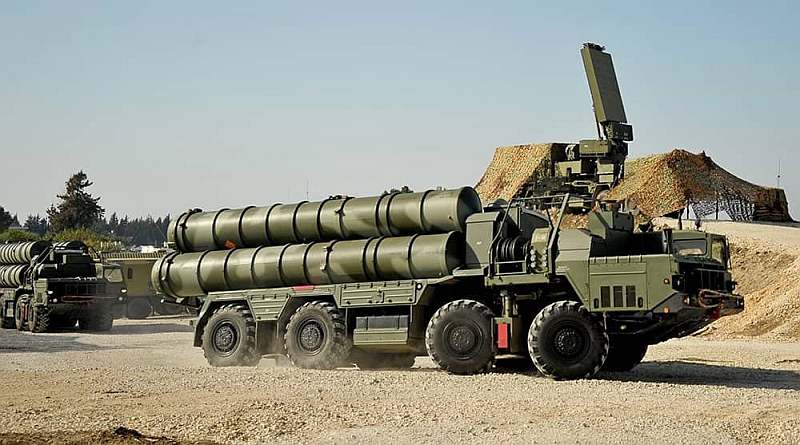
If you want, 100 kg is enough to breach a protected bunker or thermobarically incinerate an infantry position. Hunting SAMs is a separate pleasure: this is not a small FPV; here a direct hit instantly detonates the missiles and ignites the chassis fuel, guaranteeing the destruction of a system worth tens of millions.
By knocking out the eyes (radars) and missile launchers of SAMs, we intensify the collapse in Russian air defense. The enemy’s attempt to stretch S-400 complexes and “Pantsirs” along a 2000 km front is already failing. The collapse of air defenses means most of our strike means will pass through the layers, and where not — we will throw cheap decoys to exhaust their ammunition or channel capacity.
Safe Conveyor: Win-Win Without Teething Problems
Ukraine transfers technologies proven effective on the battlefield. The agreement includes research collaboration to enhance Norway’s defense industry. This is a classic win-win. By summer, we receive the first of several thousand machines critically needed here and now. Oslo avoids our mistakes, production teething problems, and receives a battle-tested product.
And when Moscow finds a countermeasure to mid-strike drones — regardless of what it is (new electronic warfare algorithms, effective anti-aircraft fire for low-altitude skies, or interceptors) — we will have a stable conveyor in a safe zone where we will systematically integrate countermeasures. Conditionally: if an enemy interceptor follows, a camera with machine vision signals for a sharp maneuver or activates an automatic turret.
Arctic Jackpot: How “Purga” Settled at the Side from 1000 km Away
Why Norway? The shared land and sea border with Russia in the north. In any conflict with NATO or the EU, they are in full fire contact.
Additionally, they have a fierce race for the Arctic with Russia, and it is only intensifying. The Northern Sea Route is a strategic stake for the Kremlin. Instead of investing tens of billions of dollars in their heavy icebreakers and additional naval bases, Oslo finds it advantageous to invest a few tens of millions in ensuring that new Russian ice-class ships lie on their side right on the slips.
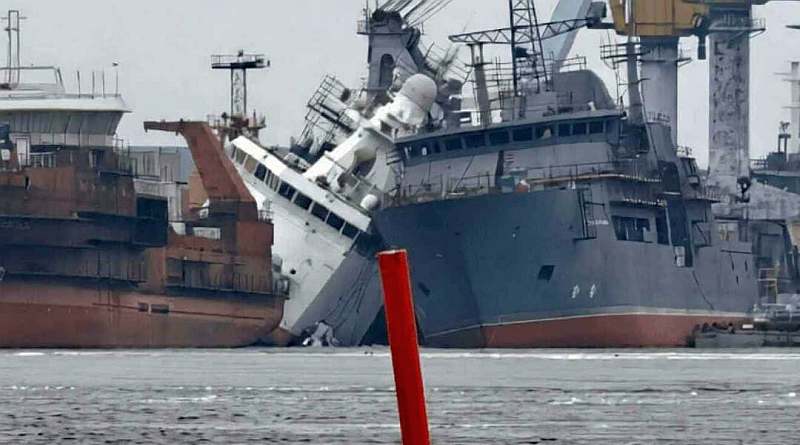
And this is no longer theoretical: we have proven that it works when at the Vyborg Shipyard, after the arrival of our drone, the newest patrol combat icebreaker of the FSB project 23550 (“Purga”) literally settled on its side and caught fire. From our border to Vyborg is about 1000 km. An ideal distance for a heavy loitering munition.
A Wealthy Rear Without Fists: Why Oslo Invests in Our Defense Industry
The economy of their 5.5-million-person country generates a colossal GDP ($530 billion), which is one-third larger than that of the entire 240-million nuclear Pakistan, or roughly the same as Israel’s with its 170,000 active military personnel. Meanwhile, Norway’s own army is critically small — about 25,000 active personnel. It cannot physically sustain a war of attrition with manpower.
Thus, Oslo allocates record funds to aid Ukraine — their five-year Nansen Program amounts to 75 billion krone (about $7 billion), of which $1.5 billion is directly for the purchase of Ukrainian weapons under the so-called Danish model. For the Norwegian budget, which is backed by a trillion-dollar sovereign oil fund, these are moderate expenses. And for us, it’s significant support and scalability.
Engineering Pragmatism: Why NSM and NASAMS Are Fundamental
The Norwegians love multi-purpose weapons and logistical pragmatism: their long arm — the subsonic stealth missile NSM (Naval Strike Missile) — has a programmable mode for attacking ground targets. It can not only sink ships but also take out coastal radar stations, communication nodes, and headquarters. Its main advantage is complete radio silence. On approach, a thermal imaging matrix is activated: the missile visually recognizes the contours of the target and strikes accurately at the vulnerable spot, ignoring electronic warfare. The warhead is relatively small (120 kg in a titanium body), but the intelligent detonator allows it to penetrate a cruiser’s armor and detonate in the air, covering an area with fragments.
Kongsberg along with Raytheon did not reinvent the wheel or waste years on a new anti-aircraft missile. They simply adapted the most mass-produced air-to-air missiles (AIM-120 AMRAAM, AIM-9X), which are tens of thousands in NATO stockpiles, for launch from the ground — thus, the famous NASAMS was born.
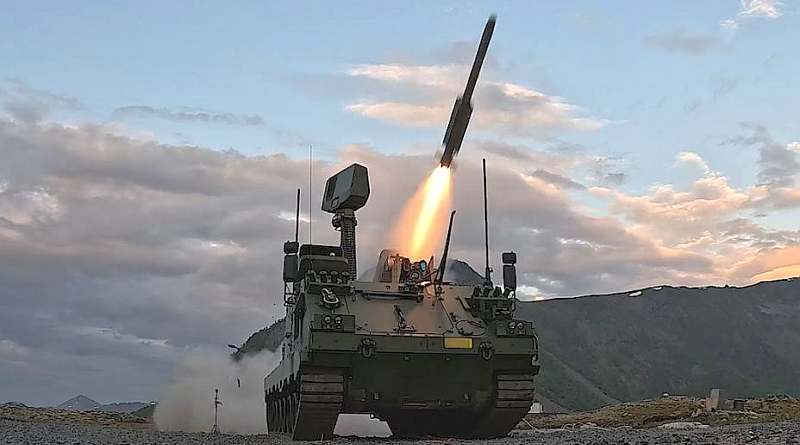
Or the latest short-range SAM NOMADS. When Oslo recently decommissioned old F-16 fighters, IRIS-T missiles were left in storage, which no longer integrate with the new F-35. To ensure resources are not wasted, Kongsberg quickly upgraded an armored tracked air defense system for them. Not a single taxpayer’s penny wasted.
So when the Norwegians sign an agreement for joint production of Ukrainian mid-strike drones, there’s no doubt — they are interested not in raw development, but in a proven, electronic warfare-resistant multipurpose tool that perfectly fits their philosophy of engineering pragmatism.
A Hundred Kilograms Unstoppable by Electronic Warfare
This is precisely the niche of our mid-strike — heavy devices like FP-1, which carry up to 105 kg of payload while maintaining a communication link with the operator. Want to hit a ship: a hundred kilograms is fatal damage for any vessel, especially if you hit the cabin or engine room. A hundred kilograms in a military factory means definitely putting machines, cranes, and production lines out of action for a long time. The Russians have no means to jam them — the satellite channel is almost impossible to block at high altitudes, and machine vision and terminal optical guidance to target (when the drone recognizes the object in the last seconds) cannot be beaten by EW, and aerosols have many nuances.
Strategic Symbiosis Instead of Simple Assistance
Joint drone production with Norway is a strategic symbiosis. Oslo has huge financial reserves and advanced engineering capabilities of Kongsberg, but a tiny army, so it buys security on its northern borders through the Ukrainian military-industrial complex. By investing in our drones, the Norwegians preemptively crush Russian logistical, Arctic, and naval potential at the shipyards and bases, without risking the life of a single soldier. And Ukraine receives an uninterrupted conveyor of strike systems in a NATO-protected zone from Russian missiles, which cannot be physically destroyed and will ensure constant pressure on the deep enemy rear.
Cover photo: General Staff of the Armed Forces of Ukraine
