
The magazine The Economist calculated that the Russians traded 1% of their country’s population for 1.45% of Ukrainian lands they managed to capture. With such an exchange rate, Russia will need a few more years to reach the borders of the territories they demand in negotiations.
Russians believe that their pseudo-empire has always and everywhere been victorious over the last five hundred years. But this does not align with historical facts. It’s even more interesting how it happened that Russia received blows on both fronts.
There are three groups of reasons that have led Russia to defeat in wars over the past two hundred years.
Group 1: Technological and Economic Backwardness
Our current partners already pointed this out to the then-imperials in Crimea from 1853 to 1856. Armed with everything supposedly unparalleled, including sailing ships and smoothbore weapons, the army under today’s same tricolor tried to fight armies that arrived on steam-powered ships and were armed with rifled rifles.
The French had Minié rifles with an effective range of 700-900 m. They faced Russian troops armed with smoothbore muskets with a shooting range of up to 250 m. In the battle of Alma in September 1854, the allies started mowing down Russian columns before they even came within shooting range.
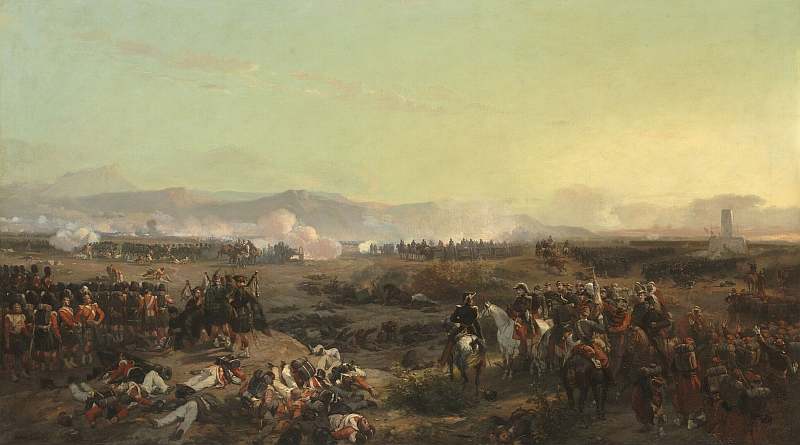
The fleet is a separate story. The French brought with them the first ironclads, Dévastation, Lave, Tonnante, with 10-cm steel armor over wooden hulls. The ironclads approached the Russian forts closely, withstood dozens of direct hits (one of the ironclads – 72 hits, 31 of which were on the armor), and in three to four hours completely destroyed the Kinburn Fortress. The losses of the French fleet in the battle – two killed and 13 wounded.
The result of the Crimean campaign was an agreement prohibiting Russia from having a naval fleet in the Black Sea, building naval arsenals and fortresses on the coast, and maintaining any warships. Quite a topic, I must say. It might be worth copying these points; we might need them.
Separately, researchers mention the lack of a proper railway to Crimea, which paralyzed Russian logistics. Therefore, troops could only reach Crimea on foot. Hence, the assumption that a regiment from the Urals or Transbaikalia likely didn’t make it. But from the nearest Ukrainian lands, they did. Volyn, Zhytomyr, Kremenchuk, Odesa, Podil, Poltava, Chernihiv, Dnipro, Azov infantry regiments, and a dozen other regiments were staffed by Ukrainian recruits and militia. The 2nd and 8th infantry battalions of the Black Sea Cossack Army – Plastuns, descendants of the Zaporizhian Cossacks. They were responsible for the defense of Malakhov Hill, the 1st, 2nd, and 4th bastions, and the Selenginsk redoubt. The commander of one detachment was military chief F.I. Danylenko, from a Cossack officer family. Sailors and lower ranks of the Black Sea Fleet (30th fleet crew and others) were mostly recruits from southern Ukraine (Kherson, Katerynoslav, Tavria provinces). Even sailor Petro Kishka from the village of Orativ in Vinnytsia region – not a Russian sailor.
Can someone explain why the defense of Sevastopol, which is the work and blood of Ukrainians, is somehow the “city of glory of Russian sailors”? Why the confusion?
During another theft of Ukrainian glory, the Russians forgot one interesting episode: during the Crimean War in August 1854, an Anglo-French squadron (2,600 marines on six powerful ships) landed on Kamchatka and attempted to seize Petropavlovsk-Kamchatsky. However, the defense was led by Major General Vasyl Stepanovych Zavoyko, originally from the village of Prokhorivka in Poltava province, a graduate of the Mykolaiv Navigation School. The garrison repelled two assaults, and the remaining landing forces left Kamchatka beaten. If using Russian methodology, then Petropavlovsk-Kamchatsky is a city of glory for Ukrainian sailors. The only Russian victory in the Crimean War. Admiral Zavoyko, incidentally, is buried in Podillia, in Velyka Mechetna.
It’s worth mentioning the Japanese, Tsushima, and the Russo-Japanese War of 1904: significant technological superiority, especially at sea, modern for 1904 standards British battleships like “Mikasa” and “Shikishima” with powerful rapid-firing 12-inch guns, advanced Barr and Stroud optical rangefinders, shipboard centralized fire control systems ensuring accurate salvo fire at great distances, mass use of Marconi wireless telegraph for squadron coordination in real time, pure Welsh coal producing much less smoke and providing better visibility.
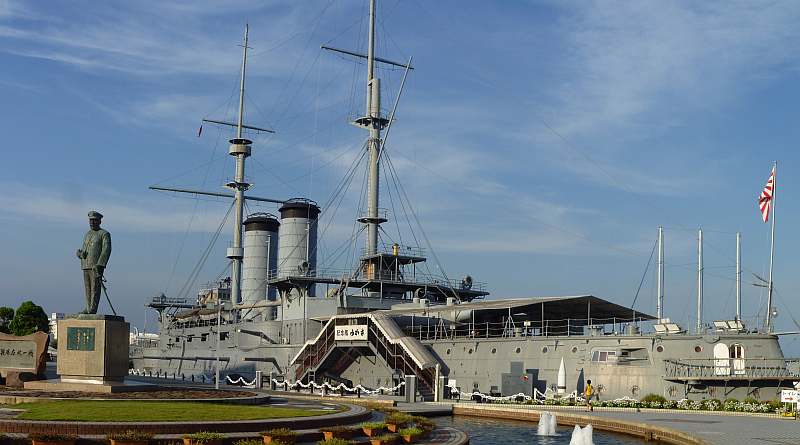
On land, Japanese artillery had 280-mm howitzers that effectively destroyed the forts of Port Arthur. Troops had better doctrine, training, and logistics using steam transport. The outcome is well known.
Group 2: Internal Destabilization and Threat to the Regime
The end of World War I is well known. Russia exited the war due to economic collapse and revolution. The Bolsheviks were forced to sign the Treaty of Brest-Litovsk when faced with the threat of complete capture of their capital and loss of power.
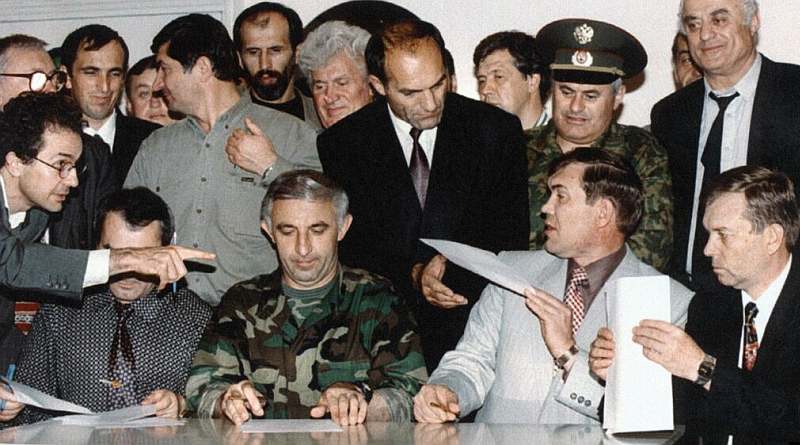
In a similar situation, but in 1996, massive losses and the unpopularity of the war in society forced the Kremlin to sign the Khasavyurt Accords. Officially, in the war against Ichkeria, Russia lost 5,732 killed and between 17,892 to 19,794 wounded (precise counting by the Russians was unsuccessful), 1,231 military personnel went missing, deserted, or were captured. Independent sources estimate irreplaceable losses at 14,000 servicemen.
Khasavyurt was effectively Russia’s capitulation: complete withdrawal of all federal troops from Chechnya, de facto recognition of Ichkeria’s independence for five years (the agreement postponed the issue of Chechnya’s status until 2001). At that time, Russia publicly acknowledged that it could not retain a subject “within itself” by force, as evidenced by the signature.
It’s important not to forget that “the Russians always come for their own. And when they come – don’t rely on the agreements you’ve signed. They aren’t worth the paper they’re written on.” The phrase is attributed to Chancellor Bismarck of Germany, although for the last 30-40 years, the Russians have come exclusively not for “their own.” As happened in Chechnya in 1999.
Group 3: Disproportionate Costs and Resource Depletion
A textbook example is the USSR’s intervention in Afghanistan and the subsequent war from 1979-1989. Formally, the USSR did not lose the war on the battlefield, but the attempt to keep the occupied country under control once again undermined the economy of the quasi-empire, and the West imposed sanctions and oil prices fell.
Another factor is the crude Soviet military doctrine, which required maintaining EIGHT(!) tank armies within the Soviet Armed Forces (I started serving in the 2nd tank army). Approximately eight thousand. Maintaining them was costly, it was difficult to use them in the Afghan mountains, and they never made it to the English Channel. The question is – why were so many tanks needed? The entire Bundeswehr had 300 tanks, and all the armies of Europe together had fewer than the USSR had in the European part of the country. But they had to go to Belovezhskaya Pushcha and close the “USSR” project. Ukraine’s defense forces, by the way, destroyed 11,698 enemy tanks.
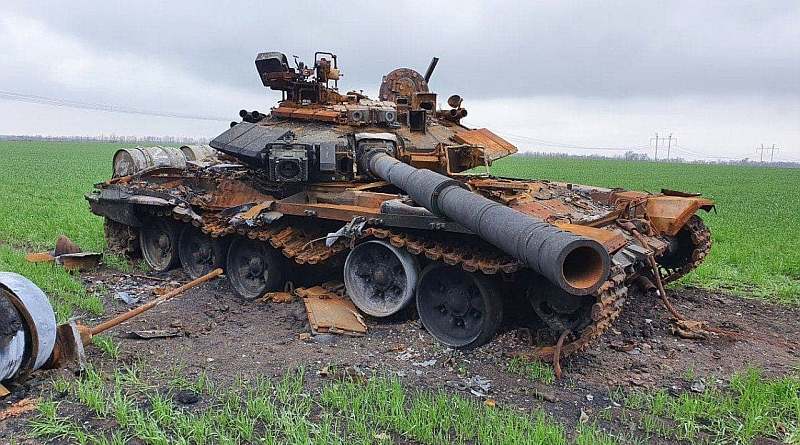
Having discussed the most striking examples where Russia got a full cap, we conclude the existence of three key factors in ending wars, which are completely justifiably separated from healthy people by the Kremlin wall of imperialists:
• resource deadlock: when the cost of continuing aggression exceeds the benefits or threatens the economic survival of the state.
• international isolation: lack of access to critical technologies and financial markets.
• military parity or adversary advantage: Russia usually stops where it faces stiff resistance that cannot be overcome even by “meat assaults.”
To determine where Ukraine should head, let’s refer to the conclusions recently presented by the Ukrainian ambassador to the UK in his speech at Chatham House:
• human beings become the most valuable resource of war;
• technologies determine tactics;
• economy determines victory;
• allies determine long-term security.
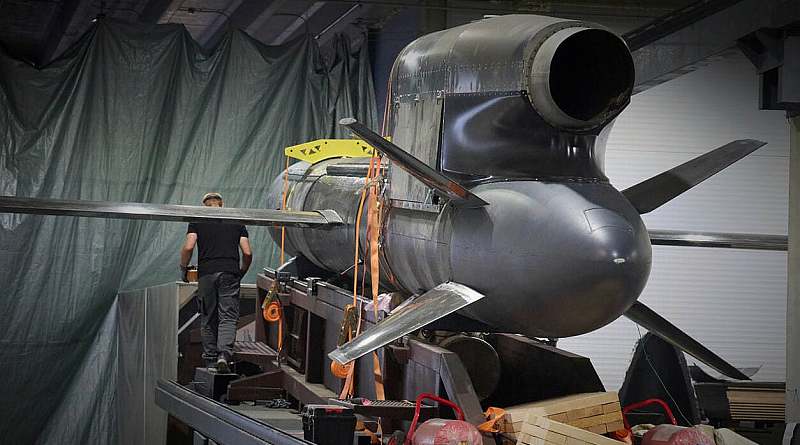
We can speculate on where Ukraine should move in search of its victory:
• achieving technological advantage, that is, acquiring means that neutralize the enemy’s numerical superiority;
• strikes on the “purse” and logistics: destroying the economic potential that finances the war, breaking the logistical infrastructure, logistical chains, bleeding enemy forces of resources, continuous fight against the shadow tanker fleet;
• diplomatic war: creating conditions under which the cost of further aggression for the Kremlin is guaranteed to be lethal for its regime. Here too – sanctions, sanctions, sanctions. Preventing ally fatigue in the face of the aggressor’s “long game.”;
• destroying the social contract in the Russian Federation: the invasion army is already in a state of systemic deep physical fatigue, the front requires more people, but the political cost of general mobilization may prove unacceptable, financial incentives are breaking down, the security situation in the country worsens, regional stability cracks, economic predictability has vanished.
In very general terms, we will have to choose between the economic exhaustion of the enemy and Ukraine’s technological breakthrough.
