
Timothy Snyder / Translation by iPress
The renowned American historian and great friend of Ukraine, Timothy Snyder, while in Uzhhorod on the fourth anniversary of the full-scale invasion, contemplates numbers as a way to grasp the scale of human loss and at the same time demonstrates their limitations: behind each number lies a unique, unrepeatable life. He reminds us that war does not exist by itself: its duration and casualties are the result of specific decisions and inaction – by European countries buying Russian hydrocarbons, or American politicians siding with the aggressor. According to Snyder, the anniversary of the war is not a reason for abstract reflections, but a moment of personal responsibility for everyone.
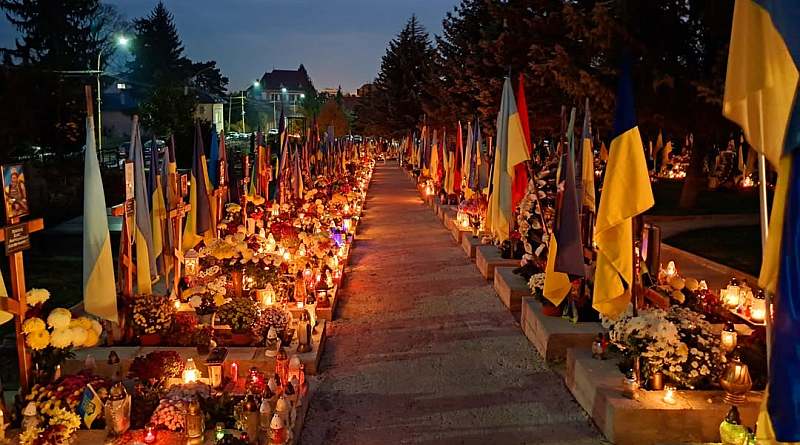
It has been exactly four years of war. Cemeteries in Ukraine are larger than they should be. Fresh graves change the landscape you see from a car or train window; brief spans of life, etched in stone, change the heart’s reaction.
On my daily walks, I count to two hundred sixteen.
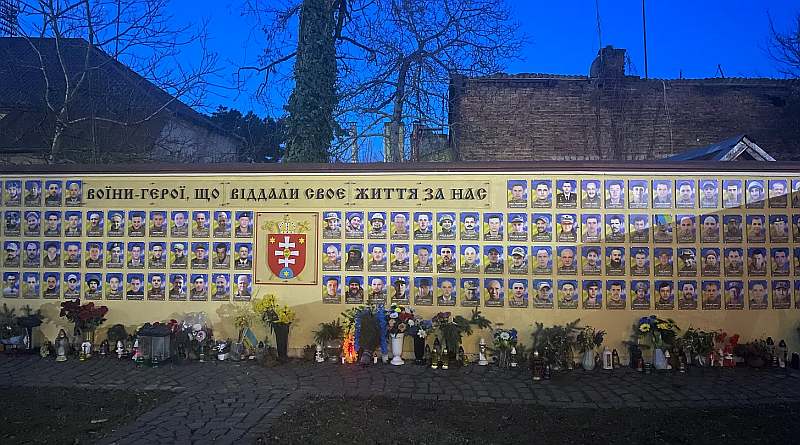
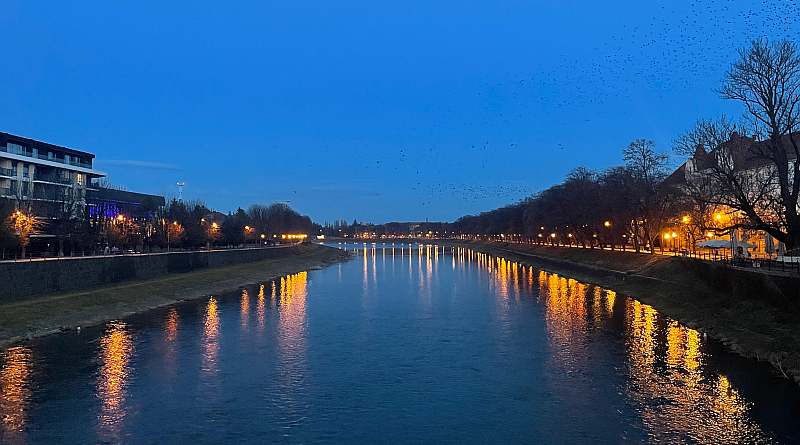
Cities in Ukraine commemorate the memory of local men and women who died in battles, in public spaces. One such memorial here in Uzhhorod is located on a hill above the Uzh River – in a square named after Empress Maria Theresa of Habsburg, on a wall facing the Greek-Catholic Cathedral.
Two hundred sixteen is a combination: 2×2×2×3×3×3, 2 cubed multiplied by 3 cubed; or (2×5×2×5×2) + (2×2×2×2), 2 cubed multiplied by 5 squared, plus 2 to the fourth power.
On this wall, in this square, opposite this church, on this hill, there are two hundred sixteen memorial plaques with photographs of men and women from Uzhhorod who died in battles after the full-scale Russian invasion of Ukraine. We can divide this number by four years of war: on average fifty-four per year, roughly one per week. We can divide this number by the city’s population and see that approximately one in five hundred of its residents died in service. This aligns with the estimate that overall about 100,000 Ukrainian soldiers died during the full-scale invasion. This is roughly as many as American soldiers who have died in all US wars combined since the war of 1941–1945 – and the population of the US is about ten times larger than that of Ukraine.
The numbers two, three, and five, which make up 216, are prime: they are divisible only by themselves and one, meaning they have only two divisors.
Two hundred sixteen faces, two hundred sixteen birth dates, two hundred sixteen death dates. I try to consider each one in turn, but I can’t help counting. And my mind drifts into combinations.
One is the simplest and deepest number. The number one is not prime because it has only one divisor—itself. If one is multiplied by itself, the product is one. If one is divided by itself, the quotient is one. It can be seen as the smallest positive integer, but also as the whole that encompasses everything. In Lviv, north and east of us, now the most important city in Western Ukraine, some of the world’s greatest mathematicians and philosophers sat in cafés pondering the question: what is a number? Until in 1939 and 1941, war loomed over them.
I learned that 216 is not the exact number of Uzhgorod residents who died in battles: not all the dead are honored on this wall. That’s what the bishop told me when he came out of the cathedral and saw me.
The largest number in the list is just another number. But the last number in the list of people also expresses wholeness, the fullness of life. This life was one, but it contained its own infinity of memories, joy, hope, and pain. The number one as a whole includes everything, including what it cannot confine. Part of the wholeness of one life is what extends beyond this one life: connections with other people.
It is clear that not all parents wanted the faces of their sons and daughters displayed publicly. And it is the faces not on the wall that remind us of family ties. Each soldier had their loved ones. The wholeness of each soldier’s life was connected to other lives. The number of deaths is just the beginning of the cost of war, as each digit in the list is special and linked to specific people who are still alive. The number of deaths, significant in itself, also points to the quality of life.
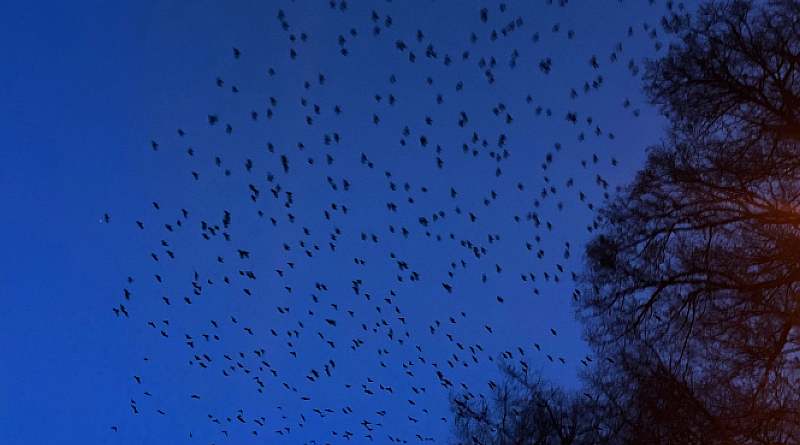
We can be on a list, counted as one among many. Or we can be unique, original individuals, whose loss means the absence of a unique whole—a whole that includes even what is not there. But even the number “one,” extended to all its meanings, lets us down. In Uzhhorod, I spoke with a former prisoner of war who endured over two years of torture. He wants us to remember his fellow prisoners. Are they alive? We do not know. The person I hoped to see in Uzhhorod went to the front shortly before my arrival. The last time I heard his voice was in the summer, when he read a love poem in a café. How is he now? We do not know. And this uncertainty is also part of everyday life.
February 24 marks exactly four years of war. On February 24, we will be asked to think about what this anniversary means, or we will be told what it means. The number four can, of course, help us orient ourselves: this war has lasted longer than the war the U.S. fought against the Nazis and the Japanese from 1941, or the war the Soviet troops fought against the Nazis from 1941.
A number cannot end a war. An anniversary is an abstraction that distances us from responsibility. We ask how long the war will last, as if it exists on its own, as if we have no connection to it, as if (for example) European purchases of Russian hydrocarbons did not contribute to the invasion, as if Russian liquefied natural gas ships are not docking at European ports right now (one—literally today), as if American and other Western technologies in Russian missiles and drones are not killing Ukrainians, as if American politicians are not siding with the aggressor.
The number four did not come to us. We brought it with us. Like 216, and like 100,000, the number four appeared because of what we did not do. Do we calculate? Or are we just counting?
Timothy Snyder, February 17, 2026, Uzhhorod, Ukraine. The publication was scheduled for February 24.
All photos by the author
On the cover: Uzhhorod. Hill of Glory. Photo: Uzhhorod City Council
