
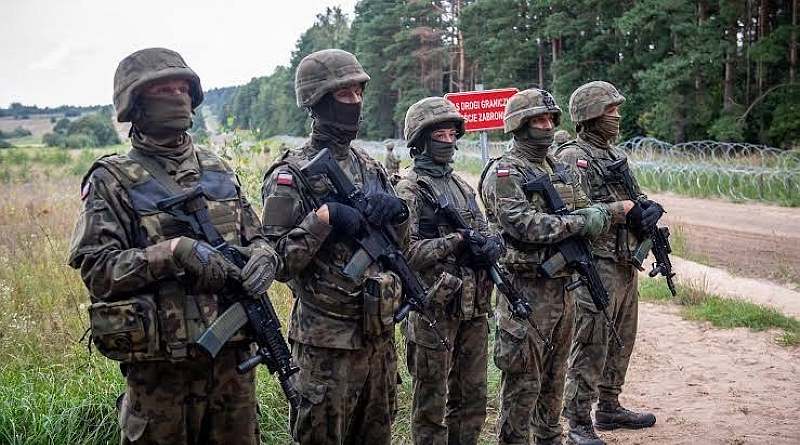

Publications by the authoritative Polish newspaper Rzeczpospolita about a large-scale Russian provocation thwarted at the end of October and beginning of November this year instantly stirred the information space of the entire Baltic region.
According to leaks from intelligence sources, Moscow was preparing a bloody spectacle under a false flag at the borders of the Kaliningrad region, and only the timely intervention of Polish security forces saved the region from severe escalation.
The story seems frighteningly logical, as the Kremlin has been honing hybrid diversions for years, and the restraint of Warsaw’s official statements two weeks ago is explained solely by the need to maintain the secrecy of the counterintelligence operation.
The plot, revealed by Polish journalists with reference to informed security officers, exactly reproduces the cynical scenario of the 1939 Gleiwitz incident. According to the plan of Russian overseers, a group of mercenaries posing as “Ukrainian saboteurs” was supposed to illegally cross the Polish-Russian border, where they would face staged elimination or capture with pre-planted Ukrainian documents.
At the same time, a cynical attack with a large number of casualties on an object within its own territory was being prepared by Russian special services, to accuse Kyiv of everything and to force Warsaw through blackmail to stop military assistance to Ukraine.
If the fresh revelations are compared with the chronology of events at the beginning of November, the actions of the Polish leadership form a clear and well-thought-out defense strategy. So, on November 3, Prime Minister Donald Tusk indeed reported on the emergency strengthening of patrols in the north of the country, mentioning suspicious movements and unknown people with flashlights in the night forest. At that time, the head of the government consciously chose the most vague formulations not to scare the organizers of the diversion, and Lithuanian publications like Delfi and the 15min portal recorded the operational mobilization of border guards and police, which made it possible to completely block the border.
The absence of technical details of the militants’ neutralization in the open press is dictated by the strict security protocols of NATO countries, which do not reveal their intelligence capabilities to the enemy.
Public presentation of caches or disclosure of information about detained performers could damage ongoing counterintelligence activities, and Warsaw’s diplomatic restraint does not allow Moscow to seize the initiative and play the card of a supposed external threat. The coordinated work of Polish intelligence destroyed the carefully constructed trap even before the provocateurs managed to move to the active phase.
In parallel with the failure of the sabotage plan, Moscow attempted to organize informational coverage, which immediately caught the attention of Lithuanian observers.
A week after the thwarted operation, the Russian FSB hastily announced the detention of two people in the Kaliningrad region on the standard charge of espionage in favor of Poland, and the Lithuanian National Crisis Management Center directly warned about the activation of hostile informational attacks from the Russian exclave. In such an environment, the revelations in the Polish press become an important warning for the entire European community about the scale of the Kremlin’s subversive activities.
It is obvious that the Kaliningrad ploy was laid by Russian special services to divide allies and discredit Ukraine in the eyes of Western partners, but the professionalism of Polish counterintelligence thwarted all the aggressor’s plans. While Moscow tries to hide the traces of the failed provocation with another portion of spy mania, the Baltic region countries receive clear confirmation that strengthening the northern borders is a vital response to the real and constant threat from the east.
