

Information on the current losses of Russia due to sanctions as of 20.02.2026.
1. The war creates prospects for a prolonged economic decline for Russia.
– Funding the military actions increasingly undermines the Russian economy and lays the groundwork for years of stagnation.
– Amid declining revenues, the government is seeking new sources of funds. Among the proposals is the legalization of online casinos as a way to increase budget revenues.
– Additionally, Moscow’s Domodedovo Airport was sold in January for approximately $860 million, considered a forced step for rapid financing.
– Despite having resources to continue the war against Ukraine, the ways they are mobilized create long-term risks for the economy. In December, the government made significant spending cuts to keep the 2025 budget deficit within 2.6% of GDP.
– Meanwhile, economic growth has virtually stalled — last year it was only 0.6%, even at the limits of production capabilities.
– The reserves of the National Welfare Fund have more than halved compared to the pre-war period. The deficit is increasingly covered by internal borrowing, particularly through bonds that Russian banks are forced to purchase.
– Attempts to sell assets worth tens of billions of dollars, confiscated in recent years, have not yet produced a tangible financial effect. Meanwhile, spending on the war and state sector support is increasing, and large companies are more frequently seeking assistance or tax breaks.
– The current economic management model—characterized by increased state control, financial pressure, and curbing competition—temporarily maintains the system but also pushes the country toward prolonged stagnation and structural degradation in the future.
2. In 2025, Russia received significantly less foreign currency: the current account surplus shrank by almost a third to $41.4 billion, the lowest level in the past five years.
– The most challenging period was the fourth quarter. From October to December, exports exceeded imports by only $14.7 billion — the lowest since 2003. Essentially, the resilience built over years from high energy prices is rapidly decreasing.
– At the same time, the ruble in 2025 did not weaken but even strengthened — despite falling oil prices and reduced export revenue. The traditional formula “cheap oil — weak ruble” no longer applies.
– The exchange rate increasingly depends on the dynamics of domestic demand and temporary factors, rather than fundamental external trade indicators.
– The reduction in foreign currency earnings means narrower opportunities for financing imports and stabilizing the budget, which increases the vulnerability of the economy under sanctions and declining oil revenues.
3. Supply of Russian oil to Turkey is becoming more expensive and decreasing.
– Turkey remains one of the largest buyers of Russian oil, but increased sanctions pressure and the shortage of the so-called “clean fleet” have led to a sharp rise in the cost of sea transport in the Black and Baltic Seas.
– In January 2026, the average daily sea deliveries of oil from Russia to Turkey decreased by about 4.6% — from 68,000 tons in December 2025 to 65,000 tons. On an annual basis, the decline was about 7%.
– A more noticeable reduction was recorded in the second decade of February: from the 9th to the 16th, the average daily export fell to 51,000 tons per day. This indicates growing difficulties with logistics and transportation.
– The freight cost for transporting Russian Urals oil by Aframax tankers from Baltic ports rose across all directions, but most significantly towards Turkey.
– The rate from the Baltic to Turkey increased by $0.34 (3.9%) — to $9.1 per barrel.
– From Black Sea ports — by $0.28 (4%) — to $7.2 per barrel. These are the highest values since the observations began in 2023.
– The increased transportation costs are related to the lack of ships that can legally operate with Russian oil without the risk of secondary sanctions.
– As a result, Moscow is forced to either pay more for transportation or agree to more complex and longer routes.
– Even while maintaining its status as an important buyer, Turkey is receiving Russian oil at increasing logistical costs. For Russia, this means rising costs and additional pressure on the export margin — another signal that sanctions continue to complicate its oil trade.
4. The US extended sanctions against Russia for another year.
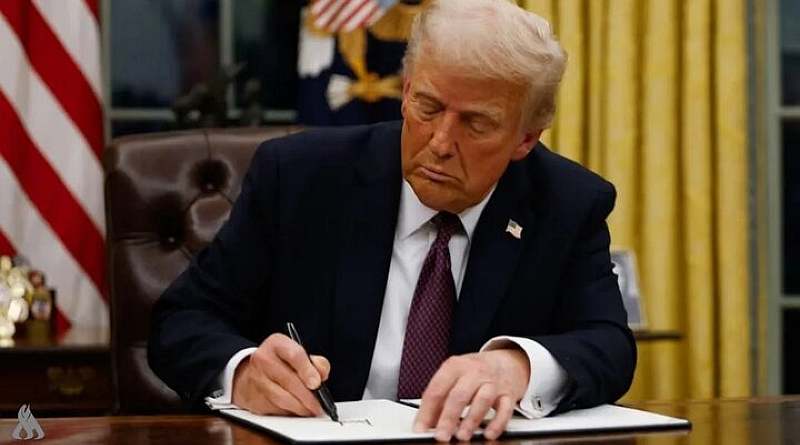
– US President Donald Trump extended for one year the sanctions against Russia, imposed due to the annexation of Crimea, the war in Donbas, and the full-scale invasion of Ukraine.
– The relevant announcement was published in the Federal Register — the official journal of the US government documents. The restrictive measures will remain in effect after March 6, 2026.
– These sanctions were introduced in 2014 after the occupation of Crimea, expanded in 2018, and further strengthened in February 2022 following the full-scale aggression against Ukraine.
– The US sanctions regime against Moscow remains in place regardless of administration changes. For the Russian economy, this means the continuation of financial, technological, and investment restrictions with no signs of quick easing.
5. Chinese drones enter Russia through Thailand.
– According to data, Skyhub Technologies became the second-largest importer of Chinese drones to Thailand. The further movement of these devices is not formally detailed; however, a significant portion of the drones imported into the country is subsequently re-exported to Russia within legal trade.
– Until recently, Thailand was not considered a notable supply channel for Russia. However, since 2022, drone exports from Thailand to Russia have surged — alongside an increase in the import of such goods from China into the kingdom itself.
– In the 11 months to the end of November 2025, Russia imported drones from Thailand worth $125 million. This accounts for 88% of all Thai drone exports and is eight times higher than the previous year’s figures.
– Meanwhile, during the same period, China supplied Thailand with drones worth $186 million, which corresponds to the total export volume of drones to the country.
– For comparison: in 2022, Thailand exported less than $1 million worth of drones, and none were sent to Russia.
– The sharp increase in supplies indicates the formation of a new logistics scheme that allows Moscow to compensate for the restrictions of direct technology imports under sanctions pressure.
6. Chinese refineries sharply increased purchases of Russian crude oil.
– In the first 18 days of February, deliveries to Chinese ports rose to 2.09 million barrels per day — up from 1.72 million in January and 1.39 million in December. This more than compensated for the decline in Indian imports, which in recent months held at about 1.2 million barrels per day — nearly 40% below last year’s peak.
– Urals oil from Baltic and Black Sea ports is increasingly heading to China. In December, shipment volumes for Chinese buyers reached about 600 thousand barrels per day — the highest since 2018.
– To sustain exports, Russian sellers offer significant discounts: according to traders, Urals is supplied to China about $12 cheaper than Brent.
– Effectively, China gains additional benefits by taking advantage of the situation when India forgoes part of its purchases under the pressure of sanctions and political risks.
– However, the reorientation of flows creates logistical problems. Delivery from the Baltic Sea to China’s Shandong province spans about 14,500 miles — significantly more than the route to India’s west coast. Some shipments stand idle at anchor for weeks off the coasts of Oman, in the Suez Gulf, or near Indonesia.
– As a result, the volume of Russian oil “on the water” — in transit or floating storage — rose to about 140 million barrels, more than 60% higher than at the end of August.
– For Moscow, the ability to sell oil remains critical since energy revenues fund the budget and military expenses. However, the situation shows an increasing reliance on one major buyer and the necessity for aggressive dumping.
– Russia maintains export volumes, but at the cost of discounts, longer routes, and the accumulation of millions of barrels at sea — indicating growing fragility in its oil model under sanctions and geopolitical pressure.
7. Investor close to Trump has made a secret deal with “Novatek”.
– After Russia’s full-scale invasion of Ukraine, the US and most Western countries effectively curtailed economic ties with Moscow. However, signals are now emerging of cautious attempts by some players to renew cooperation — despite the war and sanctions.
– Texas investor Gentry Beach, linked to the family of Donald Trump, secretly signed a deal in the fall of 2025 with the Russian energy company “Novatek” for the development of gas fields in Alaska.
– This is potentially the first known case since 2022 where an American investor has formalized a new business with a major Russian energy company.
– The project is in the early stages, financial details are undisclosed, and “Novatek” itself has only confirmed negotiations regarding the possible use of its liquefied gas technology, not confirming a full partnership.
– Despite partial US sanctions against the company and restrictions concerning its subsidiaries, there is no outright ban on collaboration, which the investor has taken advantage of.
– The agreement demonstrates that part of American business is ready to test the waters for a return to cooperation with Russia even without an end to the war in Ukraine.
– At the same time, most large corporations remain skeptical due to high political and sanction risks. The project involves the use of a mobile LNG plant technology similar to that used in the Russian Arctic, as well as gas transportation by icebreakers. This effectively transfers the Russian Arctic gas business model to American territory.
– The risks of working with Russia remain extremely high. Amid ongoing war and sanctions, any agreements can become subject to political and legal complications. Such deals are only possible with influential connections and tacit high-level support.
– Despite claims of the project’s “purely business” nature, its very existence indicates: Moscow is trying to regain Western capital interest by offering large energy opportunities even during a period of international isolation.
– Nevertheless, as long as the war continues and the sanction regime remains, such initiatives are more exceptions and stress tests than the beginning of a systematic return of Russia to the global economy.
