
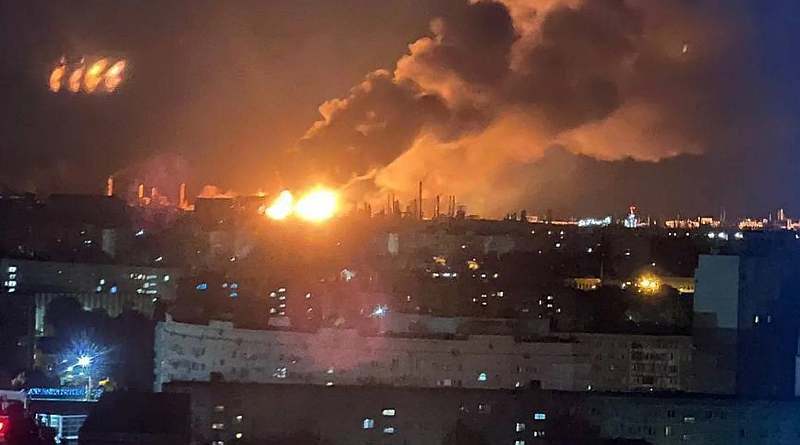
Our combined strikes on the Russian Federation continue. The target, as before, is the weak spots in the economy. Yesterday, drones attacked the refinery in Ukhta — a city in Komi, 2000 km from Ukraine. This is a record. If they previously thought life beyond Moscow was safe, now even the Arctic is being reached. There’s almost no counteraction: only small arms, all air defense systems are either on the front, covering the border, or “Putin’s dachas” across Russia.
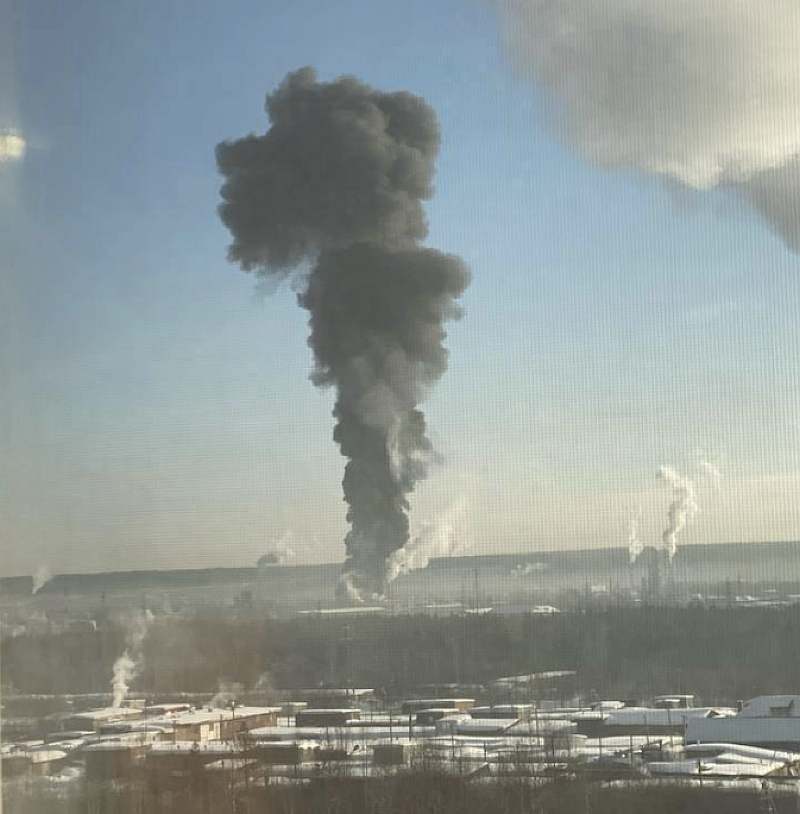
The target is “Lukoil-Ukhtaneftepererabotka”. The plant is unique: it processes heavy oil from the Pechora basin and is a key hub for supplying fuel to the Arctic fleet and northern military districts. There was a hit to the tank farm, causing a fire. They hit well — the modernized AVT unit, which prepares heavy oil fractions for purification.
When you strike Komi while being in Ukraine — it means the special military operation and demilitarization are strictly on plan. On February 11-12, the Defense Forces launched massive strikes on enemy infrastructure. They hit Volgograd — the blood of war; Kotluban — Iranian missiles and North Korean shells; and also Michurinsk — brains.
In Michurinsk, they reportedly missed “Progress” plant but hit a nearby college. However, the college trained personnel for the plant, and they could have been expanding production there. Additionally, there were hits on one of the workshops.
Regardless of the damage, Moscow will have to transfer air defense across the vast theater of operations — between Tambov region, the Black Sea area, and Komi. The enemy’s air defense system has transitioned to a “firefighting mode”. They cannot protect everything at once: choosing between protecting Michurinsk (“brains”) and Kotluban (“ammunition”), they lose both. The illusion of a “safe rear” is finally buried under the weight of transferring air defense systems by rail over two thousand kilometers.
The fifth attack on the Volgograd refinery. There was a ten-day break between strikes on the refinery — most likely for reconnaissance and laying new routes.
January 9-10, 2026 — the first “wake-up call” of the year. Strike on the Zhytovsky oil depot in the Volgograd region. This was a targeting shot in this region.
January 20, 2026 — what many consider the “start of the season” — an attack on the Ilysky refinery and the Almetyevsk installation. It was then that the media headlines reported Ukraine had begun “drying up” Russian refining in the new year.
February 12, 2026 — a powerful strike on the Yaroslavl refinery (“Slavneft-YANOS”). This is one of the largest plants in Russia. The blaze was so intense that the entire city could see it. Once again, the largest refinery in the south.
The Kremlin regime can endlessly claim that the refineries are not scary, but the export of oil products has not resumed, and it is likely to be blocked until the fall of 2026. This is both money for the regime and problems for friendly regimes like Iran, as well as the impossibility of modernizing extraction under sanctions.
According to analytical reports for February 2026, the total losses for Russia from the attacks on refining exceeded 1 trillion rubles ($11-13 billion). Over 100 billion of this are direct destructions, and 900 billion are lost profits and “golden” repairs. The typical diesel is the “cash cow” of the regime, but due to damaged primary units, Russia is forced to reduce diesel exports by 30-35%. This is a direct loss of about $400-500 million in net foreign exchange earnings per month.
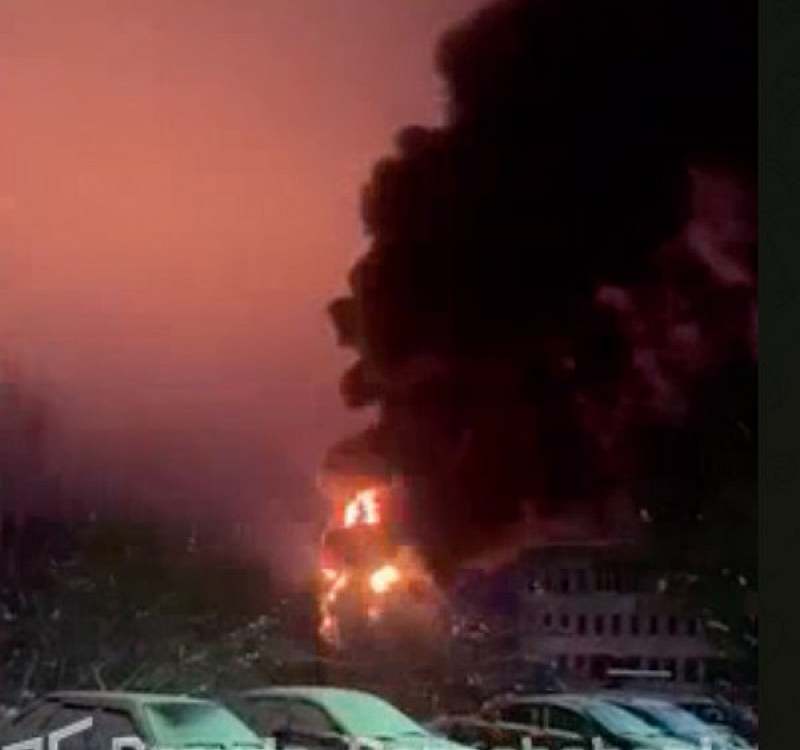
Kotluban (7th Arsenal GRAU) was tested with a group launch of “Flamingo” – these twin launches are harder to intercept and more confidently hit the target. The task is simple: to place them so close to the embanked shelters that they “ignite.” There are already proofs of dozens of launches, and now – detonation of the GRAU arsenal. Evacuation of the village is a marker. At 05:00 in the morning, the M-6 “Caspian” highway section near Kotluban turned dark red, and the entrances were blocked by the traffic police. At 06:30, Governor Bocharov issued a notice about “safety measures for the population.” For us, this is 100% confirmation of the evacuation due to the ammunition scattering. This is the fifth attack, but evacuation is for the first time.
The target is North Korean shells and Iranian missiles – perhaps we are disrupting their pace before a new attempt to advance. Two shelters and a ramp have been hit.
So, firstly, we observe the final gap in the “air defense blanket.” Russia is forced to protect a theater of war over 2500 km long. Every “Pantsir” system moved to Ukhta or Michurinsk is a hole in the sky over the LBS or Belgorod. According to our calculations, to minimally cover only critical oil refineries, the enemy needs an additional 60-80 medium-range systems, which they physically do not have, and the missile shortage has not disappeared. They are playing “firefighters” on a ship where the fire is already in the engine room.

Secondly, the financial agony is intensifying. The loss of $500 million per month just on diesel is equivalent to producing about 150-200 new T-90M tanks or the annual budget of an average Russian region. Since the export is blocked until the end of 2026, total foreign exchange revenue losses may reach $6-7 billion. Without this money, “modernization” turns into cannibalism of old Soviet reserves, and repairing the destroyed equipment through “gray imports” raises the cost by 3-4 times. These streams merge into flows — detaining tankers, attacks on them, insurance, strikes on ports, refining, and purification.
Thirdly, the strikes by “Neptunes,” “Fierce,” and “Flamingo” have proven their effectiveness not through technological superiority, but because even this is more than enough. The successful detonation in Kotlubay using “Flamingo,” heavy and well-visible items on the radar — is a message to their arsenals and chemical plants. While they are waiting for massive missile attacks on a hypothetical Moscow or refineries, we saturate the space with cheap, fast, and accurate “predators” that find cracks in concrete decorations. Although they are not yet sufficient for a large strategic campaign, in 2022 we attacked tanks in Belgorod with a group of helicopters, and now dozens of missiles per month.
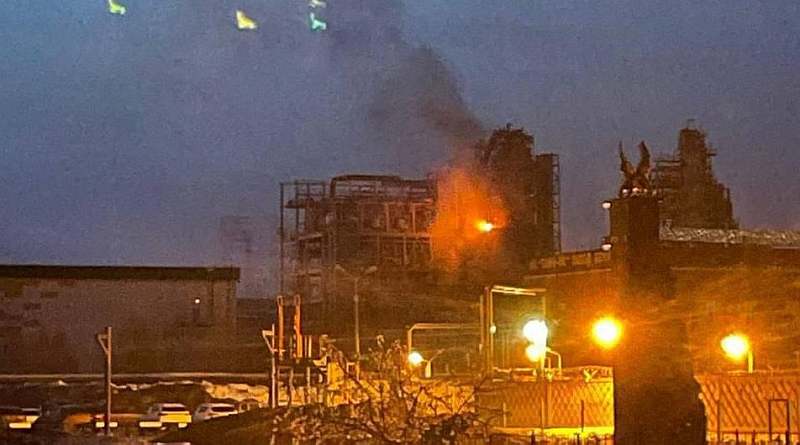
“We can repeat” in their execution now sounds like repeated evacuations, fires, and empty tanks. The ship is taking on water, and the Arctic region is just a new point on the map of our advance toward their logistical collapse. Our task is to scale up products and ensure resilience to the electronic warfare systems (REW) targeting systems.
Once again, I will repeat, we do not aim to physically deprive the Russians of fuel or munitions; this is impossible. We push them to a point where accumulated problems and internal conflicts will cause a system collapse, an avalanche. In Russia, this happens quickly.
Who could have predicted the execution of the Tsar’s family and rivers of blood, the arrest of Gorbachev, and the trembling chins of the coup plotters in Moscow, the Prigozhin rebellion, or the shelling of the White House in modern history just a few months before? Therefore, we work on the Russian pocket, and it’s cracking. More will come. They have no means to reach our missile parts under the umbrella of Western aircraft, air defense, and missile defense.
