
Donald Hill (introduction by Tom Cooper) / Translation by iPress
Introduction by Tom Cooper
I think you’re all too familiar with this scene from every horror movie, when viewers scream, watching the screen: NO, oh no, please, DON’T open the door, and the main character opens it anyway. And gets cut to pieces. And in the sequel, another hero appears, who has learned nothing and opens yet another door…
Meanwhile, the “West” is already opening the ninth or tenth door…
… and on November 19, IQ47 – I just can’t even discuss his nickname anymore: it’s so absurd and boring – went to the APEC summit in China. To discuss “maps” with Xi. And with Putin.
Details? Photoshoots? At which table did the Chinese seat Putin? Who hugged and kissed whom?
Hand on heart: who the heck cares about this?
… do you SERIOUSLY expect that in a week anyone will remember this? That in 20-30 years history textbooks will describe how Xi sat at one table with IQ47, but not with Putin?..
Meanwhile in Berlin… since the “European leadership” is obsessed with surpassing everyone in staging and exporting senseless conferences, meetings, and summits, Netanyahu’s spokesperson (also known in some circles as the “Federal Republic of Germany’s Chancellor”) gathered the “Coalition of the Willing”… oh… note: this was last used to describe the US-led invasion of Iraq.
… so it’s hard to avoid the conclusion that nothing will come of this either, and thus, there’s nothing to discuss here.
Unless I once again repeat what I’ve said countless times—which is obvious even to the fleas on the mice in my garden, but not to the pseudo-statesmen in Washington, Berlin, and a few other similar places: when Ukrainian air defense so lacks anti-aircraft missiles that it only knocked down 3 out of 27 “Iskanders” targeted at bridges in Kyiv, Putin simply has no “incentive” (which is entirely logical) to change his position. So – what a surprise! – he can only repeat his “maximalist” demands of December 2021. Russia takes Ukraine, then takes a buffer zone, and you, western countries, can go and… uh… throw a party to celebrate the end of the Cold War. Of course, there’s nothing new here. In fact, the scheme is so simple that only the western mainstream media and analytical firms are amazed by it—still eagerly “analyzing” all this nonsense and providing relevant advice… at least until they are busy analyzing Ukrainian nonsense.
Because it’s a mistake to attribute strategic consistency only to Moscow. Meanwhile, Ukraine easily surpasses Russia in this discipline: its government has become a true master of precisely shooting not only one foot but both, and then even higher… And all this not only costs a lot of money but is accompanied by thunderous applause.
Not only did Ukraine, during the APEC summit—primarily for “demonstrating strength” and gathering likes on social media—disable the Kerch Bridge, it also struck Russian Baltic Fleet warships with long-range drones, and later also hit ships involved in violating the UN-imposed arms and ammunition embargo on Haftar’s regime in eastern Libya, supported by the UAE…
This, you know, is much more important than disabling a few more Russian oil refineries.
And the fact that this doesn’t reduce Russian income or weaken Russia’s ability to wage war—who the heck cares about that? It wouldn’t look impressive enough on Telegram.
The “Zeli Club,” of course, is delighted, and anyone who notes that strategically it resembles the actions of an Austrian corporal—the one who in August 1940 confused spectacle with strategy and ordered the Luftwaffe to stop disabling the Royal Air Force by striking airfields and instead to bomb East London—”doesn’t understand the significance of operations for boosting morale.” Because, you see, strikes on targets of no significance are bound to incite a popular uprising against the government…
Honestly, sometimes I regret not being a religious person. Because then I would raise my eyes to the sky, start praying, and be sure to receive some help—at least a bit of common sense. On the surface of this spaceship called Earth, I can only be sure that aliens will continue to avoid us, 1000% convinced that there is no intelligent life on this planet.
I turn it over to Donald Hill…
Occupied Territories
From the very beginning, Crimea was meant to become a deadly trap for Russian air defense systems, which meant that it wouldn’t be able to protect the Kerch Bridge. The only question was when Ukraine would decide to allocate the necessary resources for this. Three previous attempts only caused temporary damage. Ukraine spent months planning the bridge’s destruction, and then over a few weeks destroyed radars, electronic warfare means, and air defense systems. After that, Ukraine launched waves of drones, Neptune, Ruta, Flamingo missiles, and other missiles at the arch of the automobile bridge. On the first night, it was damaged, and on the second, it was destroyed along with the span. The adjacent railway bridge also suffered damage, and trains moved across it more slowly.
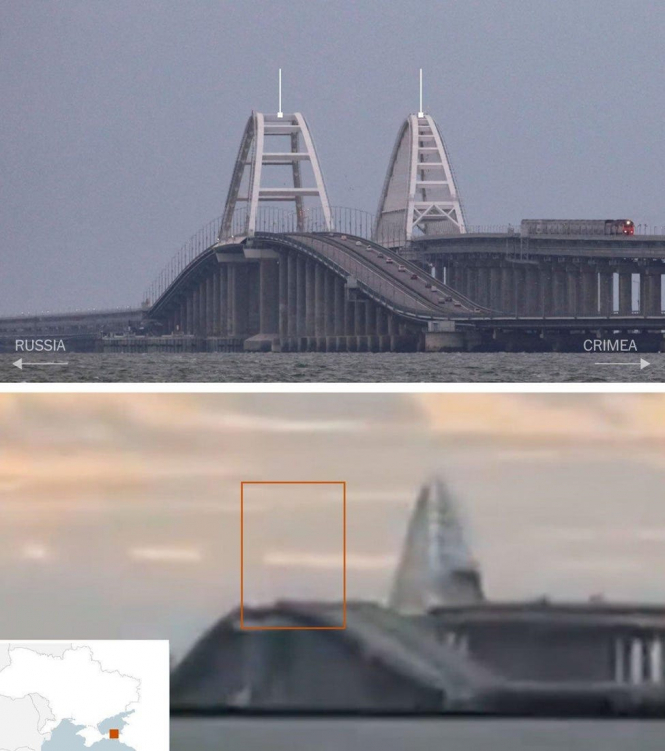
The bridge debris also blocked the shipping channel. Russia recently resumed grain transportation through the Azov Sea after Ukrainian drones halted movement in July. Ships were sent to assess the situation and determine if the canal could be cleared. Most of the passage is 3-6 meters deep, so large vessels can only go through the deep channel, which now needs to be cleared of debris. It is unknown if Ukraine will strike during these operations. On July 10, Russia stopped allowing vessels through the Kerch Strait, but it recently partially resumed traffic.
The loss of the automobile bridge will create additional difficulties for Crimea’s residents. Many used the bridge to refuel vehicles at gas stations in Russia. This option is no longer available. From now on, all trucks will have to travel routes within the range of Ukraine’s medium-range strike drones.
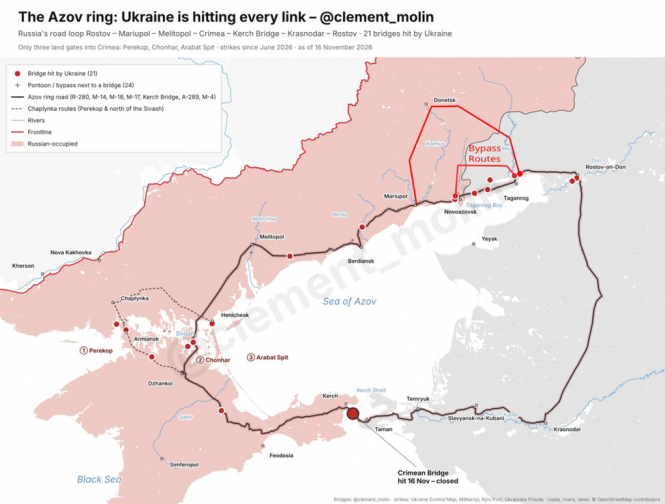
The Kerch Bridge was just one component of a broader campaign. Bridges around the Sea of Azov were attacked again, trying to slow down Russian logistics. Many had already been hit: they were either damaged and repaired, or the Russians made detours. As in any war of attrition, destruction must outpace reconstruction. The Kerch Bridge will never be restored, and time will tell if Russia can repair other bridges or if the detours will significantly slow down its logistics. Until the bridges in the Mariupol and Taganrog areas are repaired, trucks will have to take a 120 km detour. But the war of attrition on Russian logistics continues.
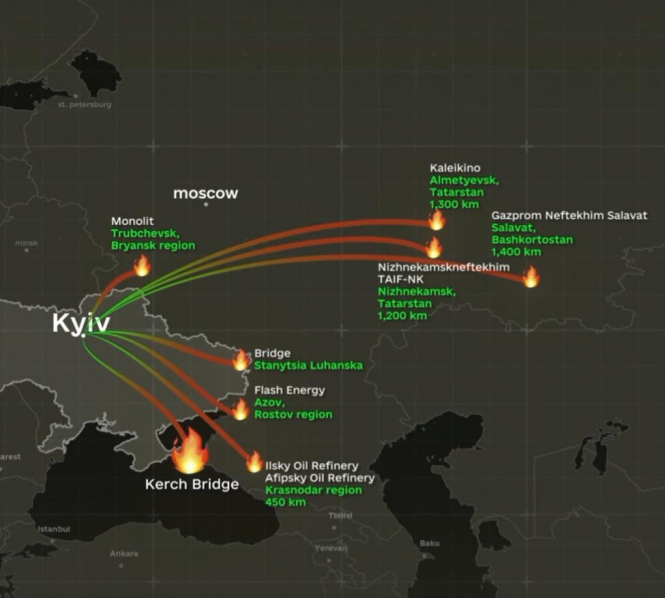
However, the greatest threat to Russia remains Ukrainian strikes on its oil refineries. Over 50 days – from October 1 to November 20 – Russian industrial facilities were attacked 40 times, with refineries being the targets in 17 cases. Last week, five refineries were hit, as well as a pump station in Tatarstan, an oil depot in Rostov, and an aircraft plant in Bryansk.
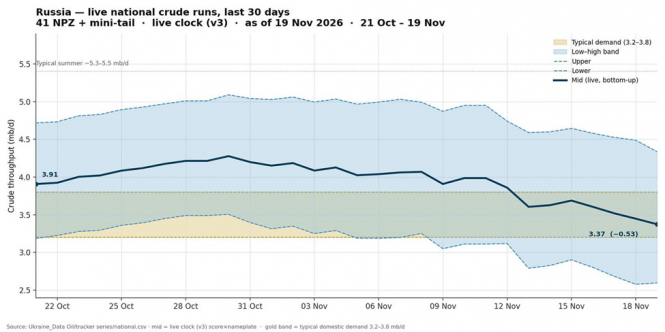
Continuous strikes on the refineries lower fuel production to the minimum level still sufficient to meet demand. As of November 11, estimated fuel production still exceeded the upper demand range but is now rapidly decreasing. The state of individual refineries is here.
Back in April, the leader of the Communist Party of Russia said in the State Duma: “If you [the government] do not urgently take financial, economic, and other measures, by autumn we will face a repeat of what happened in 1917. We have no right to allow a repetition. Decisions must be made.”
There are only a few weeks left until the end of autumn.
Two weeks ago, Ukraine attacked a corvette in the Baltic Sea. Last week, it attacked a Ro-Ro type cargo ship and a naval base on the coast of the Kaliningrad region – specifically the base of the Baltic Fleet in Baltiysk. There were suggestions that the attack on Kaliningrad was carried out from a ship.
A Russian corvette, moored in Benghazi, Libya, was hit by Ukrainian drones based in Libya. The ship was on fire both before and after the explosion, and then it sank. A Russian cargo vessel transporting equipment from Kaliningrad to Libya was hit by a sea drone off the coast of Libya. The Libyan side evacuated the crew of the cargo ship.
The number of Russian attacks per day is decreasing: in November 2026, they averaged 185 a day compared to 200 (both figures dated November 2026 in the original – iPress). The ratio of Ukrainian attacks (without specifying a particular direction) to Russian ones is increasing. Here’s another chart. The growth in the area of captured territory on Russian maps, where these data are inflated, has slowed down, although the area itself is not decreasing.
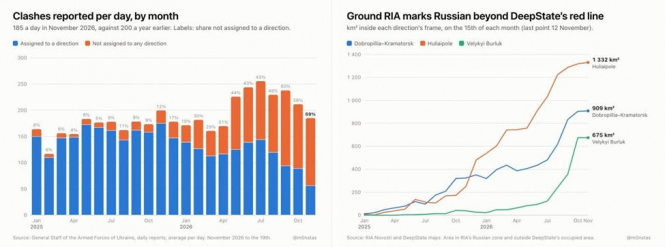
Fog and rain only partially protected against Ukrainian drones. Two-thirds of Russian losses again occurred in the areas of Dobropillya and Huliaipole. Both sides advanced slightly, but Ukraine probably a bit more.
Sumy Region
Ukrainian special forces disorganized the Russian defense in Yunakivka, and Ukrainian forces continued their pressure and are now fighting in Basivka, 8 km from there. Ukraine is also pressing westward. Russians report high activity of Ukrainian drones and a retreat of Russian forces.
Mylove
On June 29, 2026, Russia launched Operation “Bear’s Corner” aiming to encircle a 600 km² area west of Vovchansk. The plan involved two offensives advancing 20-25 km to cut off Ukrainian troops and then eliminate those encircled. Russian sources reported a breakthrough and encirclement success. In reality, on one direction, the Russians only advanced two kilometers, and on the other, maintained a very narrow corridor only 9 km deep.
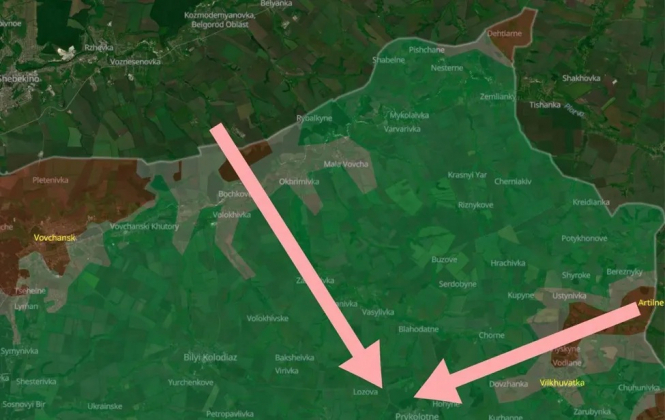
On September 10, the 475th Assault Regiment (Code 9.2) was ordered to eliminate the 9-km salient and, after completion, hand over positions to other units for defense. The next day, the regiment began using drones in this area to locate Russian positions. By September 20, collected data allowed for plan formation and the start of offensive actions.
The plan was simple and resembled Operation “Vivaldi”. Drones were to strike Russian logistics, blocking supplies and reinforcements. Armored attacks were to engage the frontline of the Russian salient held by assault units. This was a diversionary maneuver. Main strikes were to cut off the base of the salient, held by weaker units. This would deprive Russians of the ability to receive reinforcements and supplies by land and force reliance on drones. The operation was named “Bear Trap”.
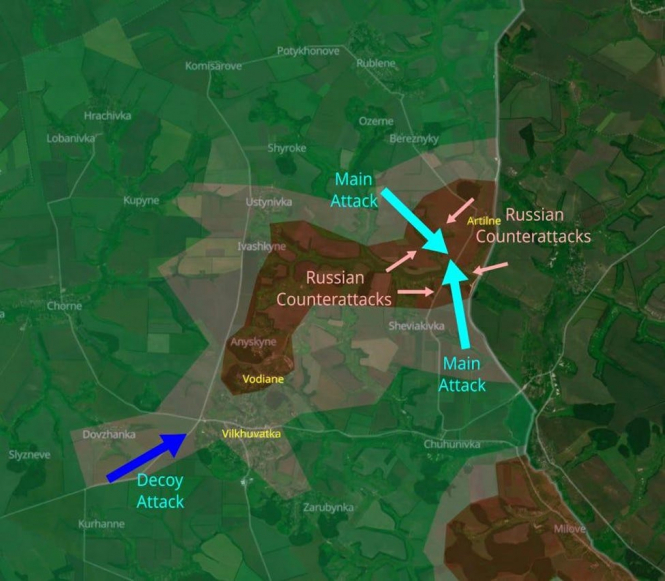
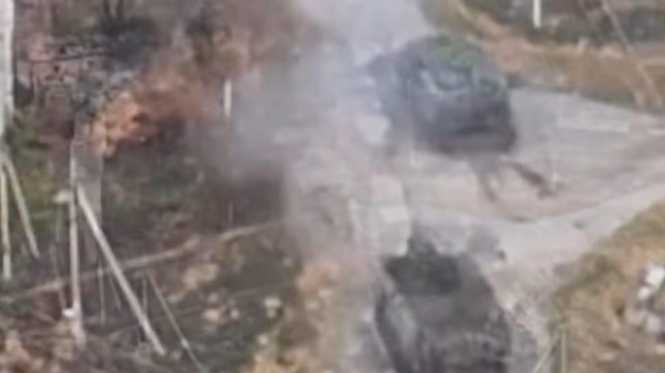
During the first attack, two tanks entered Vilkhuvatka and fired on known positions, including a house where nine Russians were located, then withdrew. They were partially covered by Ukrainian drones, and both vehicles returned safely to the secure zone. Russia decided that the village was Ukraine’s main target and moved reinforcements from the flanks. Many of these units were detected and attacked by heavier medium-range strike drones. Drones with larger warheads destroyed several houses where Russians were hiding.
Then the base of the Russian advance was attacked from both sides, and the Russians were driven out of the villages. Throughout this time, Ukrainian drones struck Russian UAV crews, artillery and mortar positions, communication equipment, and command posts. Logistic routes to the combat area were mined. Artillery also targeted the Russian rear; according to radio intercepts, the commander of the 11th tank regiment with the call sign “Father” was killed in the shelling.
The Russians moved towards the Ukrainian positions from the east and west. Some of them were hit by drones while still on the move. Many did not know where the Ukrainian defensive positions were and fell into ambushes. Those who managed to pass unharmed were taken out by small arms fire.
The 475th regiment did not always know the exact locations of the Russians. One group of Ukrainians was setting up positions when a soldier emerged from an unnoticed bunker. A Ukrainian asked who he was, and he replied that he was Russian. The Ukrainian soldier then shot him, and the group began clearing the bunker. Before dying, the Russians managed to transmit over the radio that they were under attack, and soon the area was hit by Russian mortar fire, forcing the Ukrainians to seek cover.
After clearing the villages, the positions were handed over to a heavy mechanized brigade – likely the 127th.
The regiment commander, Major Oleksandr “Flint” Nastenko, said that drones were used to evacuate many wounded – both from their unit and neighboring ones. According to him, he can describe five soldiers who could not have been evacuated by land: most likely, they would have died before help arrived or would have been killed trying to move on the ground. One of the evacuees nearly died from injuries during the flight, so immediately after being extracted from the drone, he was given urgent assistance to support his heart function. After this, he was taken to a stabilization point, operated on, and later to a hospital for long-term treatment and recovery.

Major Nastenko said that the 475th regiment, and the Ukrainian army in general, are no longer as concerned about Russian infiltration. If the Russians pass behind the front line, they just need to be detected and destroyed.
Kupiansk
The overall situation has not changed. The Russians infiltrate, Ukraine eliminates them. In the pipelines about a meter in diameter, local battles continue within the operation “Veles.” This is just one component of the offensive actions, which also include ground battles, the use of aerial drones, and artillery strikes – some of which can be heard and felt in the pipes. Movement on the surface increases the risk of detection and attack.
The entrance to the pipeline from the safer side is still within the reach of Russian drones. During one trip with a journalist, the group traveled in a truck, monitored drone detectors, and maintained contact with reconnaissance UAV pilots in case of a Russian drone appearance. Suddenly, one of the soldiers ordered everyone to run. The driver stopped, and everyone jumped out of the vehicle and hid in the bushes. The soldiers aimed their weapons at the approaching drone, but it flew by without attacking. There were still 30 minutes of driving left to the pipeline entrance. Before reaching it in the forest, the group had to stop and scatter once more.
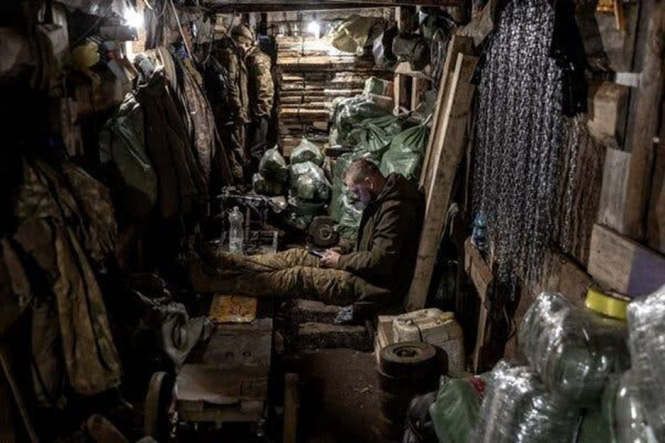
When Ukrainian units on the surface reach the entrance to the pipeline, they can quickly and safely travel several kilometers to the rear using an electric cart—for rest and medical aid. The soldiers call this the “Kupiansk Metro”: a 10-kilometer section they cover in 40 minutes at a speed of 15 km/h. They must travel sitting with bent heads and crossed legs. The cart shakes at each welded pipe joint, and sometimes it breaks down.
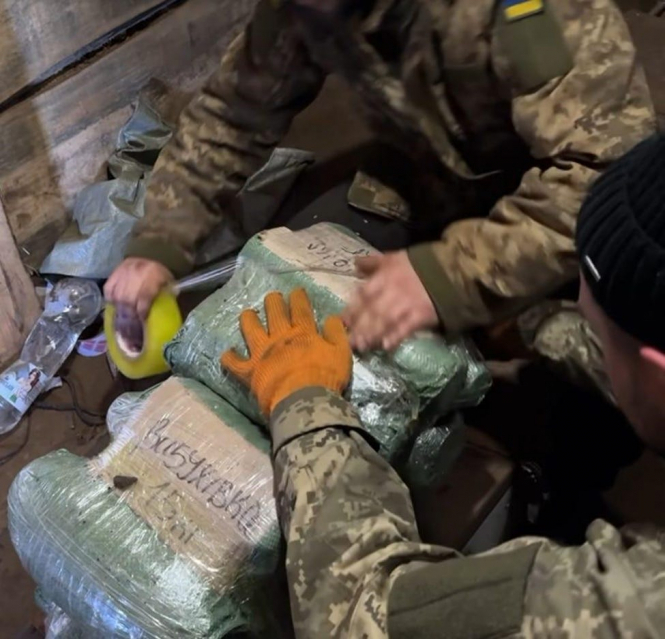
The air in the pipes is stale and filled with the smell of gas. Tobacco smoke does not dissipate in the wind. It would be even worse, but the Khartia corps installed ventilation to allow some air circulation. Water is pumped out from secured pipeline sections, and cables laid down provide communication and lighting for the dugouts, arranged in the soil at openings in the pipe made every few hundred meters. These dugouts offer a rare opportunity to fully stretch out. Instead of toilets, plastic bags and bottles are used. It’s uncomfortable for everyone, but all agree: it’s safer than traveling on the surface. It is still unknown if staying in the pipelines will have long-term health effects on soldiers who spend up to three months continuously inside.
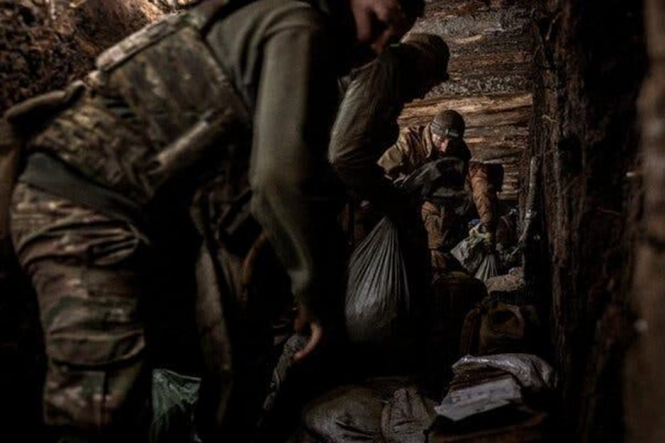
Closer to the combat zone, the pipes may be filled with water mixed with debris; there are barricades and bodies there. Sometimes the barricades and bodies are mined. The fight takes place in the dark, among barricades, and bullets of various calibers ricochet off the thick metal walls of the pipes. One soldier died from smoke inhalation after a Russian bomb hit the entrance to the pipe. Dust and chemical residues can settle on weapons and equipment inside the pipeline.
It took Colombians 30 days to clear 500 meters of pipeline from Russian soldiers. One of them said, “It was hard, it was hot, and inside the pipe, I was scared. But at some point, I just thought: okay, I have to accept this and move forward.”
Near the zero line, Russian bombs regularly cause the ground to tremble slightly shortly after noon – “just after the Russians have had lunch,” one soldier joked.
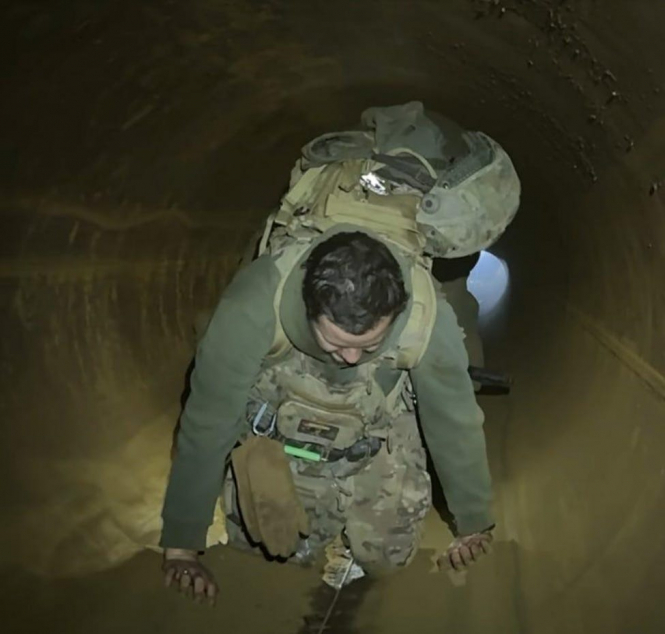
In the pipeline, soldiers spend much of their time on their knees and suffer from abrasions. Some experience panic attacks due to the confined space. Others find it hard to breathe. One soldier said that towards the end of the rotation, he felt completely drained and needed to get out. It took him time to readjust to life on the surface. “After being in the pipe, sometimes you wake up at home and, before getting up, you try to assess the ceiling height,” he said. “Then you realize you’re in your own apartment.”
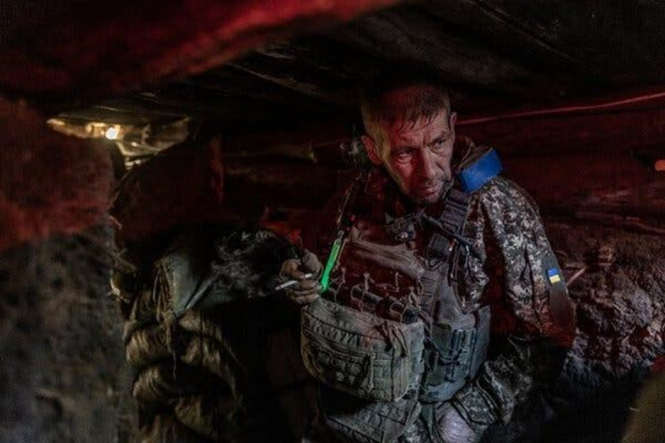
On the way back, a small group of soldiers gathered at a logistics point near the tunnel entrance. A warning is sounded: a Russian quadcopter is approaching. Russians constantly scout for tunnel entrances and sometimes identify them by thermal signatures. Everyone climbs over bags of food and earth and retreats deeper into the tunnel to both hide and reduce their thermal signature.
A trolley arrives, and the soldiers board. On the way, they stop at another dugout and pick up a few more people. For unknown reasons, the trolley couldn’t carry everyone the last 50 meters, so the rest of the distance was walked, hunched over.
On the surface, part of the group got into the car, which was supposed to take them through the open fields. The driver started the engine and said, “God help us.” Then he raced up and down the hills. The tunnel, though uncomfortable, was safe and left behind. They were once again under threat from drones.
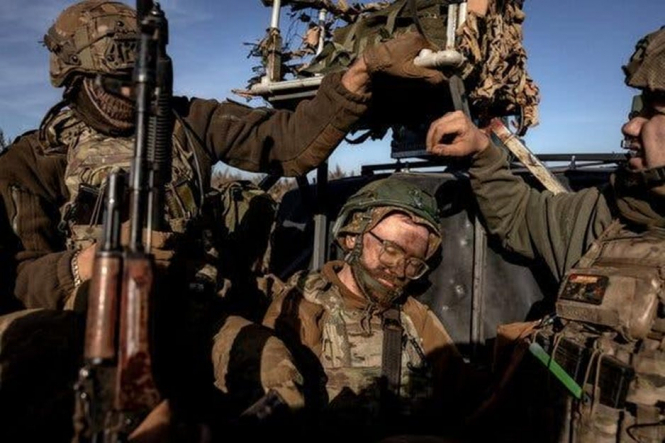
Finally, they reached the road covered with nets, and the most dangerous part of the trip was over. The driver called. “Honey, I’m back,” he said. “Everything’s fine. Kisses.”
The Ukrainian army is studying this operation and assessing the cost and feasibility of creating tunnel networks in other locations to connect observation points with the rear for supply and other support via a protected route. Where there are no pipelines, soil type and groundwater levels will need to be considered. Russian bombs can collapse tunnels, and if Russia captures the entrance, special defensive measures will be needed to protect the network. In the long term, tunnels could be most useful for stationary defense positions, for example, near the border with Russia.
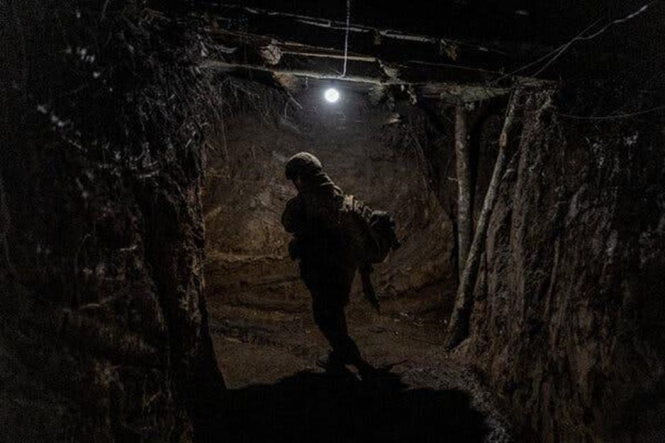
Creating tunnels to support offensive operations would take a long time, but any movement out of drone sight would reduce losses of people and equipment. Tunnel entrances would need to be concealed from Russian surveillance, and during periods of mud and snowfalls, any movement traces near them would need to be camouflaged. Several entrances and parallel tunnels would increase the network’s survivability if one section is lost, but as the scale increases, so do the needs for people to construct and maintain, as well as to remove and disperse soil.
Far from the front line, Ukraine has already moved part of its defense production and logistics operations underground.
Lyman
Russian sources claim that the 3rd Corps continues to advance in the Lyman area due to weak Russian defense, poorly prepared Russian troops, and false reports from Russian commanders and disinformation they themselves receive.
Sloviansk
Russia has made some advances.
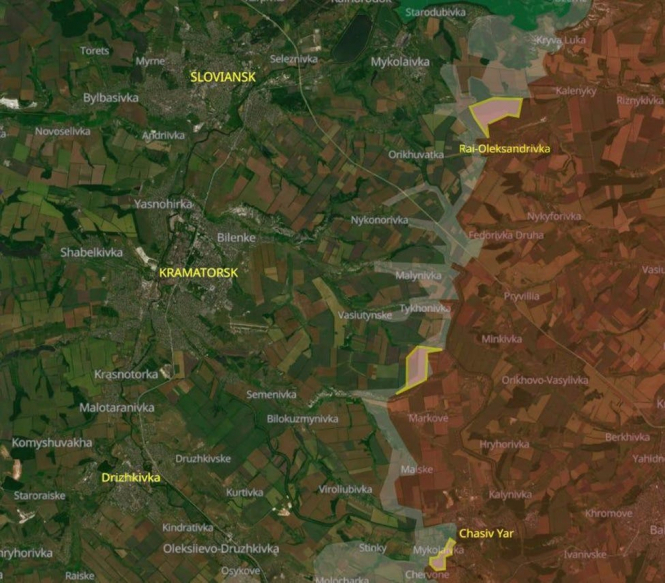
Kostiantynivka
Two Ukrainian soldiers from the 93rd Brigade with the call signs “Kotsia” and “Yuzhny” were ordered to clear a forest strip 20-30 meters away. After an exchange of fire, both Russians retreated, one of them wounded, but they managed to report by radio that they were being attacked. This is why most battles are conducted using drones, even when infantry is nearby.
Russia responded with 120-mm mortar fire, “Molniya” drones, FPV drones, and munitions dropped from UAVs. Somehow, both Ukrainians managed to avoid injuries until a drone on fiber optics exploded near Kotsia, severely wounding his legs and injuring Yuzhny.
They managed to escape Russian observation, and a group led by a fighter with the call sign “Pohreb” came to their aid. Kotsia was bandaged and given pain relief. Part of the 25-kilometer evacuation route was covered with Pohreb carrying Kotsia. Later, crutches were provided to Kotsia, and the three of them reached a safe place.
Dobropillia
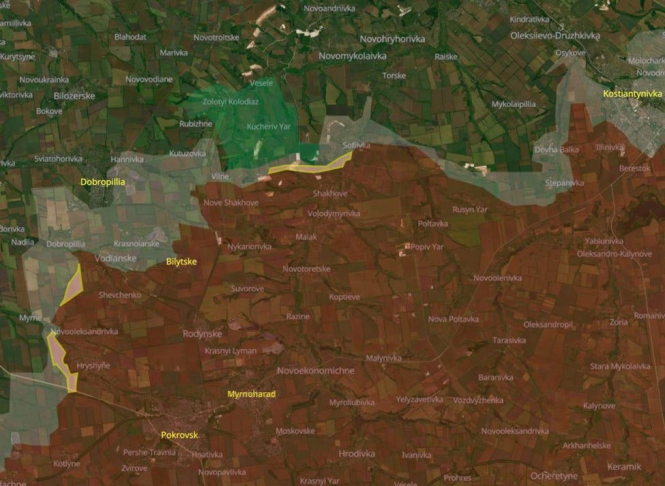
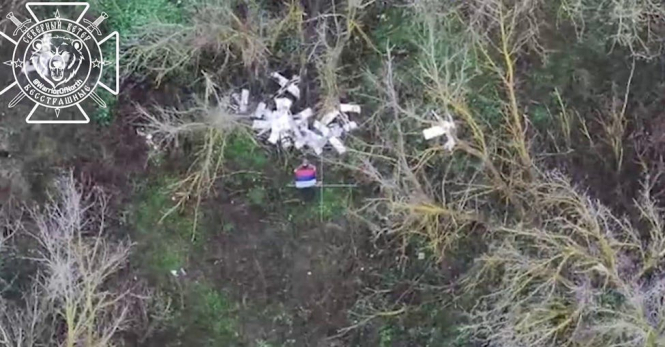
Russia continues to infiltrate with small groups, but the number of its mechanized assaults is increasing. Russian logistics have to deal with drones, wreckage of equipment destroyed by drones, and mud. South of Popov Yar, there are remains of equipment 10 km from the front line. The 1st Corps added more deaths and destruction already 20 km from the front.
Komar
Currently, since Drapaty restored sanity in the Ukrainian Armed Forces’ command system, a key element of all Ukrainian operations is limiting Russian logistics. This starts with the destruction of bridges and attacks on trucks up to 200 km away. Then strikes hit warehouses, troop concentrations, command posts, and supply bases. Troops and supplies brought within 20 km of the front are also attacked; infantry on foot carrying supplies to the frontline are targeted. Drones are used for supply, so UAV teams are attacked as well.
Ukraine cannot eliminate all Russians moving to the front, but it kills and injures slightly more than Russia manages to replenish its forces. Therefore, Russian forces are not building up but are slowly depleting, allowing Ukrainian troops to push them back. To minimize losses, it’s important for Ukrainian military to remain unnoticed. In winter, when there are no leaves, it’s easier to spot soldiers and their movements. It’s still unknown whether Ukraine will continue the attacks and maintain the pace or limit movement and defend current positions. If Ukraine continues to disrupt Russian logistics, it will be able to regain momentum in the spring.
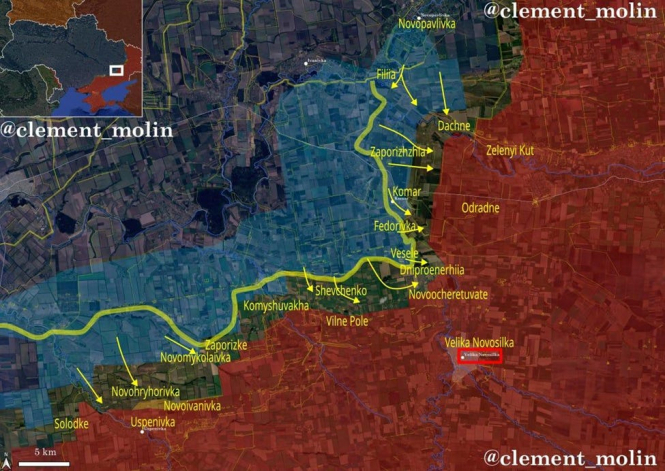
Ukraine reveals few details. Reports of territorial gains usually appear with a delay. Clement Molin’s report shows somewhat more advancement of Ukrainian troops than the Russian blog Rybar. The area marked in blue was still under Russian control in February 2026.
Huliaipole
The 110th Brigade of Ukraine destroys Russian equipment and drones.
Zaporizhzhia
In Zaporizhzhia, several KABs exploded. In total, 10 KABs and three “Geran” drones fell in the city within 18 hours. The likely target was the city bridges, as bridges are being attacked in many regions of Ukraine.
Kherson
Over Kherson, a “Shahed” drone was shot down with an AK-74.
Occupied Territories
A Russian truck drives through an area engulfed in flames on the R-280 highway in the south of Zaporizhzhia region. A Ukrainian drone is shot down.
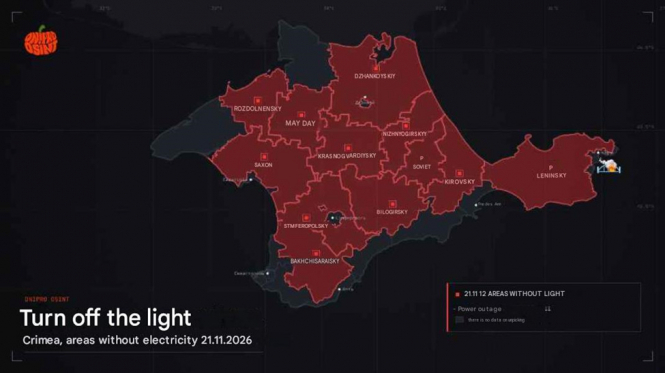
Air defense systems continue to come under attack.
Source: Part 1, Part 2 and Part 3
Cover collage: Radio Free Europe
Copyright © 2021 RFE/RL, Inc. Reprinted with permission from Radio Free Europe / Radio Liberty
